
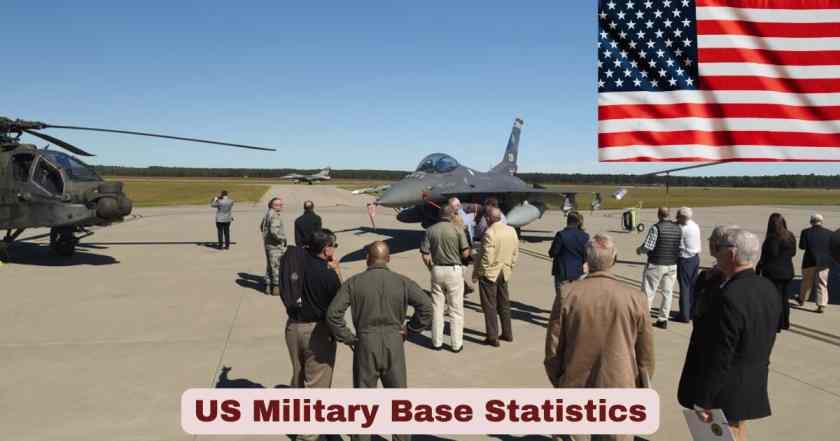
Military Bases of America 2026
The United States military base network is the largest and most geographically dispersed military infrastructure ever assembled in human history. As of 2026, the U.S. Department of Defense manages a sprawling portfolio of approximately 4,790 military sites worldwide, covering nearly 27 million acres of land — a territorial footprint larger than the entire state of Virginia. These installations range from massive, city-sized garrisons capable of housing tens of thousands of troops to compact forward operating posts tucked into desert outposts across the Middle East and the Pacific Rim. The 128 confirmed overseas bases in 49 countries represent the official, named tier of this infrastructure, but the total count of locations where American forces exercise operational presence stretches to an estimated 750 to 800 facilities across 80+ countries when cooperative access points, pre-positioning sites, and rotational locations are included. Together, this network consumes an annual overseas maintenance bill of over $70 billion, making the United States the world’s single largest military real estate investor by an enormous margin.
Understanding US military base statistics in 2026 requires examining both the global macro picture and the intensely active regional snapshot, particularly in the Middle East, where American military posture has surged dramatically since late 2023. As of June 2025, the United States had approximately 40,000 to 50,000 service members deployed across the Middle East region alone — spread across at least 19 confirmed military sites in countries including Bahrain, Egypt, Iraq, Jordan, Kuwait, Qatar, Saudi Arabia, Syria, and the United Arab Emirates. The FY2026 DoD budget request stands at $892.6 billion, reflecting massive sustained spending on a force of 1.28 million active-duty service members and 0.77 million reserve members globally. All data presented in this article is drawn exclusively from U.S. government sources including the Defense Manpower Data Center (DMDC), Congressional Research Service (CRS), USAFacts, the DoD Base Structure Report FY2024, and official Pentagon budget documents.
Interesting Facts: US Military Base Statistics in 2026
| Fact Category | Key Statistic |
|---|---|
| Total DoD-managed sites worldwide | ~4,790 military sites |
| Total land managed by DoD | ~27 million acres |
| Confirmed named overseas bases | 128 bases in 49 countries |
| Broader overseas facility estimate | ~750–800 in 80+ countries |
| US troops in Middle East (June 2025) | ~40,000–50,000 service members |
| Total overseas military & civilian personnel | 243,048 (DMDC, March 2025) |
| Active-duty overseas troops (June 2025) | 171,500+ active personnel |
| DoD FY2026 budget request | $892.6 billion |
| Annual overseas base maintenance cost | ~$70 billion/year |
| Active-duty force size (FY2025) | 1.28 million service members |
| Reserve force size (FY2025 authorized) | 0.77 million |
| Largest overseas base by area | Camp Humphreys, South Korea (1,398 hectares / 3,454 acres) |
| Largest domestic base by personnel | Fort Liberty (formerly Fort Bragg), NC — ~57,000 |
| World’s largest naval complex | Naval Station Norfolk, Virginia |
| Country with most US troops | Japan — 52,793–53,912 troops (DMDC 2025) |
| US military presence documented in | ~150 countries and territories |
| State with most military installations | California — ~123 installations |
| Oldest US military base overseas | Guantanamo Bay, Cuba — operating since 1903 |
| Middle East confirmed permanent bases | 8 permanent bases (Bahrain, Egypt, Iraq, Jordan, Kuwait, Qatar, Saudi Arabia, UAE) |
Source: U.S. Department of Defense Base Structure Report FY2024; Defense Manpower Data Center (DMDC) March 2025; Congressional Research Service R48123, July 2024; USAFacts Defense Report 2025; DoD FY2026 Budget Request, May 2025; Council on Foreign Relations, June 2025
The numbers above lay bare just how extraordinary the American military base network in 2026 truly is. The fact that 243,048 military and civilian DoD personnel are stationed outside the continental United States — and that this accounts for only a fraction of total force strength — reveals the depth of America’s overseas commitment. The $892.6 billion FY2026 DoD budget request is not just the world’s largest defense budget; it exceeds the combined defense spending of the next ten countries combined according to SIPRI 2025. The sheer land mass under DoD management — 27 million acres — includes everything from Arctic radar stations in Alaska to sun-scorched airfields in Qatar, all serving as the physical backbone of American global power projection.
What makes these figures especially striking heading into 2026 is the acute regional concentration now visible in the Middle East, where the United States has conducted its single largest military buildup since the 2003 Iraq invasion according to multiple U.S. officials and Congressional reports from early 2026. The 19 confirmed US military sites spread across at least 10 Middle Eastern nations represent the densest concentration of forward-deployed American power anywhere outside of the Indo-Pacific. Ongoing Iran-related tensions through late 2025 and into February 2026 have driven troop levels, aircraft deployments, and naval assets in the region to their highest levels in over two decades — with Iranian ballistic missiles actually striking at Al Udeid Air Base in Qatar on February 28, 2026.
US Military Bases in the Middle East in 2026
| Base / Installation | Country | Branch | Estimated Troops | Key Role |
|---|---|---|---|---|
| Al Udeid Air Base | Qatar | USAF / CENTCOM | ~10,000 troops | Largest US base in Middle East; CENTCOM forward HQ; 2-mile runway |
| Naval Support Activity (NSA) Bahrain | Bahrain | US Navy | ~9,000 DoD personnel | US 5th Fleet HQ; Gulf, Red Sea & Arabian Sea ops |
| Camp Arifjan | Kuwait | US Army | ~15,000–17,000 | ARCENT forward HQ; largest Army logistics hub in ME |
| Ali Al Salem Air Base | Kuwait | USAF | ~3,000 troops | 386th Air Expeditionary Wing; primary airlift hub in theater |
| Camp Buehring | Kuwait | US Army | ~3,500 troops | Staging/transit base for Iraq and Syria deployments |
| Al Dhafra Air Base | UAE (Abu Dhabi) | USAF | ~2,000–3,500 | 380th AEW; 10 flying squadrons; F-35A, KC-10, RQ-170 |
| Ain Al Asad Air Base | Iraq (Anbar) | Multi-branch | ~2,000–2,500 | Support to Iraqi security forces; NATO mission |
| Erbil Air Base | Iraq (Kurdistan) | Multi-branch | ~900 troops | Counterterrorism hub; intelligence gathering |
| Prince Sultan Air Base (PSAB) | Saudi Arabia | USAF | ~2,500+ | Dispersal airfield; 53 F-16s, 22 KC-135s, E-3 AWACS (June 2025) |
| Eskan Village | Saudi Arabia | US Army / Intel | ~500–800 | Missile defense intelligence; Saudi trainer support |
| Al-Tanf Garrison | Syria | US Army / SOCOM | ~200–300 | Counter-ISIS; blocks Iran-Hezbollah ground corridor |
| Muwaffaq Salti Air Base | Jordan | USAF | ~3,000 | F-35 staging; strike operations; logistics |
| Camp Titin / Al-Azraq | Jordan | US Army | ~500 | Training Jordanian forces; border security support |
| Jebel Ali Port (access) | UAE (Dubai) | US Navy | Rotating vessels | Largest US Navy port of call in entire Middle East |
Source: Council on Foreign Relations (CFR), June–February 2026; Reuters Factbox, February 28, 2026; Al Jazeera Middle East Military Mapping, September 2025; Congressional Research Service CRS R48123, July 2024; Middle East Eye, February 2026; WorldAtlas Pentagon Data Compilation, 2025
The Middle East military base network in 2026 represents an unprecedented forward deployment posture driven by the most dangerous regional escalation cycle since the early 2000s. Al Udeid Air Base in Qatar, spanning 24 hectares in the desert west of Doha, serves as the forward headquarters of U.S. Central Command (CENTCOM), which oversees all American military operations from Egypt east to Kazakhstan — a geographic remit that spans 25 countries and 4 million square miles. With roughly 10,000 troops and coalition forces rotating through its two-mile runway, Al Udeid is the single most operationally important American base in the entire region, and in June 2025, Iran fired at least six Fateh-313 ballistic missiles at the base, four of which were intercepted by Patriot batteries, underscoring just how contested and consequential this installation has become. NSA Bahrain, home to the US Navy’s Fifth Fleet, hosts approximately 9,000 DoD personnel and manages security across the Gulf, Red Sea, Arabian Sea, and parts of the Indian Ocean — covering a 2.5 million square mile maritime theater from a single installation.
Kuwait’s Camp Arifjan has served as America’s premier logistics and prepositioned equipment hub since the Gulf War of 1991, and in early 2026, it remains the largest single US Army logistics installation in the region, housing the forward headquarters of US Army Central (ARCENT) and pre-positioned armored vehicles, ammunition, and equipment sufficient to rapidly equip heavy combat formations. Prince Sultan Air Base (PSAB) in Saudi Arabia experienced a dramatic resurgence in 2025: satellite imagery captured in June 2025 revealed a ramp packed with 53 F-16 fighters, 22 KC-135 tankers, and several E-3 AWACS aircraft — a force posture not seen there since the early 2000s, with analysts describing PSAB as a critical dispersal field for assets otherwise dangerously concentrated at Al Udeid. The strategic logic is clear: the US is distributing its Middle East air power across multiple nodes — Qatar, UAE, Kuwait, Saudi Arabia, and Jordan — to reduce vulnerability to Iranian precision strikes, while simultaneously preparing for potential high-intensity operations in the most volatile regional environment since 2003.
US Middle East Military Buildup Timeline 2023–2026 – Troop Surge Statistics
| Period | Troop Level (Middle East) | Key Event / Trigger | Assets Deployed |
|---|---|---|---|
| Pre-October 2023 (baseline) | ~30,000 troops | Standard deterrence posture | Single carrier rotation; standard Patriot batteries |
| October–December 2023 | ~40,000+ troops | Hamas Oct. 7 attack; Israel-Gaza war begins | 2 carrier strike groups; THAAD; Patriot reinforcements |
| 2024 (sustained) | ~40,000–43,000 | Houthi Red Sea attacks; Iran-Israel tensions | Operation Rough Rider (Houthi strikes); CBG rotations |
| October 2024 (peak) | ~43,000 troops | Peak Israeli-Iranian direct confrontation | Multiple CBGs; B-52 deployments; additional destroyers |
| June 2025 | ~40,000 troops | US strikes on Iran nuclear facilities | USS Abraham Lincoln CSG; RC-135W aircraft; THAAD |
| January 2026 | Largest since 2003 | US-Israel Iran nuclear escalation | USS Gerald R. Ford + Abraham Lincoln; F-35C; THAAD |
| February 28, 2026 | Active combat operations | US-Israel joint Iran strikes; Iranian retaliation | Iran fires Fateh-313 missiles at Al Udeid; intercepted by Qatar/US defenses |
Source: Council on Foreign Relations Middle East Tracker, February 2026; Wikipedia “2026 United States Military Buildup in the Middle East”; Middle East Eye Explainer, February 2026; Al Jazeera Military Mapping Report, September 2025; Reuters, February 28, 2026
The 2024–2026 Middle East military buildup tells the story of a region that went from a 30,000-troop maintenance posture before October 7, 2023, to the largest US military presence since the 2003 Iraq invasion within just over two years. Following the Hamas attack on Israel, the US immediately deployed two aircraft carrier strike groups to the Eastern Mediterranean and Arabian Sea simultaneously — a posture that had not been maintained in the region since the early stages of the Iraq War. By October 2024, troop levels peaked at approximately 43,000 amid simultaneously escalating Israeli-Iranian tensions and Houthi attacks on Red Sea commercial shipping, which triggered Operation Rough Rider, a sustained American air and naval campaign against Houthi targets in Yemen launched in the early months of President Trump’s second term.
The most dramatic data point in this entire timeline is February 28, 2026 — the day Iranian forces retaliated against Al Udeid Air Base in Qatar with Fateh-313 ballistic missiles following US-Israeli joint strikes on Iranian nuclear facilities. Qatar’s missile defense systems, augmented by American Patriot batteries, intercepted the attack and prevented casualties, but the episode confirmed that US military bases in the Middle East are now operating under active kinetic threat conditions not seen since Iranian missile strikes on Ain Al Asad Air Base in January 2020. With USS Gerald R. Ford and USS Abraham Lincoln both deployed to the theater simultaneously, and THAAD air defense batteries reinforcing all eight permanent bases, the 2026 force posture marks a fundamental shift in what “forward presence” means in the modern Middle East: it now means operating inside a contested, actively threatened combat zone, not merely a deterrent presence on friendly soil.
US Military Bases — Global Regional Overview Statistics in 2026
| Region | Estimated Bases / Sites | Key Host Countries | US Troops Deployed |
|---|---|---|---|
| Indo-Pacific / East Asia | ~220+ bases and facilities | Japan (120 bases), S. Korea (73), Philippines (9) | ~115,000+ troops |
| Europe / NATO | ~119+ facilities | Germany (119 bases), Italy, UK, Spain, Poland | ~85,000+ troops |
| Middle East / CENTCOM AOR | 19+ confirmed sites (8 permanent) | Qatar, Bahrain, Kuwait, Iraq, Jordan, UAE, Saudi Arabia | ~40,000–50,000 troops |
| Africa / AFRICOM | ~29 locations | Djibouti (CJTF-HOA), Niger, Cameroon, Kenya | ~6,000–7,000 troops |
| Americas (non-CONUS) | ~15–20 sites | Guantanamo Bay, Honduras, Aruba, Colombia | ~5,000–8,000 troops |
| Domestic US (CONUS + territories) | ~450–500 active installations | California, Texas, Virginia, NC, Florida | ~1.1 million active-duty |
Source: Defense Manpower Data Center (DMDC) March–June 2025; Congressional Research Service R48123, July 2024; USAFacts Defense Report 2025; Al Jazeera Global Military Mapping 2025; The Global Statistics US Military Report 2025
The regional breakdown of American military deployments in 2026 reveals a force spread across every major strategic theater on earth simultaneously. The Indo-Pacific remains the single largest overseas theater by both base count and troop concentration, with Japan alone hosting 120 US military facilities and over 52,793 to 53,912 troops — a presence rooted in post-WWII security architecture that remains the cornerstone of America’s Pacific deterrence posture against both China and North Korea. Europe saw a significant and sustained uplift following Russia’s 2022 invasion of Ukraine, with ~85,000 troops now stationed or rotated across NATO member states — the highest European deployment level in decades — with Germany at 34,547 to 35,989 troops remaining the undisputed anchor of the European basing network.
Africa’s 29 AFRICOM locations may appear modest by comparison, but the Camp Lemonnier complex in Djibouti — the only permanent US military base on the African continent — supports drone operations, special operations missions, and maritime security across the entire Horn of Africa. The combination of all these regional presences means that as of 2026, US service members are present in approximately 150 countries and territories — a figure so vast that the sun has not set on an American military presence anywhere on earth in nearly a century. The Middle East at 19 sites and 40,000–50,000 troops stands out in this global picture not for its base count but for its intensity: these are the most operationally active, most heavily armed, and now the most directly threatened American military installations anywhere in the world.
US Military Troops Stationed Overseas — Top 10 Countries in 2026
| Rank | Country | US Troops (2025 DMDC) | Key Installations | Command |
|---|---|---|---|---|
| 1 | Japan | 52,793–53,912 | Yokosuka Naval Base, Misawa AB, Kadena AB, Okinawa | INDOPACOM |
| 2 | Germany | 34,547–35,989 | Ramstein AB, Stuttgart HQ, Grafenwoehr Training | EUCOM |
| 3 | South Korea | 22,844–26,414 | Camp Humphreys, Osan AB, Kunsan AB | INDOPACOM |
| 4 | Kuwait | ~18,000–20,000 | Camp Arifjan, Ali Al Salem AB, Camp Buehring | CENTCOM |
| 5 | Italy | ~12,332 | Aviano AB, Camp Darby, Sigonella NAS | EUCOM |
| 6 | United Kingdom | ~10,046 | RAF Lakenheath, RAF Mildenhall, Menwith Hill | EUCOM |
| 7 | Qatar | ~10,000 | Al Udeid Air Base | CENTCOM |
| 8 | Bahrain | ~9,000 | NSA Bahrain (5th Fleet HQ) | CENTCOM |
| 9 | Guam (US Territory) | ~6,000+ | Andersen AFB, Naval Base Guam | INDOPACOM |
| 10 | Spain | ~3,400 | Rota Naval Station, Moron AB | EUCOM |
Source: Defense Manpower Data Center (DMDC) March 2025; 24/7 Wall St. Foreign Deployment Analysis, October 2025; The Global Statistics US Military Bases Report 2025; USAFacts 2025; Congressional Research Service
Japan’s 52,793 to 53,912 troops — concentrated heavily on the island of Okinawa, which hosts approximately 70% of all US military facilities in Japan — represent the largest single-country overseas troop commitment in the entire American military portfolio, a direct legacy of World War II and the 1960 US-Japan Security Treaty. Germany remains the bedrock of European basing at 34,547 to 35,989 troops, with Ramstein Air Base serving as the hub of US Air Forces Europe and a critical node for all logistics and airlift operations flowing into NATO’s eastern flank. South Korea’s 22,844 to 26,414 troops are anchored at Camp Humphreys, the world’s single largest overseas US military base by land area at 1,398 hectares (3,454 acres) — a $10+ billion construction project completed in 2017 that consolidated dozens of older Korean installations into one modern megabase less than 100 kilometers from the heavily fortified DMZ.
The Middle East nations — Kuwait at ~18,000–20,000, Qatar at ~10,000, and Bahrain at ~9,000 — collectively represent the third largest regional troop concentration in America’s overseas network. What distinguishes these Middle East deployments from Japan and Germany is the operational tempo: while Japan and South Korea serve primarily deterrent functions, US troops in Kuwait, Qatar, Bahrain, and Iraq are conducting live combat operations, active ISR missions, and direct-support activities daily in a threat environment that includes Iranian drones, ballistic missiles, and proxy militia attacks. The US Navy’s Fifth Fleet in Bahrain has authority over 2.5 million square miles of ocean and is currently coordinating the most complex multi-domain maritime security campaign seen in the region since the Tanker War of the 1980s.
US Domestic Military Bases by State in 2026 – Personnel Statistics
| State | Est. Installations | Key Bases | Active-Duty Personnel |
|---|---|---|---|
| California | ~123 installations | Camp Pendleton, NAS Lemoore, MCAS Miramar, NB Coronado | ~150,000+ |
| Virginia | ~90 installations | Naval Station Norfolk, Pentagon, JB Langley-Eustis | ~117,000–120,000 |
| Texas | ~60 installations | Fort Cavazos, JB San Antonio, Fort Bliss, Dyess AFB | ~100,000+ |
| North Carolina | ~20 installations | Fort Liberty (ex-Fort Bragg), Camp Lejeune, Seymour Johnson AFB | ~75,000+ |
| Florida | ~30 installations | MacDill AFB (CENTCOM + SOCOM HQ), Eglin AFB, NAS Pensacola | ~70,000+ |
| Georgia | ~15 installations | Fort Stewart, Fort Eisenhower (Cyber), Hunter AAF | ~55,000+ |
| Hawaii | ~49 installations | JB Pearl Harbor-Hickam, USMC Camp H.M. Smith | ~46,000+ |
| Alaska | ~49 installations | JB Elmendorf-Richardson, Fort Wainwright | ~21,000+ |
| Colorado | ~10 installations | Peterson SFB, Schriever SFB, NORAD/NORTHCOM, Fort Carson | ~38,000+ |
| Washington State | ~15 installations | JB Lewis-McChord, Fairchild AFB, Naval Base Kitsap | ~45,000+ |
Source: USAFacts U.S. Military Personnel Report, March 2025; Visual Capitalist “States with Most Military Personnel” July 2025; OmniMilitaryLoans State Military Analysis 2025; DoD MilitaryINSTALLATIONS Database; 24/7 Wall St.
California’s ~123 military installations and 150,000+ active-duty personnel make it the undisputed center of American domestic military activity, driven by its Pacific coastline which hosts enormous Navy and Marine Corps infrastructure. California hosts 34.8% of all Marine Corps active-duty members nationally and 27.9% of all active-duty Navy personnel, reflecting the massive Pacific-facing naval complex at San Diego, NAS Lemoore, and Point Mugu. Virginia’s ~120,000 active-duty personnel and concentration of Naval Station Norfolk — the world’s largest naval complex with over 1 million residents including military families and civilians — alongside the Pentagon and Joint Base Langley-Eustis make it arguably the most strategically critical domestic military state in America per square mile. North Carolina’s Fort Liberty remains the largest single installation by personnel at ~57,000 service members, home to the XVIII Airborne Corps, 82nd Airborne Division, Delta Force, and US Army Special Operations Command (USASOC).
Florida’s MacDill Air Force Base is one of the most consequential installations in the entire domestic network: it is simultaneously home to US Central Command (CENTCOM) — which directs the entire Middle East theater — and US Special Operations Command (SOCOM), giving a single Tampa, Florida installation command authority over the two most operationally active American military theaters in the world as of 2026. Colorado has emerged as a growing center of military gravity as the US Space Force matures, with Colorado now hosting 46.8% of all active-duty Space Force personnel in the country — a concentration that reflects the co-location of NORAD/NORTHCOM, Peterson Space Force Base, Schriever SFB, and the United States Space Command headquarters all within a single state.
US Military Budget & Defense Spending 2026
| Metric | Figure | Source / Year |
|---|---|---|
| DoD FY2026 Budget Request | $892.6 billion | DoD, May 2, 2025 |
| DoD FY2025 Total (with supplementals) | ~$919.2 billion | FY2025 enacted |
| DoD Discretionary Base Budget FY2025 | $850 billion | CRS IN12447, 2024 |
| Annual overseas base maintenance | ~$70 billion/year | The Global Statistics, 2025 |
| US share of global military spending | ~40% of world total | SIPRI 2025 |
| DoD as % of federal discretionary budget | ~50%+ | USAFacts 2025 |
| Active-duty personnel authorized FY2025 | 1.28 million | CRS / DoD FY2025 |
| Reserve personnel authorized FY2025 | 0.77 million | CRS / DoD FY2025 |
| Total active + reserve US military personnel | ~2.05 million | DoD FY2025 |
| Top defense spending states FY2024 | Texas, Virginia, California | Visual Capitalist 2025 |
| Virginia DoD per-capita spending | ~$5,459/person/year | OmniMilitaryLoans 2025 |
| NC DoD per-capita spending | ~$1,015/person/year | OmniMilitaryLoans 2025 |
Source: U.S. DoD FY2026 Budget Request, May 2, 2025; Congressional Research Service CRS IN12447; USAFacts Defense Spending Analysis 2025; SIPRI Military Expenditure Database 2025; Visual Capitalist Defense Spending State Map, July 2025
The $892.6 billion FY2026 DoD budget request represents the financial engine behind the entire global base network described in this article. While this figure reflects flat nominal growth compared to FY2025, it maintains America’s position as the world’s dominant military spender — accounting for roughly 40% of all global military expenditure according to SIPRI 2025 data. The $70 billion annual cost of maintaining overseas bases alone is a figure that exceeds the entire defense budgets of most individual European NATO allies, and it funds everything from the operational costs of Al Udeid’s CENTCOM headquarters in Qatar to the massive logistics pre-positioning at Camp Arifjan in Kuwait and the carrier fleet maintenance at Yokosuka in Japan. The authorized force of 1.28 million active-duty and 0.77 million reserve members — totaling over 2.05 million uniformed personnel — represents the human capital sustaining this network, and military personnel costs consume the single largest slice of the $850 billion discretionary base budget.
At the state level, defense spending creates an economic footprint that shapes entire regional economies and political landscapes. Virginia’s DoD per-capita spending of $5,459 per resident per year — the highest in the nation — reflects the unique concentration of the Pentagon, Naval Station Norfolk, multiple intelligence agency headquarters, and the massive defense contractor ecosystem in Northern Virginia. Texas, Virginia, and California collectively received the largest absolute shares of DoD contract and installation spending in FY2024, and seven states — California, Washington, Texas, Florida, Georgia, North Carolina, and Virginia — together host 60% of all active-duty US troops domestically, meaning that American military power is simultaneously globally dispersed and domestically concentrated in a handful of strategically chosen states. The FY2026 budget trajectory suggests this pattern will persist and deepen, with no indication of significant base closures or domestic footprint reduction on the current legislative horizon.
US Overseas Military Bases by Service Branch in 2026
| Branch | Primary Overseas Theaters | Key Overseas Commands | Notable Overseas Bases |
|---|---|---|---|
| US Army | Germany, S. Korea, Kuwait, Japan | USAREUR, USFK, ARCENT | Camp Humphreys (Korea), Camp Arifjan (Kuwait), Grafenwoehr (Germany) |
| US Navy | Japan, Bahrain, Guam, Spain, Italy | 7th Fleet, 5th Fleet, 6th Fleet | Yokosuka (Japan), NSA Bahrain, Rota (Spain), Sigonella (Italy) |
| US Air Force | UK, Germany, Qatar, UAE, Japan, Korea | USAFE, AFCENT, PACAF | Ramstein (Germany), Al Udeid (Qatar), Al Dhafra (UAE), Kadena (Japan) |
| US Marine Corps | Japan (Okinawa), Guam, Australia | III MEF, MARFORPAC | Camp Foster, Camp Schwab, MCAS Futenma (all Okinawa) |
| US Space Force | Bahrain, S. Korea, Japan, Qatar | SPOC, SpOC detachments | Small distributed teams embedded at major air bases |
| SOCOM (Special Operations) | Middle East, Africa, Asia-Pacific | TSOC commands worldwide | Al-Tanf (Syria), JSOC at Erbil (Iraq), Camp Lemonnier (Djibouti) |
Source: Congressional Research Service July 2024; Defense Manpower Data Center (DMDC) March 2025; USAFacts 2025; DoD MilitaryINSTALLATIONS Database; 24/7 Wall St. Foreign Deployment Analysis, October 2025
Each branch of the US military maintains a distinct geographic footprint shaped by its specific operational requirements. The US Navy’s five numbered overseas fleets — most critically the 7th Fleet at Yokosuka, Japan and the 5th Fleet at NSA Bahrain — represent the naval architecture of American forward deterrence. The 7th Fleet alone operates across 48 million square miles of ocean in the Indo-Pacific, making Yokosuka Naval Base arguably the most strategically vital Navy installation on earth outside the continental United States, while the 5th Fleet at Bahrain currently operates under the most intense combat and threat conditions of any US naval command in the world. The US Air Force structure across USAFE (Europe), AFCENT (Middle East), and PACAF (Pacific) mirrors this tri-theater logic — with Ramstein serving Europe, Al Udeid serving the Middle East and Central Asia, and Kadena covering the Pacific.
SOCOM’s dispersed global footprint deserves particular attention in 2026. The Al-Tanf Garrison in Syria — a 55-kilometer deconfliction zone in the Syrian desert near the Jordanian and Iraqi borders — is officially home to only 200–300 US troops, yet it is considered one of the most strategically significant small installations in the entire American base network because it physically disrupts Iranian ground logistics routes connecting Tehran to Hezbollah in Lebanon. The JSOC elements at Erbil in Iraqi Kurdistan conduct dual counterterrorism and intelligence missions that would be impossible to replicate from any other geography. These small special operations outposts — underpublicized and deliberately low-profile — are in many ways the most operationally active American military facilities in the entire Middle East theater as of 2026, operating daily in an environment where Iranian-backed militia attacks, drone strikes, and intelligence confrontations are routine rather than exceptional events.
Disclaimer: The data reports published on The Global Files are sourced from publicly available materials considered reliable. While efforts are made to ensure accuracy, no guarantees are provided regarding completeness or reliability. The Global Files is not liable for any errors, omissions, or damages resulting from the use of these reports.