
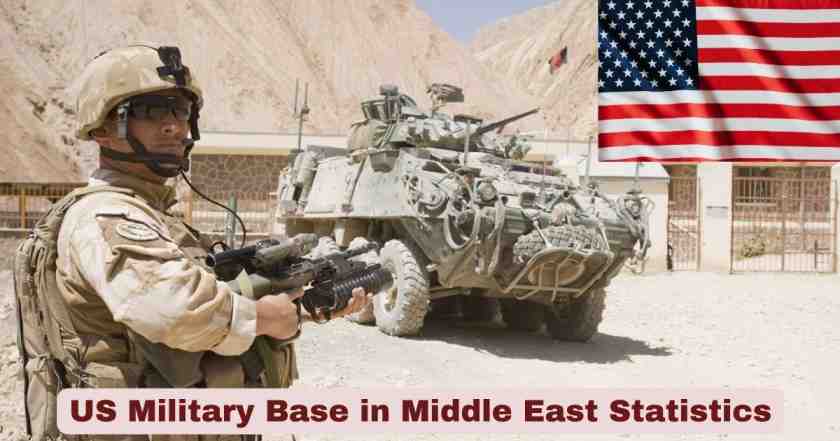
Military Bases of America in the Middle East 2026
The United States military presence in the Middle East in 2026 is not simply large — it is, by every measurable standard, the most operationally intense forward deployment America has maintained in the region since the 2003 invasion of Iraq. As of today, February 28, 2026, the United States has just launched joint strikes with Israel on Iranian nuclear facilities, Iranian ballistic missiles have been fired at Al Udeid Air Base in Qatar, and an American two-carrier armada of 14+ warships is positioned across the Persian Gulf, Arabian Sea, and Eastern Mediterranean — the largest concentration of US naval power in the Middle East since five carrier battle groups assembled at the outset of Operation Iraqi Freedom. Across at least 19 confirmed military sites in countries including Bahrain, Egypt, Iraq, Jordan, Kuwait, Qatar, Saudi Arabia, Syria, and the United Arab Emirates, the United States maintains the most sophisticated, heavily armed, and geographically dispersed military network on earth — one that has been in a state of active escalation since the Hamas attack of October 7, 2023, and which has now entered its most dangerous operational phase in over two decades.
Understanding the full statistical picture of US military bases in the Middle East in 2026 demands more than a simple base count. The 40,000 to 50,000 US troops spread across this network — up from roughly 30,000 before October 7, 2023 — are not static peacetime garrisons but actively engaged forces conducting daily combat sorties, naval intercepts, missile defense operations, counterterrorism raids, and intelligence collection missions in a threat environment where Iranian-allied militias, Houthi drone boats, and ballistic missiles represent a daily reality. The combined cost of US military operations in the Middle East in FY2025 alone — Operations Rough Rider and Midnight Hammer plus carrier deployments — is estimated at $4.8 to $7.2 billion according to the Costs of War Project at Brown University, on top of the $892.6 billion DoD FY2026 baseline budget. Eight of the 19 sites are classified as permanent bases by the Council on Foreign Relations — in Bahrain, Egypt, Iraq, Jordan, Kuwait, Qatar, Saudi Arabia, and the UAE — while the remaining 11 are “enduring” or contingency outposts capable of rapid scaling. All data in this article is drawn from official US government sources including CENTCOM, DVIDS, the Congressional Research Service, the Defense Manpower Data Center, DoD budget documents, CSIS, and verified reporting from Reuters, PBS, Al Jazeera, and Middle East Eye as of February 28, 2026.
Interesting Facts: US Military Bases in the Middle East 2026
| Fact | Statistic |
|---|---|
| Total US military sites in the Middle East | At least 19 confirmed sites |
| Permanent US bases in the Middle East | 8 permanent bases (Bahrain, Egypt, Iraq, Jordan, Kuwait, Qatar, Saudi Arabia, UAE) |
| US troops in Middle East (mid-2025) | ~40,000–50,000 service members |
| US troops in Middle East pre-Oct 7, 2023 | ~30,000 troops (baseline) |
| Peak troop level (Oct 2024) | ~43,000 troops |
| Largest US base in Middle East | Al Udeid Air Base, Qatar — ~10,000 troops |
| US ships in Middle East theater (Feb 2026) | 14+ warships including 2 aircraft carrier strike groups |
| USS Abraham Lincoln strike group | Arrived CENTCOM AOR January 26, 2026 (~5,700 service members) |
| USS Gerald R. Ford | En route / deployed February 13, 2026 (~5,000+ service members) |
| F-22 Raptors deployed to Israel (Feb 24, 2026) | 12 F-22s — first US offensive weapons deployed to Israel |
| F-15E Strike Eagles deployed to Jordan | ~35 F-15E Strike Eagles at Muwaffaq Salti AB |
| Houthi targets struck (Operation Rough Rider, Mar–May 2025) | 1,000+ targets destroyed (CENTCOM, May 2025) |
| Operation Rough Rider / Midnight Hammer cost (FY2025) | $4.8–$7.2 billion (Costs of War, Brown University) |
| CENTCOM AOR geographic scope | 25 countries, 4+ million square miles |
| MEAD-CDOC opened at Al Udeid | January 12, 2026 — integrates air defense of 17 nations |
| Al Udeid Iran missile strike | June 23, 2025 — 6 Fateh-313 missiles fired; Qatar intercepted all but 1 |
| NSA Bahrain evacuation | Feb 26, 2026 — reduced to <100 personnel; all ships left port |
| Combined Maritime Forces at NSA Bahrain | 47-nation multinational naval partnership |
| US annual military aid to region (Israel alone) | $21.7 billion in US assistance to Israel (FY2025, Costs of War estimate) |
| US CENTCOM commander | Admiral Brad Cooper (as of 2025) |
Source: Council on Foreign Relations June 2025; Al Jazeera Military Mapping, June 2025; Reuters Factbox, February 28, 2026; CSIS Analysis February 24, 2026; PBS NewsHour February 19–26, 2026; Wikipedia 2026 US Military Buildup in the Middle East; USNI News January 2, 2026; Costs of War Project, Brown University, October 2025; CENTCOM.mil; DVIDS NSA Bahrain February 2026; Middle East Eye February 2026
The headline number — 19 confirmed sites, 8 permanent bases, 40,000–50,000 troops — barely scratches the surface of what is happening on the ground in the Middle East as of today. The two-carrier armada now assembled in the region — comprising USS Abraham Lincoln and USS Gerald R. Ford, plus 14 surface warships total — is the largest US naval force in and around the Middle East since the five-carrier fleet that began Operation Iraqi Freedom in March 2003, according to CSIS analysis from February 24, 2026. The entire force is capable of launching 150–250 Tomahawk cruise missiles from Navy destroyers alone, with additional strike capacity from carrier-based F/A-18E Super Hornets, F-35C Lightning IIs, and long-range B-2 Spirit stealth bombers that struck Iranian nuclear facilities in June 2025 from Diego Garcia. What makes 2026 different from 2003 is not the scale — Operation Iraqi Freedom dwarfed current deployments — but the speed, precision, and layered joint nature of the force, which integrates air, naval, missile defense, cyber, and special operations capabilities from 19 bases in 9 countries simultaneously.
The $4.8 to $7.2 billion operational cost of just two major CENTCOM operations in FY2025 — Operation Rough Rider against the Houthis and Operation Midnight Hammer against Iran’s nuclear facilities — illustrates how quickly Middle East base operations translate into extraordinary expenditure. The MEAD-CDOC (Middle East Air Defense Combined Defense Operations Center) opened at Al Udeid on January 12, 2026 and now integrates missile defense from 17 nations — a direct response to the June 2025 Iranian missile attack on the base that destroyed a radome and validated fears about CENTCOM’s single-point-of-failure dependency on Al Udeid. The decision to evacuate NSA Bahrain to fewer than 100 personnel and remove all ships from port on February 26, 2026 — taking the same defensive posture used before the June 2025 Iran strikes — signals that the US military is actively managing its bases in the Middle East as potential combat targets, not merely as administrative installations.
Complete List: US Military Bases in the Middle East in 2026
| Base / Installation | Country | Branch | Troops (2025–2026) | Key Role & Status |
|---|---|---|---|---|
| Al Udeid Air Base | Qatar | USAF / CENTCOM | ~10,000 troops | Largest US base in Middle East; CENTCOM forward HQ; Combined Air Ops Center (CAOC); 2 runways; ~100 aircraft; MEAD-CDOC opened Jan 2026; struck by Iran June 2025 |
| Naval Support Activity (NSA) Bahrain | Bahrain | US Navy | ~8,500–9,000 DoD personnel | US 5th Fleet & NAVCENT HQ; 62 acres; 78 tenant commands; ~100 ship visits/year; evacuated Feb 26, 2026 |
| Camp Arifjan | Kuwait | US Army | ~13,500 troops | ARCENT forward HQ; largest logistics hub in region; constructed 1999; pre-positions APS-5 armor |
| Ali Al Salem Air Base (“The Rock”) | Kuwait | USAF | Part of Kuwait ~13,500 | 40 km from Iraqi border; 386th AEW; primary air mobility hub; also called Al Jaber |
| Camp Buehring | Kuwait | US Army | Part of Kuwait ~13,500 | Staging post for Iraq/Syria deployments; established 2003 |
| Al Dhafra Air Base | UAE (Abu Dhabi) | USAF | ~3,500–5,000 troops | 380th AEW; 10 flying squadrons; F-22 Raptors, F-35As, KC-10 tankers, RQ-170 stealth drones; shared with UAE Air Force |
| Jebel Ali Port (Dubai) | UAE | US Navy | Rotating vessels | Largest US Navy port of call in Middle East; not a formal military base but highest-value naval access point |
| Prince Sultan Air Base (PSAB) | Saudi Arabia | USAF / ARCENT | ~2,321–2,700 troops | 60 km south of Riyadh; Patriot batteries + THAAD; 53 F-16s + 22 KC-135s + E-3 AWACS on ramp (June 2025 satellite imagery); dispersal field |
| Eskan Village | Saudi Arabia | US Army / Intel | Part of Saudi ~2,700 | Training Saudi forces; missile defense intelligence; branded “legitimate target” by Iran |
| Muwaffaq Salti Air Base (Azraq) | Jordan | USAF | ~3,000–3,800 troops | 332nd AEW; 100 km NE of Amman; $143 million in US upgrades since 2018; ~35 F-15E Strike Eagles deployed Feb 2026 |
| Camp Titin / Al-Azraq | Jordan | US Army | Part of Jordan total | Training Jordanian forces; border/counterterrorism support |
| Tower 22 (Al-Tanf area) | Jordan (near Syrian border) | US Army | ~250–350 troops | Drone strike target (Jan 2024, 3 US soldiers KIA); remote desert outpost; IOB |
| Ain Al Asad Air Base | Iraq (Anbar Province) | Multi-branch | ~2,500 troops | Largest US base in Iraq; struck by Iranian missiles Jan 2020; C-RAM battery activated June 2025 |
| Erbil Air Base (Al Harir) | Iraq (Kurdistan) | Multi-branch | Part of Iraq ~2,500 | Training/ISR hub; supports Kurdish and Iraqi forces; counterterrorism ops |
| Al-Tanf Garrison | Syria | US Army / SOCOM | ~200–900 troops | 55-km deconfliction zone; blocks Iran–Hezbollah ground corridor; US-Syrian normalization underway (May 2025) |
| MFO North Camp (Task Force Sinai) | Egypt (Sinai) | US Army | ~700 rotational troops | MFO peacekeeping; Zone C monitoring; US-led since 1982 |
| Camp As Sayliyah | Qatar | US Army | Part of Qatar total | Primary Army logistics installation in theater; ARCENT equipment pre-positioning |
| Isa Air Base | Bahrain | USAF | Part of Bahrain total | Significant US Air Force presence; joint operations with Bahraini Air Force |
| Incirlik Air Base | Turkey | USAF | ~1,465 US troops | NATO base; hosts US nuclear warheads; contributed to anti-ISIS coalition; not in CENTCOM AOR but operationally linked |
Source: Council on Foreign Relations June 2025; Al Jazeera Military Mapping June 2025; Reuters Factbox February 28, 2026; Jerusalem Post February 2026; Middle East Eye February 2026; WorldAtlas June 2025; Shafaq News June 2025; Modern Diplomacy February 28, 2026; CSIS February 24, 2026; Wikipedia 2026 US Military Buildup in the Middle East; Costs of War Brown University October 2025; CENTCOM.mil; USNI News
The geographic spread of these 19 installations — from the Sinai Peninsula in Egypt to the shores of the Persian Gulf — forms an interlocking, overlapping network of air power, naval presence, logistics capacity, and intelligence collection that no single adversary can neutralize without striking multiple countries simultaneously. Al Udeid in Qatar is the command brain, NSA Bahrain is the naval spine, Camp Arifjan in Kuwait is the logistics muscle, and Al Dhafra in the UAE is the intelligence eye — each base performing a specialized function that makes it indispensable to the overall CENTCOM architecture. The February 2026 surge has added F-22 Raptors at Ovda Airbase in Israel (the first-ever deployment of US offensive weapons on Israeli soil), ~35 F-15E Strike Eagles at Muwaffaq Salti in Jordan, and additional THAAD batteries across multiple Gulf locations — distributing air power to reduce the single-point vulnerability exposed by the June 2025 missile strike on Al Udeid.
What the table also reveals is the extraordinary diversity of access arrangements underlying this presence. Qatar’s Al Udeid was built with $1 billion of Qatari investment and recently extended for another 10 years in a deal confirmed by CNN. NSA Bahrain sits on the site of a former British Royal Navy base, HMS Jufair, transferred to the US in 1971 — making it one of the oldest continuously occupied Western military sites in the Gulf. Camp Buehring in Kuwait was established during the 2003 Iraq War and has never closed. And Tower 22 in Jordan’s northeast desert — the remote outpost where three US soldiers were killed in an Iranian-backed drone strike in January 2024 — illustrates how dangerous even the smallest and most obscure installations have become in the current threat environment. Every dot on this map is a potential target in 2026, not just a logistical convenience.
US Troops by Country in the Middle East in 2026
| Country | US Troops (2025–2026) | Primary Base(s) | Key Mission |
|---|---|---|---|
| Kuwait | ~13,500 troops | Camp Arifjan, Ali Al Salem AB, Camp Buehring | Logistics HQ; armor pre-positioning; Iraq/Syria staging |
| Qatar | ~10,000 troops | Al Udeid AB, Camp As Sayliyah | CENTCOM forward HQ; air operations command; Army logistics |
| Bahrain | ~8,500–9,000 DoD personnel | NSA Bahrain, Isa Air Base | 5th Fleet HQ; Gulf maritime security; Combined Maritime Forces |
| United Arab Emirates | ~3,500–5,000 troops | Al Dhafra AB, Jebel Ali Port | ISR; stealth aircraft ops; Navy port access |
| Jordan | ~3,000–3,800 troops | Muwaffaq Salti AB, Camp Titin, Tower 22 | 332nd AEW; Levant strike missions; counterterrorism |
| Saudi Arabia | ~2,321–2,700 troops | Prince Sultan AB, Eskan Village | Air and missile defense; F-16/KC-135 surge capacity |
| Iraq | ~2,500 troops | Ain Al Asad AB, Erbil AB | NATO training; anti-ISIS operations; force protection |
| Syria | ~200–900 troops | Al-Tanf Garrison | Counter-ISIS; Iran logistics disruption; US-Syria normalization ongoing |
| Egypt | ~700 rotational + 188 permanent | MFO North Camp (Sinai), Cairo West AB access | MFO peacekeeping; Suez Canal access; Bright Star exercises |
| Turkey | ~1,465 troops | Incirlik Air Base | NATO nuclear host; anti-ISIS coalition logistics |
Source: Al Jazeera Military Mapping June 2025; Middle East Eye February 2026; WION News 2025; Reuters February 28, 2026; Council on Foreign Relations June 2025; WorldAtlas June 2025; Shafaq News June 2025; DMDC March 2025; CRS RL33003 February 2026; Wikipedia 2026 US Buildup
Kuwait’s 13,500 troops make it the single largest US military concentration in any Middle East country, a fact that surprises many observers who assume Qatar or Bahrain — home to CENTCOM and the Fifth Fleet respectively — host the most Americans. Kuwait’s dominance reflects its historic role as the primary logistics, pre-positioning, and staging platform for the entire CENTCOM theater — the country through which the majority of Army equipment, vehicles, and ammunition flows to Iraq, Syria, Jordan, and beyond. Camp Arifjan alone houses the forward headquarters of US Army Central (ARCENT), the Army component of CENTCOM, and pre-positions the APS-5 (Army Pre-Positioned Stock-5) equipment sets — enough to rapidly equip heavy armored formations without requiring sealift from the continental United States. Kuwait’s government has invested over $200 million in constructing and maintaining US military facilities, reflecting the unambiguous strategic calculus of a small country with only 25,000 total armed forces personnel that views American military presence as its ultimate security guarantee.
Qatar’s 10,000 troops at Al Udeid represent the command-and-intelligence apex of the American Middle East presence, not just its largest individual base by personnel. The Combined Air Operations Center (CAOC) at Al Udeid is the single most sophisticated air command-and-control facility in the US military’s forward-deployed inventory, coordinating hundreds of aircraft sorties daily across Iraq, Syria, the Gulf, and beyond — and it is the facility from which Operation Midnight Hammer’s B-2 strikes on Iranian nuclear facilities were coordinated in June 2025. The MEAD-CDOC opened at Al Udeid on January 12, 2026 now integrates missile defense data from 17 nations in real time — a landmark multilateral air defense architecture that has no precedent in the region’s history and was built directly in response to the existential vulnerability demonstrated by the Iranian missile strike on Al Udeid in June 2025.
Al Udeid Air Base in Qatar Statistics 2026
| Metric | Figure | Source |
|---|---|---|
| Established | 1996 | Wikipedia Al Udeid; Al Jazeera |
| Location | Southwest of Doha, Qatar | CENTCOM / Wikipedia |
| Size / Area | 24 hectares (59–60 acres) | Al Jazeera; Jerusalem Post |
| Runway length | 12,303 feet (~2.3 miles / 3.75 km) | The World Data (2026) |
| US troops stationed | ~10,000 US and coalition forces | CFR June 2025; Al Jazeera |
| Aircraft capacity | ~100 aircraft + drones | Al Jazeera; Gulf News |
| Commands hosted | CENTCOM forward HQ; AFCENT HQ; 379th AEW; CAOC; RAF 83 EAG | Wikipedia Al Udeid |
| Qatar’s investment in base | Over $1 billion (construction) | CNN; Al Jazeera |
| US MCAF construction contracts | $100+ million | Wikipedia Al Udeid |
| Base agreement extension | 10-year extension (confirmed 2024, not publicly announced) | CNN January 2024 |
| Iran missile attack | June 23, 2025 — Fateh-313 ballistic missiles; 1 impacted; radome destroyed | Wikipedia; CFR; Middle East Eye |
| Partial evacuation (Jan 2026) | “Hundreds” of personnel relocated; 6 KC-135 tankers departed | Middle East Forum January 2026 |
| MEAD-CDOC opened | January 12, 2026 — 17-nation air defense integration cell | CENTCOM.mil; Jerusalem Post |
| Trump visit | May 15, 2025 | Reuters; Al Jazeera |
| Peak operational sorties | Up to 800 sorties/day (peak Iraq/Afghanistan ops) | The World Data (2026) |
| KC-135 annual fuel offload | 300+ million pounds of fuel/year | The World Data (2026) |
| CAOC construction cost | $60 million (made fully operational February 2003) | The World Data (2026) |
Source: Wikipedia Al Udeid Air Base; Al Jazeera June 2025; Gulf News June 2025; Council on Foreign Relations June 2025; CNN January 2024; Middle East Forum January 2026; CENTCOM.mil January 2026; The World Data US Military Base in Qatar 2026; Reuters May 2025
Al Udeid Air Base is, without qualification, the most strategically important American military installation in the Middle East — and arguably the most critical US overseas base on earth given CENTCOM’s geographic remit. The base’s 12,303-foot runway is long enough to simultaneously handle B-2 Spirit stealth bombers, C-17 Globemaster strategic airlifters, KC-135 Stratotankers, F-35C fighter jets, and MQ-9 Reaper drones — a runway length that not even many US domestic air force bases can match. Qatar’s original $1 billion investment to construct world-class facilities during the 1990s — at a time when Qatar had virtually no air force of its own — reflected a strategic vision of “build it and they will come” that proved spectacularly prescient after September 11, 2001 made Central Asian basing operations critical and existing Saudi facilities politically untenable. By 2003, Al Udeid had replaced Prince Sultan Air Base in Saudi Arabia as CENTCOM’s primary air hub, a shift that has never been reversed.
The June 23, 2025 Iranian missile strike on Al Udeid marked a genuine inflection point in the base’s history. The Fateh-313 ballistic missile that struck the facility destroyed a white radome containing American secure communications equipment — the first direct hit on a US military base in the Gulf by Iranian forces since the January 2020 missile strikes on Ain Al Asad. The strike forced Qatar to close its airspace for six hours and triggered the partial evacuation of Al Udeid on January 14, 2026, when hundreds of personnel were relocated to hotels in Doha and six KC-135 tankers departed as defensive pre-positioning. The opening of MEAD-CDOC on January 12, 2026 — a 17-nation missile defense coordination cell — represents the direct institutional response to this vulnerability, distributing air defense decision-making authority and sensor data across a coalition architecture that makes any future Iranian strike far harder to execute without triggering simultaneous multi-national countermeasures.
NSA Bahrain & US Fifth Fleet — Detailed Statistics 2026
| Metric | Figure | Source |
|---|---|---|
| Full name | Naval Support Activity Bahrain | Wikipedia NSA Bahrain |
| Established (US presence) | WWII era; transferred from UK in 1971 | Wikipedia NSA Bahrain |
| Location | Al Jufayr (Juffair), Manama, Bahrain | Wikipedia |
| Base size | 62 acres | Military Base Guides; The World Data |
| Total DoD personnel | 8,500 (7,600 military + ~900 civilians) | Military Base Guides; The World Data |
| Family members | ~1,200 family members on base | Military Base Guides |
| Tenant commands | 78 tenant commands | Military Base Guides; The World Data |
| Ship visits per year | ~100 annual ship visits | Military Base Guides |
| 5th Fleet AOR | ~2.5–3.2 million square miles | Wikipedia 5th Fleet; DVIDS |
| 5th Fleet AOR countries | ~20 countries | Wikipedia 5th Fleet |
| Combined Maritime Forces nations | 47 nations | DVIDS February 2026 |
| $580M expansion (2010–2015) | 5-year project; essentially doubled base size | Wikipedia NSA Bahrain |
| Mina Salman Pier upgrade | $49 million (2021); 50% more berthing capacity | Military Base Guides |
| Annual economic impact on Bahrain | $500+ million/year | Military Base Guides |
| February 26, 2026 status | Reduced to <100 mission-critical personnel; all ships left port | Wikipedia 2026 Buildup; Fox News |
| DoD Installation Excellence Award | 2021 Commander in Chief’s Annual Award | Wikipedia NSA Bahrain |
| Readiness transition (Oct 1, 2025) | Shifted to continuous 36-month certification cycle (Category I) | DVIDS November 2025 |
| Next HQ Sustainment Validation | Tentatively May 2026 | DVIDS November 2025 |
Source: Wikipedia Naval Support Activity Bahrain; Wikipedia United States Fifth Fleet; Military Base Guides Bahrain; The World Data American Military Base in Bahrain 2026; DVIDS NSA Bahrain February 2026; DVIDS NAVCENT/5th Fleet; Reuters February 28, 2026; Wikipedia 2026 US Military Buildup
NSA Bahrain has been described as the “busiest 62 acres in the world” — a claim that is difficult to dispute when you consider that 78 distinct tenant commands operate from a facility smaller than many suburban shopping malls. The Fifth Fleet’s 2.5 to 3.2 million square mile area of responsibility — encompassing the Persian Gulf, Red Sea, Arabian Sea, and parts of the Indian Ocean — is monitored and secured from this single 62-acre plot in Manama. The $580 million expansion project completed between 2010 and 2015 essentially doubled the base’s physical footprint, adding a new harbor patrol facility, small-craft basin, barracks, a dining facility for thousands, and the Mina Salman Pier flyover bridge connecting NSA Bahrain’s main campus to its port facility. The 2021 $49 million Mina Salman Pier upgrade added 50% more berthing capacity for warships, enabling the base to accommodate the surge of Arleigh Burke-class destroyers, littoral combat ships, and patrol vessels now cycling through the Gulf on high-tempo operations.
The dramatic February 26, 2026 drawdown — in which the US Fleet Headquarters was reduced to fewer than 100 mission-critical personnel and all US ships left Bahrain port, confirmed by Fox News and satellite imagery — represents the starkest single indicator of how serious the threat environment has become. This is the exact same defensive posture the US adopted in 2025 ahead of Operation Midnight Hammer — the June 2025 strikes on Iranian nuclear facilities — meaning the US military is now effectively preparing its Gulf bases for the same level of Iranian retaliation that followed those strikes. The Combined Maritime Forces’ 47-nation coalition, headquartered at NSA Bahrain, now includes the most diverse multinational naval partnership ever assembled in the Gulf, reflecting the broad international recognition that Houthi drone attacks on Red Sea shipping and Iranian threats to close the Strait of Hormuz represent threats to global commerce that transcend any single nation’s security interests.
US Military Bases Kuwait — Detailed Statistics 2026
| Metric | Figure | Source |
|---|---|---|
| Total US troops in Kuwait | ~13,500 troops | Middle East Eye; WorldAtlas June 2025 |
| Camp Arifjan established | 1999 (operational 2002) | Al Jazeera; The World Data |
| Camp Arifjan location | ~55 km southeast of Kuwait City | Al Jazeera; Jerusalem Post |
| Camp Arifjan role | ARCENT forward HQ; primary regional logistics & supply hub | Al Jazeera; Jerusalem Post |
| APS-5 pre-positioning | Heavy armor, vehicles, ammunition for rapid deployment | ARCENT documentation |
| Ali Al Salem AB location | ~40 km (25 miles) from Iraqi border | Jerusalem Post; Reuters |
| Ali Al Salem AB nickname | “The Rock” (isolated desert environment) | Jerusalem Post; Reuters |
| Ali Al Salem AB wing | 386th Air Expeditionary Wing | US Air Force |
| Camp Buehring established | 2003 (Iraq War staging base) | Jerusalem Post; US Army.mil |
| Camp Buehring role | Staging post for Iraq and Syria deployments | Jerusalem Post; US Army website |
| Kuwait host nation investment | Over $200 million in US facility construction | The World Data |
| Kuwait total armed forces | ~25,000 total (making US presence critical) | The World Data |
| US Kuwait Military Cooperation | Defense Cooperation Agreement in place | US Embassy Kuwait |
| Kuwait troop level vs. Iraq+Syria combined | 13,500 vs. ~3,400 — Kuwait exceeds combined total | The World Data |
Source: Al Jazeera June 2025; Middle East Eye February 2026; Jerusalem Post February 2026; Reuters February 28, 2026; WorldAtlas June 2025; The World Data US Military Base in Kuwait 2026; US Army.mil
Kuwait’s three major US installations — Camp Arifjan, Ali Al Salem Air Base, and Camp Buehring — form the most complete, integrated ground and air logistics complex the US military operates anywhere in the Middle East. What makes the 13,500-troop Kuwait presence uniquely valuable compared to Qatar’s larger 10,000-troop, single-base concentration is its functional diversity: Arifjan handles logistics and command, Ali Al Salem handles air mobility, and Camp Buehring handles rotational staging — three distinct mission sets from three distinct locations, creating a resilient operational architecture that is far harder to disrupt than a single large base. The APS-5 equipment sets pre-positioned at Arifjan mean that armored formations can deploy from Kuwait with tanks, artillery, and armored personnel carriers waiting for them, eliminating the 30–60 day sealift requirement that would otherwise apply — a capability that compresses crisis response timelines from months to days.
Ali Al Salem’s nickname “The Rock” — reflecting its stark, isolated desert environment roughly 40 km from the Iraqi border — captures something important about the psychological and operational reality of US basing in Kuwait. This is not a garrison in a comfortable allied capital; it is a combat-oriented installation positioned specifically for rapid offensive or defensive action across the northern Kuwait border into Iraq, or down the Gulf coast. The 386th Air Expeditionary Wing at Ali Al Salem operates C-17 Globemasters, KC-135 Stratotankers, and combat search-and-rescue assets that are the daily workhorses of CENTCOM airlift across the entire theater. When US troops rotate into and out of Iraq and Syria, they pass through either Ali Al Salem’s airhead or Arifjan’s logistics pipeline — making Kuwait not just a stationing location but the physical circulatory system of American military operations in the Middle East.
2026 US Military Buildup Timeline — Middle East Crisis Escalation
| Date / Period | Event | US Military Action / Deployment |
|---|---|---|
| Oct 7, 2023 | Hamas attack on Israel | US deploys 2 carrier strike groups to E. Mediterranean & Arabian Sea |
| Late 2023–2024 | Houthi Red Sea shipping attacks begin | Operation Prosperity Guardian launched; 34-nation coalition assembled at NSA Bahrain |
| Jan 2024 | Tower 22 drone strike (Jordan) | 3 US soldiers KIA — largest US military loss in Middle East since 2020 |
| Oct 2024 | Iran–Israel direct missile/drone exchange | US peak troop level ~43,000; 4 additional aircraft squadrons deployed |
| Early 2025 | Trump second term begins | Operation Rough Rider launched March 15, 2025; 2 carrier groups deployed |
| Mar 15–May 6, 2025 | Operation Rough Rider (Yemen/Houthis) | 1,000+ Houthi targets struck; 75+ Tomahawk missiles; cost $4.8–7.2B |
| May 6, 2025 | US-Houthi ceasefire | Ceasefire ends Rough Rider; Houthis agree to stop attacking US ships |
| Jun 21, 2025 | Operation Midnight Hammer — Iran nuclear strikes | B-2 bombers + naval assets strike 3 Iranian nuclear facilities from Diego Garcia |
| Jun 23, 2025 | Iran retaliates — Al Udeid missile strike | 6 Fateh-313 missiles fired at Al Udeid; 1 hits; radome destroyed; Qatar intercepts others |
| Jul–Dec 2025 | Post-Midnight Hammer de-escalation | USS Gerald R. Ford reassigned to Caribbean (Operation Southern Spear) |
| Dec 28, 2025 | Iran currency collapse; protests erupt | Iran crackdown kills 3,117–6,126+; Trump says “help is on the way” |
| Jan 8, 2026 | Iran cuts internet; protest crackdown | US begins new buildup; Trump demands “decisive military options” |
| Jan 12, 2026 | MEAD-CDOC opens at Al Udeid | 17-nation missile defense integration cell established |
| Jan 14, 2026 | Al Udeid partial evacuation | Hundreds relocated; 6 KC-135s depart as precautionary measure |
| Jan 26, 2026 | USS Abraham Lincoln arrives in CENTCOM AOR | ~5,700 additional personnel; F/A-18Es, F-35Cs, EA-18Gs embarked |
| Feb 3, 2026 | IRGCN attempts to board US tanker in Hormuz | USS McFaul escorts M/V Stena Imperative to safety; F-35C shoots down Iranian drone |
| Feb 13, 2026 | USS Gerald R. Ford en route | Two-carrier deployment — first since OIF 2003 level of naval presence |
| Feb 19, 2026 | 14 US ships confirmed in region | Largest naval armada in Middle East since 2003 (CSIS) |
| Feb 24, 2026 | 12 F-22s deployed to Ovda AB, Israel | First US offensive weapons deployed to Israel |
| Feb 26, 2026 | NSA Bahrain evacuated; all ships leave port | Defensive posture — same protocol as pre-Midnight Hammer 2025 |
| Feb 28, 2026 | US-Israel joint strikes on Iran; Iran retaliates | Iranian missiles fired at Al Udeid — active ongoing military confrontation |
Source: Wikipedia 2026 US Military Buildup in the Middle East; CSIS February 24, 2026; PBS NewsHour February 19–26, 2026; USNI News January 2, 2026; Al Jazeera June 2025; CFR June 2025; Costs of War Brown University October 2025; CENTCOM.mil; Reuters February 28, 2026; Middle East Forum January 2026; Fox News February 26, 2026; Wall Street Journal February 2026
The 2023–2026 escalation timeline is the single most important context for understanding the current state of US military bases in the Middle East. What began as a deterrence posture following the October 7, 2023 Hamas attack has evolved through three distinct phases — deterrence (late 2023–2024), active combat operations (2025), and direct US-Iran confrontation (2026) — each one pulling more American military assets into the theater and placing more of the region’s bases under direct threat of attack. The Tower 22 drone strike of January 2024, which killed three American soldiers in the most significant US military casualty event in the Middle East since 2020, demonstrated that even the most remote and underpublicized American installations are now targeted by Iranian proxy networks. The Operation Midnight Hammer strikes of June 21, 2025 marked the first direct US military attack on Iranian territory in history, crossing a threshold that has fundamentally altered the threat calculus for every American base from Bahrain to Jordan.
February 28, 2026 — today’s date — represents the most kinetically dangerous single day for US military bases in the Middle East since January 8, 2020, when Iran fired 16 ballistic missiles at Ain Al Asad Air Base following the killing of General Soleimani. The two-carrier armada now in theater (USS Abraham Lincoln + USS Gerald R. Ford, with potentially USS George H.W. Bush preparing to follow), the 12 F-22s at Ovda in Israel, the ~35 F-15Es at Muwaffaq Salti in Jordan, and the THAAD batteries reinforcing Gulf bases collectively represent a force package that CSIS describes as “capable of punitive strikes on Iran and protection of US allies and partners in the region” — but also one that makes every US base in the Middle East a potential target for Iranian retaliation at the highest sustained tempo since the Iraq War.
US Naval Assets in the Middle East Theater — February 2026
| Asset / Vessel | Type | Location / Status | Capability |
|---|---|---|---|
| USS Abraham Lincoln (CVN-72) | Nuclear aircraft carrier | CENTCOM AOR (arrived Jan 26, 2026) | F/A-18E Super Hornets, F-35C, EA-18G Growlers, E-2 Hawkeyes; ~5,700 crew |
| USS Gerald R. Ford (CVN-78) | Nuclear aircraft carrier (world’s largest) | En route / deployed Feb 13, 2026 | Most advanced carrier in US fleet; ~5,000+ personnel |
| USS McFaul (DDG-74) | Arleigh Burke-class guided-missile destroyer | Strait of Hormuz / Arabian Sea | Tomahawk missiles; escorted M/V Stena Imperative Feb 3, 2026 |
| USS Delbert D Black (DDG-119) | Arleigh Burke-class destroyer | CENTCOM forces (per US Navy, The War Zone) | Tomahawk cruise missiles; additional Centcom destroyer |
| USS Canberra (LCS-30) | Littoral Combat Ship | NSA Bahrain / Persian Gulf | First of 4 new LCSs; mine countermeasures; drone boat interception |
| 3 specialist ships at Bahrain | Combat-specialist vessels | NSA Bahrain (pre-evacuation) | Patrol, mine counter, force protection |
| 2 destroyers near Souda Bay (Greece) | Arleigh Burke-class | Souda Bay, Crete | Ready to transit to CENTCOM AOR |
| Additional destroyer (Red Sea) | Arleigh Burke-class | Red Sea | Red Sea corridor security; Houthi deterrence |
| Total US ships in/around Middle East | ~14+ warships | Gulf, Arabian Sea, Red Sea, E. Mediterranean | 150–250 Tomahawk missiles combined; largest fleet since OIF 2003 |
Source: PBS NewsHour February 19, 2026; CSIS February 24, 2026; Middle East Eye February 2026; Wikipedia 2026 US Military Buildup; Military Base Guides Bahrain; The War Zone / USNI News 2026; Wall Street Journal February 2026
The 14-ship armada currently assembled in and around the Middle East is a force package without modern precedent in this region outside of wartime operations. USS Abraham Lincoln — the carrier on which President George W. Bush famously declared “Mission Accomplished” in May 2003 — is now operating in the Arabian Sea with a full complement of F-35C Lightning IIs and F/A-18E Super Hornets, while USS Gerald R. Ford, the world’s most advanced and expensive aircraft carrier, is steaming to reinforce it. The combined strike capacity of two carrier air wings plus 13 destroyer-class vessels represents an ability to launch hundreds of precision munitions simultaneously — 150–250 Tomahawk cruise missiles from destroyers alone, plus air-launched weapons from two carrier air wings and long-range B-2 bombers that can reach from Diego Garcia without refueling.
What is particularly notable about the February 2026 naval posture is its defensive architecture as much as its offensive capability. The evacuation of NSA Bahrain on February 26, 2026 — moving all ships out of port and reducing base personnel to fewer than 100 — is a deliberate reduction of vulnerability in the most geographically exposed of America’s Middle East bases. By dispersing naval assets away from a fixed, known location in Bahrain’s harbor and positioning them at sea where they have far greater maneuverability and self-defense options, the US military is applying the hard lessons of the June 2025 Al Udeid missile strike. The same dispersal logic drove the deployment of F-22s to Ovda in Israel rather than concentrating them at existing Gulf bases that Iranian planners already have targeting data for — a doctrine of distributed lethality that represents the future of how America intends to operate from its Middle East base network under threat.
US Air Power in the Middle East Theater — February 2026
| Aircraft / Asset | Quantity (Feb 2026) | Location | Mission |
|---|---|---|---|
| F-35C Lightning II | Deployed with Abraham Lincoln CSG | Arabian Sea / CENTCOM AOR | Stealth strike; F-35C shot down Iranian drone Feb 3, 2026 |
| F-35A Lightning II | Deployed at Al Dhafra AB (UAE) | Al Dhafra, UAE | Stealth strike; advanced ISR |
| F-22 Raptor (stealth) | 12 jets (deployed Feb 24, 2026) | Ovda AB, Israel | First US offensive weapons in Israel; air superiority |
| F-15E Strike Eagle | ~35 jets | Muwaffaq Salti AB, Jordan | Strike missions in Levant; relocated from RAF Lakenheath |
| F/A-18E Super Hornet | ~60–70 (2 carrier air wings) | USS Abraham Lincoln + USS Gerald R. Ford | Multi-role strike; primary carrier strike aircraft |
| EA-18G Growler | Deployed with Abraham Lincoln | Arabian Sea | Electronic warfare; air defense suppression |
| F-16 Fighting Falcon | 53 jets (per June 2025 satellite imagery) | Prince Sultan AB, Saudi Arabia | Multi-role fighter; PSAB dispersal field |
| KC-135 Stratotanker | 22 jets at PSAB + surge numbers at Al Udeid | PSAB (Saudi Arabia); Al Udeid (Qatar) | Aerial refueling; extends all fighter range |
| E-3 AWACS Sentry | Multiple at PSAB and Al Udeid | Saudi Arabia; Qatar | Airborne early warning and control |
| B-2 Spirit (stealth bombers) | Deployed to Diego Garcia (March 2025 confirmed) | Diego Garcia, British Indian Ocean Territory | Struck Iranian nuclear facilities June 2025; range: global |
| RC-135W Rivet Joint | Deployed to Qatar | Al Udeid AB, Qatar | Electronic intelligence; radar/comms monitoring |
| RQ-170 Sentinel drone | At Al Dhafra AB | UAE | Stealth reconnaissance; Iran monitoring |
| MQ-9 Reaper drones | Multiple at Al Udeid and Jordan | Qatar; Jordan | Strike/ISR; counterterrorism |
| E-2 Hawkeye | Deployed with Abraham Lincoln | Arabian Sea | Carrier-based early warning and control |
Source: PBS NewsHour February 19, 2026; CSIS February 24, 2026; Wikipedia 2026 US Military Buildup; WorldAtlas June 2025; Al Jazeera June 2025; Middle East Eye February 2026; Reuters February 28, 2026; BBC February 2026; AFCENT January 5, 2026
The air power package assembled across US military bases in the Middle East in 2026 is arguably the most technologically sophisticated combat air armada ever assembled in a single regional theater, combining 5th-generation stealth fighters (F-22, F-35A, F-35C) with electronic warfare jets (EA-18G), airborne early warning (E-3, E-2), and stealth bombers (B-2) within striking distance. The concentration of 53 F-16 fighters and 22 KC-135 tankers at Prince Sultan Air Base in Saudi Arabia — confirmed by satellite imagery in June 2025 — represents a deliberate dispersal strategy designed so that any Iranian attempt to neutralize CENTCOM’s air power in Qatar cannot succeed without simultaneously striking bases in three different countries: Qatar, Saudi Arabia, and the UAE. The RQ-170 Sentinel stealth drones operating from Al Dhafra — the same aircraft type that conducted CIA surveillance over Osama bin Laden’s Abbottabad compound before the 2011 raid — provide a persistent, low-observable intelligence collection capability over Iranian territory that no other platform can replicate.
The F-15E Strike Eagle surge at Muwaffaq Salti in Jordan — with approximately 35 jets relocated from RAF Lakenheath in the UK according to open-source flight trackers — transforms this relatively small base into one of the most powerful tactical air platforms in the region. Muwaffaq Salti received $143 million in US infrastructure upgrades since 2018, including new aprons for special operations helicopters and ISR drones, and the 332nd Air Expeditionary Wing that calls it home has been continuously engaged in Levant strike and surveillance missions for years. The simultaneous stationing of F-22 Raptors at Ovda in Israel — the first deployment of US offensive weaponry on Israeli soil — marks the most dramatic single escalation in the US military’s physical presence in Israel since the permanent THAAD battery deployment of October 2023, and signals that the partnership between Israeli and American air power has reached a new threshold of operational integration that previous administrations avoided for political reasons.
Disclaimer: The data reports published on The Global Files are sourced from publicly available materials considered reliable. While efforts are made to ensure accuracy, no guarantees are provided regarding completeness or reliability. The Global Files is not liable for any errors, omissions, or damages resulting from the use of these reports.