
What Is Mark 48 Torpedo?
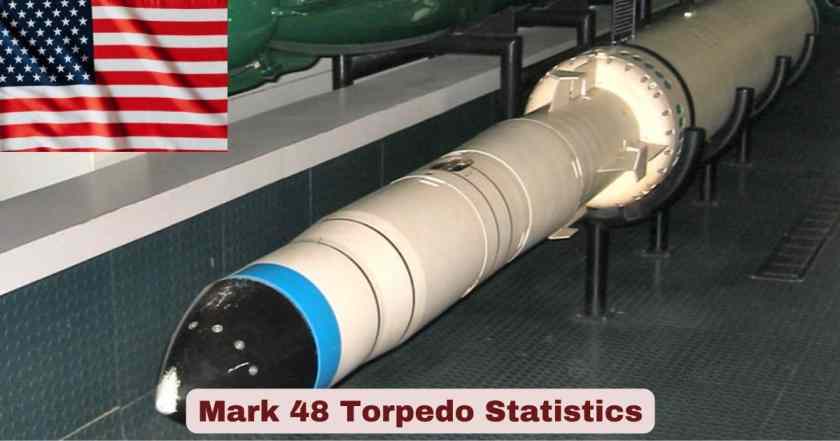
The Mark 48 heavyweight torpedo — designated MK 48 ADCAP (Advanced Capability) in its current production standard, with the Mod 7 CBASS (Common Broadband Advanced Sonar System) as the most advanced fielded variant — is the sole primary offensive weapon of every United States Navy submarine, a 21-inch (533mm), 19-foot, 3,520-pound underwater precision guided munition manufactured by Lockheed Martin at its Archbald, Pennsylvania production facility, designed to destroy fast, deep-diving nuclear submarines and high-performance surface ships at ranges of up to 38 miles, at speeds exceeding 55 knots, at depths exceeding 1,200 feet, with a 650-pound (295 kg) high-explosive warhead that detonates not by striking a target’s hull but by exploding beneath its keel, creating a massive gas cavitation bubble that lifts the ship’s hull and snaps its structural backbone in a fraction of a second. Operational since 1972 — when it replaced the Mark 37, Mark 14, and Mark 16 torpedoes as the U.S. Navy’s primary submarine weapon — the Mark 48 has been in continuous service for 54 years, continuously evolved through Mod 0 through Mod 7 variants spanning the full arc of the digital revolution in weapons electronics, and is today carried by every single class of U.S. Navy submarine: Los Angeles-class, Virginia-class, Seawolf-class fast-attack submarines and Ohio-class ballistic missile submarines, as well as Canadian, Australian, and Dutch allied submarines under Foreign Military Sale agreements.
The weapon’s guidance architecture is a layered, redundant system: before launch the firing submarine programs the torpedo with the target’s known position, course, and speed; during the run the operator can wire-guide the torpedo in real time via a thin fiber-optic dispenser wire that streams from the weapon’s afterbody, allowing course corrections, target switching, or abort commands; once the wire is severed or the weapon reaches firing range of the target, the AN/SQQ-89 equivalent onboard sonar transitions to fully autonomous active-passive acoustic homing, using the CBASS broadband sonar array to track the target’s acoustic signature through countermeasures, decoys, and the natural ambient noise of the ocean environment. The Mark 48’s digital guidance system was one of the earliest fielded applications of advanced digital signal processing in a tactical weapon — and its continued evolution over 54 years makes it one of the longest-running continuous weapons modernization programs in U.S. military history. As of March 2026, the program includes the active Liberator Project — a new containerized delivery system under development at the Naval Undersea Warfare Center Newport Division funded in the FY2026 budget — which aims to launch MK 48 ADCAP torpedoes from unmanned surface vessels (USVs) and containerized launch platforms, extending the weapon’s employment options beyond the submarine torpedo tube for the first time in its history.
On March 4, 2026, the Mark 48 torpedo made history of the kind that textbooks will record for decades. A U.S. Navy fast-attack submarine — operating silently in the Indian Ocean, approximately 40 nautical miles south of Galle, Sri Lanka — fired a single MK 48 ADCAP heavyweight torpedo into the keel of the Iranian Navy Moudge-class frigate IRIS Dena (hull number 75), a 1,500-ton warship carrying 180 crew and armed with anti-ship missiles, surface-to-air missiles, torpedoes, and a helicopter, sinking it with “immediate effect” according to Chairman of the Joint Chiefs of Staff Gen. Dan Caine, who confirmed the strike at a Pentagon press briefing on March 4 alongside Defense Secretary Pete Hegseth. Hegseth called it a “quiet death” — and in those two words captured the entire operational philosophy of submarine warfare and the torpedo weapon it relies on: no warning, no radar bloom, no missile exhaust trail, no opportunity for evasion or countermeasure, just the sudden, catastrophic detonation of a weapon that was already tracking for minutes before the crew of the IRIS Dena knew anything was happening. Gen. Caine’s exact words — “For the first time since 1945, a United States Navy fast attack submarine has sunk an enemy combatant ship using a single Mark 48 torpedo to achieve immediate effect, sending the warship to the bottom of the sea. This is an incredible demonstration of America’s global reach. To hunt, find and kill an out-of-area deployer is something that only the United States can do at this type of scale” — were spoken against the backdrop of video footage released by the U.S. Department of Defense showing the IRIS Dena’s stern lifted clean out of the water by the keel detonation, the ship breaking apart, and the wreck descending to the floor of the Indian Ocean. It was the first U.S. torpedo kill of an enemy vessel since USS Torsk (SS-423) sank a Japanese escort frigate on August 14, 1945 — the last torpedo kill of World War II — ending an 81-year gap in American submarine combat history with a single, perfectly executed Mark 48 shot from an unnamed fast-attack boat operating thousands of miles from any American base in waters the IRIS Dena’s crew believed were safe.
Mark 48 Torpedo 2026 — Key Facts
| # | Mark 48 Torpedo Key Fact | Details |
|---|---|---|
| 1 | First US Torpedo Kill Since WWII — IRIS Dena Sunk, March 4, 2026 | A U.S. Navy fast-attack submarine sank Iranian frigate IRIS Dena with a single MK 48 ADCAP torpedo in the Indian Ocean, 40nm south of Galle, Sri Lanka, on March 4, 2026 — confirmed by Defense Secretary Pete Hegseth and Gen. Dan Caine at Pentagon — the first U.S. torpedo kill since USS Torsk sank a Japanese escort on August 14, 1945 |
| 2 | “Quiet Death” — Hegseth Describes the MK-48 Strike | Defense Secretary Pete Hegseth called the Mark 48 strike “quiet death — the first sinking of an enemy ship by a torpedo since World War II. Like in that war, back when we were still the War Department, we are fighting to win” — Pentagon press briefing, March 4, 2026 |
| 3 | Gen. Caine: “Immediate Effect — Sending the Warship to the Bottom of the Sea” | Gen. Dan Caine, Chairman of the Joint Chiefs, confirmed: “For the first time since 1945, a United States Navy fast attack submarine has sunk an enemy combatant ship using a single Mark 48 torpedo to achieve immediate effect, sending the warship to the bottom of the sea” |
| 4 | Single MK-48 Costs $4.2 Million — Destroyed a $500M+ Warship | The Mark 48 ADCAP torpedo costs approximately $4.2 million per unit — confirmed by Fox News reporting on the March 4 strike — meaning a single $4.2M weapon destroyed a 1,500-ton Iranian frigate valued at hundreds of millions of dollars: one of the most cost-effective anti-ship strikes in naval history |
| 5 | MK-48 Operational Since 1972 — 54 Years Continuous US Navy Service | The Mark 48 entered U.S. Navy service in 1972, replacing the Mark 37, Mark 14, and Mark 16 torpedoes — and has been in continuous uninterrupted service for 54 years across every upgrade from Mod 0 through Mod 7 CBASS, the longest-serving primary offensive weapon of any major submarine fleet in the world |
| 6 | Carried by ALL US Navy Submarines — 50+ Hulls | The Mark 48 ADCAP is carried by every class of U.S. Navy submarine: Virginia-class, Los Angeles-class, Seawolf-class attack submarines and Ohio-class ballistic missile submarines — approximately 50 submarines in the active fleet plus Canadian, Australian, and Dutch allied boats |
| 7 | MK-48 Speed: 55+ Knots — Faster Than Any Ship on Earth | The Mark 48 ADCAP travels at 55+ knots (approximately 63 mph / 102 km/h) in transit mode — faster than any surface warship or submarine it is designed to engage, making speed-based evasion impossible once the weapon is within engagement range |
| 8 | MK-48 Range: Up to 38 Miles (61 km) — Fires From Complete Standoff Distance | Published technical sources confirm the Mark 48 ADCAP’s range at up to 38 miles (61 km) at transit speed — allowing the launching submarine to remain at complete standoff distance beyond the range of the target’s own weapons while the torpedo covers the engagement envelope autonomously |
| 9 | 650-lb Warhead Detonates BENEATH the Keel — Breaks Ship’s Back | The Mark 48’s 650-pound (295 kg) Mark 107 PBXN high-explosive warhead detonates not by striking the hull but by proximity fuze activation beneath the target’s keel — creating a vapor bubble that lifts and splits the vessel rather than penetrating its armor; visible in the DoD’s own periscope footage of the IRIS Dena strike |
| 10 | Wire-Guided + Autonomous Homing — Operator Controls Until Wire Cut | The MK 48 connects to the launching submarine via a thin guidance wire throughout its run — the operator can update targeting, correct course, or abort in real time — and if the wire is cut or lost, the torpedo automatically switches to fully autonomous active-passive CBASS acoustic homing |
| 11 | 1,263 Mk-48 Torpedoes Modernized Fleet-Wide Under Lockheed 5-Year CBASS Program | In 2011, the U.S. Navy awarded Lockheed Martin a five-year fleet-wide CBASS upgrade contract to modernize 1,263 MK-48 torpedoes across the entire submarine fleet — the most comprehensive single torpedo modernization program in U.S. Navy history |
| 12 | CBASS Mod 7 — Broadband Sonar — Defeats Shallow-Water Diesel Submarine Countermeasures | The CBASS (Common Broadband Advanced Sonar System) of the Mod 7 operates across a wide frequency band, enabling the torpedo to defeat the acoustic countermeasures — noisemakers, jammers, decoys — deployed by modern diesel-electric submarines in shallow, acoustically complex littoral waters |
| 13 | Project Liberator — FY2026 Funded — MK-48 to Launch from Unmanned Surface Vessels | The U.S. Navy’s Project Liberator, funded in the FY2026 budget, is developing a containerized delivery system to launch MK 48 ADCAP torpedoes from unmanned surface vessels (USVs) at the Naval Undersea Warfare Center Newport Division — the first time in the weapon’s history it will be employable from a non-submarine platform |
| 14 | Mk-48 Sank USS Ingraham FFG-61 in Live Weapons Test — Split 4,000-Ton Frigate in Half | During RIMPAC exercise testing, a Mark 48 ADCAP torpedo fired from USS Chicago (SSN-721) struck ex-USS Ingraham (FFG-61) — a 4,000-ton Oliver Hazard Perry-class frigate — lifting the ship’s center section clean out of the water and splitting it in half; this test photograph is among the most widely published images demonstrating the torpedo’s lethality |
| 15 | IRIS Dena Was Named “Soleimani” by Hegseth — Namesake of IRGC Commander Killed 2020 | Defense Secretary Hegseth identified the IRIS Dena as nicknamed “the Soleimani” — after IRGC Quds Force commander Qasem Soleimani, killed by a U.S. drone strike in January 2020 — adding historical and political resonance to the torpedo strike that ended the ship’s operational existence |
Source: Military Times / Defense News (militarytimes.com, March 4, 2026); USNI News (news.usni.org, March 4, 2026); Fox News – $4.2M torpedo article (foxnews.com, March 4, 2026); ABC News (abcnews.com, March 4, 2026); Military.com (military.com, March 4, 2026); The War Zone / TWZ (twz.com, March 4, 2026); Al Jazeera (aljazeera.com, March 4, 2026); Wikipedia – Sinking of IRIS Dena (updated March 4, 2026); U.S. Navy Fact File – MK-48 (navy.mil); Lockheed Martin – 5 Fast Facts About the MK-48 (lockheedmartin.com, 2025); Naval Technology – MK 48 Mod 7 CBASS (naval-technology.com); Naval News – Liberator Project (navalnews.com, July 15, 2025); Wikipedia – Mark 48 torpedo (updated March 4, 2026); NuclearCompanion.com – Mark 48 (January 2025)
These 15 Mark 48 torpedo key facts for 2026 document both the weapon’s 54-year technical evolution and the single combat moment that has permanently defined its legacy. The $4.2 million unit cost of the Mark 48 against the estimated hundreds of millions of dollars in acquisition and operational value of the IRIS Dena frigate is, in its own way, the most eloquent possible summary of why submarine-launched heavyweight torpedoes remain the most cost-effective ship-killing weapons in any navy’s inventory. An anti-ship missile fired from a surface ship or aircraft can be detected, tracked, and intercepted — the IRIS Dena herself was armed with Sayyad surface-to-air missiles that could theoretically engage such a threat. A keel-snapping torpedo fired from a submarine that was never detected, tracking silently through hundreds of feet of water, triggering a proximity fuze beneath the hull before the ship’s systems even classified the contact as hostile — that cannot be intercepted, cannot be jammed, and cannot be evaded. Thomas Shugart of CNAS told Fox News Digital: “The Mark 48 is one of the most lethal anti-ship weapons in the U.S. inventory” — and the video footage of the IRIS Dena breaking in half confirms it in the most direct possible terms.
The Project Liberator development funded in the FY2026 budget extends the Mark 48’s significance beyond the IRIS Dena moment into the future trajectory of undersea warfare. The concept — launching the most capable torpedo ever built from an unmanned surface vessel operating far forward in denied waters — addresses one of the U.S. Navy’s most pressing tactical challenges: getting heavy weapons into areas where the risk of deploying manned submarines is considered too high, or where distributed lethality requires weapons nodes spread across a theater more densely than available submarines can cover. A containerized MK-48 launcher on a USV operating in a contested strait or littoral zone is, in effect, an invisible submarine trap: the USV draws no attention, requires no periscope or communications mast, and can be placed months in advance of any conflict. The IRIS Dena was sunk by a manned nuclear submarine — but future Mark 48 kills may come from platforms that have no crew aboard at all, extending the weapon’s operational reach in ways its original 1960s designers could never have imagined.
Mark 48 Torpedo 2026 — Full Technical Specifications
| Specification | MK-48 Mod 4 | MK-48 Mod 5 ADCAP | MK-48 Mod 6 ACOT | MK-48 Mod 7 CBASS (Current) |
|---|---|---|---|---|
| IOC / Service Entry | 1981 (Mod 4 delivery) | 1988 | ~1997 | 2006 |
| Designation | Mark 48 Mod 4 | MK-48 ADCAP Mod 5 | MK-48 ADCAP ACOT Mod 6 | MK-48 ADCAP CBASS Mod 7 |
| Developer / Manufacturer | Gould Ocean Systems | Lockheed Martin (formerly Gould) | Lockheed Martin | Lockheed Martin |
| Diameter | 21 inches (533 mm) | 21 inches (533 mm) | 21 inches (533 mm) | 21 inches (533 mm) |
| Length | 19 feet (5.79 m) | 19 feet (5.79 m) | 19 feet (5.79 m) | 19 feet (5.79 m) |
| Weight (total) | ~3,400 lb | ~3,434 lb (1,558 kg) | ~3,434–3,520 lb | ~3,520 lb (1,597 kg) / 1,676 kg Naval Technology |
| Warhead | 650 lb HBX | 650 lb (295 kg) PBXN Mark 107 | 650 lb HE | 650 lb (292.5–295 kg) HE — Mark 107 PBXN |
| Exploder | Mark 21 | Mark 21 exploder + Mark 2 arming device | Same | Same |
| Fuze Type | Contact + proximity | Contact + long/short-range proximity | Same | Same |
| Detonation Position | Keel proximity | Beneath keel — keel-breaking proximity | Same | Same |
| Propulsion | Otto II liquid monopropellant piston | Otto II piston engine (high power) | Improved — reduced radiated noise | Pump-jet propulsor — ~15 rotor + 12 stator blades |
| Propulsion Fuel | Otto II | Otto II | Otto II | Otto Fuel II (liquid monopropellant) |
| Max Speed | 55+ knots | 55+ knots (transport) | 55+ knots | 55+ knots |
| Max Range | >5 miles official; ~38 miles published | Up to 38 miles (61 km) at low speed | Same | Same |
| Operating Depth | Deeper than predecessors — classified | >1,200 ft (365 m) | Same | >1,200 ft — exact depth classified |
| Guidance — Wire | Two-way TELCOM wire guidance | Same | Same | Same — fiber-optic wire |
| Guidance — Inertial | Gyro replaced by inertial | Digital inertial guidance | Improved | Same |
| Guidance — Sonar | Narrowband | Passive + active acoustic homing — 2D phased array | Advanced receiver — MODS noise reduction | CBASS — Common Broadband Advanced Sonar System |
| Sonar Frequency | Narrowband | Narrowband | Improved narrowband | Broadband — wide frequency range; counter-countermeasure optimized |
| Electronics | Early digital | Fully digital G&C — early signal processing | More memory; better performance | COTS commercial electronics; advanced signal processing; multi-band |
| Key Improvement | Deeper, faster; fire-and-forget added | All-digital; inertial; envelope expansion | Acoustic isolation; noise reduction | Broadband sonar; shallow-water optimization; defeat modern diesel ECM |
| Launch Mode | 21-inch tube — compressed air | Compressed air + Swim-out capability | Swim-out | Swim-out — exits tube under own power, no compressed air noise |
| Fire-and-Forget | Added Mod 4 | Yes | Yes | Yes — wire-guided preferred; autonomous if wire cut |
| Multi-Attack | Yes | Yes — multiple re-attack capability | Yes | Yes |
| Unit Cost | — | ~$3.0–3.5M (1988 dollars) | — | ~$4.2 million (2026 — Fox News confirmed) |
| Allied Operators | — | Australia, Canada, Netherlands | Same | Australia (Collins-class); Canada (Victoria-class); Netherlands (Walrus-class) |
Source: U.S. Navy Fact File – MK-48 (navy.mil); Naval Technology – MK 48 Mod 7 CBASS (naval-technology.com); Lockheed Martin – 5 Fast Facts About the MK-48 (lockheedmartin.com, 2025); NuclearCompanion.com – Mark 48 (January 2025); NavWeaps – Post-WWII US Torpedoes (navweaps.com); Wikipedia – Mark 48 torpedo (updated March 4, 2026); Fox News – $4.2M torpedo (foxnews.com, March 4, 2026); DOT&E – MK 48 ADCAP 2011 report (dote.osd.mil)
The Mark 48 technical specifications table — tracking the weapon’s evolution from the 1981 Mod 4 through the 2006 Mod 7 CBASS — tells the story of a weapon whose external dimensions have never changed but whose internal capability has been transformed across four decades of continuous upgrade. The decision to maintain the 21-inch (533mm) diameter through every variant is one of the most consequential dimensional choices in American weapons engineering history: it means that every submarine torpedo tube, every weapons handling system, every storage rack in the entire U.S. submarine fleet is compatible with every Mark 48 variant ever built, and that any modernization of the torpedo itself can be fielded across the force without requiring parallel modernization of the platforms that carry it. The pump-jet propulsor introduced on the Mod 7 — replacing the earlier propeller design with a ducted multi-blade unit that is dramatically quieter — is the single most operationally significant propulsion change in the weapon’s history, reducing the acoustic signature of the torpedo’s approach and making it harder for target ships and submarines to detect the incoming weapon in time to deploy countermeasures.
The CBASS broadband sonar system that gives the Mod 7 its name is the guidance achievement that makes the weapon effective against the specific adversary that ended the Cold War certainty of the Mark 48’s engagement environment: the quiet modern diesel-electric submarine operating in shallow littoral waters with deployed acoustic decoys and active jamming. Where the Mod 5’s narrowband sonar was optimized for the loud nuclear submarines of the Soviet navy in deep ocean environments, the Mod 7’s broadband processing builds a composite acoustic picture across the entire frequency range of ocean sound, using advanced algorithms to distinguish the target’s characteristic signature from background noise, biological sources, mobile countermeasures, and deliberate jamming. The SLACE (Submarine Launch and Combat Emulator) and Steel Diesel Electric Submarine target surrogate developed by the Navy specifically to test the Mod 7 CBASS against realistic countermeasure-deploying diesel submarine threats — documented in the 2011 DOT&E evaluation report — confirm that the Navy understood the threat had shifted and invested accordingly in making the Mark 48 effective against it. The IRIS Dena, as a surface ship, was a significantly more straightforward target for the Mod 7 than any diesel submarine — and the “immediate effect” of the engagement reflects that disparity.
Mark 48 Torpedo 2026 — IRIS Dena Combat Strike: Complete Statistics
| Detail | Confirmed Data | Source |
|---|---|---|
| Operation | Operation Epic Fury (US) / Operation Raging Lion (Israel) — commenced February 28, 2026 | CENTCOM official; USNI News |
| Strike Date | Tuesday, March 3, 2026 (announced publicly March 4) | Military Times; USNI News; Wikipedia – Sinking of IRIS Dena |
| Strike Time (Local) | Before 6:00 AM Sri Lanka time — Sri Lanka Navy responded to distress call between 6–7 AM | Al Jazeera; Wikipedia |
| Target Vessel | IRIS Dena (hull number 75) — Islamic Republic of Iran Navy Moudge-class (Mowj-class) frigate | USNI News; Naval News; Wikipedia |
| Target Commissioned | 2021 — launched 2015 | Wikipedia – Sinking of IRIS Dena |
| Target Displacement | ~1,500 tons | Naval News; USNI News |
| Target Length | ~94 meters | Wikipedia – Moudge-class |
| Target Armament | 4 × Qader / Noor anti-ship missiles; 2 × Sayyad-2 SAMs; 76mm OTO Melara main gun; 40mm Fajr anti-aircraft gun; lightweight torpedoes; 1 × helicopter | Naval News (navalnews.com, March 4, 2026) |
| Crew Aboard | ~180 crew | Sri Lanka Foreign Minister Vijitha Herath; Al Jazeera; Military Times |
| Torpedo Fired | Single MK-48 ADCAP heavyweight torpedo | Gen. Dan Caine — Pentagon press briefing, March 4, 2026 |
| Launching Platform | U.S. Navy fast-attack submarine (SSN) — identity withheld for OPSEC | Hegseth; Caine; all major media sources |
| Strike Location | Indian Ocean — approximately 40 nautical miles (74 km) south of Galle, Sri Lanka | Wikipedia – Sinking of IRIS Dena; Al Jazeera; Reuters |
| Command Area | U.S. Indo-Pacific Command (INDOPACOM) — not CENTCOM; SSN operating in 7th Fleet AOR | USNI News — “first time the war with Iran has expanded to U.S. 7th Fleet” |
| Detonation Location | Beneath the stern / keel — periscope footage shows stern lifted from water | ABC News; DoD video; The War Zone |
| Effect | Immediate — ship broken apart, sunk within minutes — “sent the warship to the bottom of the sea” | Gen. Caine — Pentagon; ABC News |
| DoD Footage Released | Yes — periscope / photonics mast infrared video released by U.S. Department of Defense on X showing stern detonation and sinking | The War Zone; USNI News; Military.com |
| Iranian Crew Killed | At least 87 confirmed dead — bodies recovered by Sri Lanka Navy | Al Jazeera; USNI News; Times of Israel |
| Iranian Crew Rescued | 32 survivors — transported to Karapitiya Teaching Hospital, Galle for blast injuries and exhaustion | Wikipedia; Al Jazeera; ABC News |
| Iranian Crew Missing | ~61 missing (180 aboard minus 87 dead + 32 rescued) | Calculated from Sri Lanka Navy data |
| Prior Activity of IRIS Dena | Participated in MILAN 2026 multinational naval exercise and International Fleet Review at Visakhapatnam, India through approximately February 25, 2026; was transiting home through Indian Ocean | Wikipedia; Military.com; Al Jazeera |
| Hegseth Full Quote | “Yesterday, in the Indian Ocean… an American submarine sunk an Iranian warship that thought it was safe in international waters. Instead, it was sunk by a torpedo. Quiet death. The first sinking of an enemy ship by a torpedo since World War II. Like in that war, back when we were still the War Department, we are fighting to win.” | Military Times; Fox News; USNI News; ABC News — March 4, 2026 |
| Caine Full Quote | “For the first time since 1945, a United States Navy fast attack submarine has sunk an enemy combatant ship using a single Mark 48 torpedo to achieve immediate effect, sending the warship to the bottom of the sea. This is an incredible demonstration of America’s global reach. To hunt, find and kill an out-of-area deployer is something that only the United States can do at this type of scale.” | Military Times; USNI News; ABC News — March 4, 2026 |
| Hegseth on Iranian Navy | “The Iranian navy is combat ineffective — decimated, destroyed, defeated” | Military.com; Fox News — March 4, 2026 |
| Hegseth on Ship’s Nickname | Hegseth identified the vessel as nicknamed “the Soleimani” after IRGC Quds Force commander Qasem Soleimani | ABC News; Military.com |
| Last US Torpedo Kill | USS Torsk (SS-423) sank Japanese escort Kaibokan No. 13 with Mark 28 and Mark 27 torpedoes in the Sea of Japan on August 14, 1945 — Japan surrendered the next day | Military.com; Wikipedia |
| Historical Status | First submarine torpedo kill in 81 years; first by guided torpedo; first SSN torpedo surface ship kill; first since HMS Conqueror / ARA Belgrano in 1982 by any nation | USNI News; Military Times; The War Zone |
| Total Iranian Naval Vessels Destroyed (as of March 4) | 20+ Iranian naval vessels destroyed — including IRIS Dena, one Iranian submarine, Shahid Bagheri drone carrier, IRGCN corvette — “effectively neutralized Iran’s major naval presence in theater” | Gen. Caine — Pentagon, March 4, 2026 |
| Total Targets Struck in Iran (as of March 4) | 2,000+ targets struck across Iran | Gen. Caine — Pentagon; ABC News |
Source: Military Times / Defense News (militarytimes.com, March 4, 2026); USNI News (news.usni.org, March 4, 2026); Fox News (foxnews.com, March 4, 2026); ABC News (abcnews.com, March 4, 2026); Military.com (military.com, March 4, 2026); The War Zone / TWZ (twz.com, March 4, 2026); Al Jazeera (aljazeera.com, March 4, 2026); Wikipedia – Sinking of IRIS Dena (updated March 4, 2026); Wikipedia – Mark 48 torpedo (updated March 4, 2026); U.S. Department of Defense X account (@DeptofWar, March 4, 2026); Naval News (navalnews.com, March 4, 2026); Reuters (reuters.com, March 4, 2026)
The IRIS Dena combat strike statistics constitute the most thoroughly documented single torpedo engagement in naval history — made so by the extraordinary decision of the U.S. Department of Defense to release periscope video of the attack in real time, by the verbatim on-camera quotes from both the Secretary of Defense and the Chairman of the Joint Chiefs of Staff naming the specific weapon used, and by the comprehensive international media coverage that produced verified reporting from Al Jazeera, Military Times, USNI News, ABC News, Fox News, Military.com, The War Zone, and Reuters within hours of the strike’s public confirmation. No torpedo engagement in history has ever been simultaneously confirmed at the highest levels of the U.S. government, documented with video footage, and reported by major news organizations on every continent within the same day. The contrast with the last American torpedo kill — USS Torsk’s August 14, 1945 engagement with a Japanese escort in the Sea of Japan, which was recorded in a deck log and not publicly discussed for years — could not be more stark. The 81-year gap closed not in secrecy but on live television.
The strategic context that Gen. Caine’s quote captures — “to hunt, find and kill an out-of-area deployer is something that only the United States can do at this type of scale” — is perhaps the most important single sentence spoken at the Pentagon podium about submarine warfare in decades. The IRIS Dena was not operating in the Persian Gulf or the Gulf of Oman, where Iranian naval vessels might expect to encounter hostile attention. She was thousands of miles from Iranian home ports, in the Indian Ocean, having just completed a multinational naval exercise with 74 nations’ fleets at Visakhapatnam, India — an environment of maximum perceived safety, with no warning, no prior hostile contact, and no reason for her crew to believe they were within range of anything threatening. The fact that a U.S. nuclear-powered fast-attack submarine was already in position, already tracking, and already had a firing solution waiting for a go order is the operational definition of “global reach” — and the single Mark 48 torpedo that turned a 1,500-ton warship into wreckage in the Indian Ocean is, in the simplest possible terms, the physical expression of what that reach means.
Mark 48 Torpedo 2026 — Production, Contracts & Program History
| Year / Event | Detail | Source |
|---|---|---|
| 1956 | Project Nobska summer study recommends torpedo concept that becomes Mk 48 | NavWeaps; Wikipedia |
| Late 1960s | Gould Ocean Systems Division (Cleveland, Ohio) designs Mk 48 to counter Soviet submarine advances | Wikipedia; NavWeaps |
| 1972 | Mark 48 enters operational service — replaces Mk 37, Mk 14, Mk 16 | U.S. Navy Fact File |
| 1975 | Initial fielding of Mod 1–3 improvements including two-way TELCOM wire guidance | NuclearCompanion |
| 1977 | Soviet Alfa-class submarine enters service; leads to Mk 48 envelope expansion program + ADCAP acceleration | Wikipedia; NavWeaps |
| 1981 | Mk 48 Mod 4 delivered — deeper, faster; fire-and-forget; 520 units produced in kit form | NuclearCompanion |
| 1985 | ADCAP production begins — all-digital guidance, inertial navigation, increased fuel capacity | Wikipedia |
| 1988 | MK-48 ADCAP Mod 5 enters service — fully digital; major capability leap over Mod 4 | Naval Technology; Wikipedia |
| 1997 | MK-48 Mod 6 ACOT (Advanced Common Torpedo) IOC — improved acoustics, noise reduction | DOT&E; Wikipedia |
| 2001 | U.S. Navy inventory: 1,046 MK-48 torpedoes | Wikipedia; FAS.org |
| 2003 | Stealth Torpedo Enhancement Program launched — electric fuel cells, swim-out capability | Wikipedia |
| 2004 | CBASS development testing completed — November 2004 | Naval Technology |
| 2005 | CBASS operational testing completed — November 2005 | Naval Technology |
| 2006 | MK-48 Mod 7 CBASS achieves Initial Operational Capability | Naval Technology |
| 2008 | Mod 7 test-fired by HMAS Waller at RIMPAC 08 — first Australian CBASS live fire | Naval Technology |
| 2011 (March) | Lockheed awarded $50.68M for CBASS replacement kits — functional item replacement program | Naval Technology |
| 2011 (fleet-wide) | $[program] fleet-wide CBASS contract to modernize 1,263 MK-48 torpedoes across entire submarine fleet | Naval Technology |
| 2013 (August) | Lockheed awarded $37M — Mod 7 CBASS kits for U.S., Canadian, Dutch navies | Naval Technology |
| 2014 (April) | Lockheed awarded $10M — NAVSEA maintenance support contract, all Mk-48 torpedoes | Naval Technology |
| 2017 | Lockheed production rate: ~50 MK-48 per year | Wikipedia |
| 2025 (FY2026 Budget) | Project Liberator funded — containerized MK-48 launch from unmanned surface vessels | Naval News (July 15, 2025) |
| March 4, 2026 | Single MK-48 sinks IRIS Dena — first U.S. torpedo kill since August 14, 1945 | All major media; Pentagon confirmed |
Source: Wikipedia – Mark 48 torpedo (updated March 4, 2026); Naval Technology – MK 48 Mod 7 CBASS (naval-technology.com); Lockheed Martin (lockheedmartin.com); NavWeaps – Post-WWII US Torpedoes (navweaps.com); NuclearCompanion.com – Mark 48 (January 2025); DOT&E – MK-48 ADCAP 2011 (dote.osd.mil); Naval News – Project Liberator (navalnews.com, July 15, 2025); Military Times (March 4, 2026); FAS.org – MK-48
The Mark 48 production and program history timeline maps one of the longest and most continuously productive weapons modernization programs in U.S. military history. From the 1956 Project Nobska study that first recommended the torpedo concept, through the 1977 Soviet Alfa-class crisis that accelerated the ADCAP program, through the 2003 Stealth Torpedo Enhancement Program, and on to the FY2026-funded Liberator Project — the Mark 48 has been in continuous development, testing, production, or upgrade for 70 years. The 1,263-torpedo fleet-wide CBASS modernization launched in 2011 is the most revealing single data point about the program’s industrial logic: rather than replacing the Mk 48 with an entirely new torpedo when the CBASS technology matured, the Navy and Lockheed Martin rebuilt the guidance section of every torpedo in the fleet to the new standard, preserving the proven warhead, propulsion, and structural investment while delivering a fundamentally new acoustic capability. This approach — continuous evolutionary upgrade of a mature platform rather than revolutionary replacement — mirrors exactly how the Navy has managed the Arleigh Burke destroyer, the F/A-18 Super Hornet, and the Ohio-class submarine itself.
The Project Liberator development represents the first genuinely revolutionary change in how the Mark 48 is employed since its original fielding from submarine torpedo tubes in 1972. The concept — delivering MK-48 ADCAP torpedoes from unmanned surface vessels via a containerized launcher — does not replace the submarine employment mode but supplements it, creating the possibility of forward-deploying torpedo strike capacity in contested waters where sending a manned submarine represents an unacceptably high risk, or where the tactical situation requires more torpedo launch nodes than available submarines can provide. The FY2026 budget documentation states that Liberator funding increased specifically for containerized delivery system software and hardware development — confirming that the program has moved beyond conceptual study into actual engineering. The March 4, 2026 sinking of IRIS Dena demonstrates the Mark 48’s continued devastating effectiveness from traditional submarine employment; Project Liberator is the engineering answer to the question of what comes next, ensuring that the weapon that has now reclaimed its World War II legacy as America’s most lethal underwater ship-killer will remain operationally relevant for decades beyond 2026.
Disclaimer: The data reports published on The Global Files are sourced from publicly available materials considered reliable. While efforts are made to ensure accuracy, no guarantees are provided regarding completeness or reliability. The Global Files is not liable for any errors, omissions, or damages resulting from the use of these reports.