
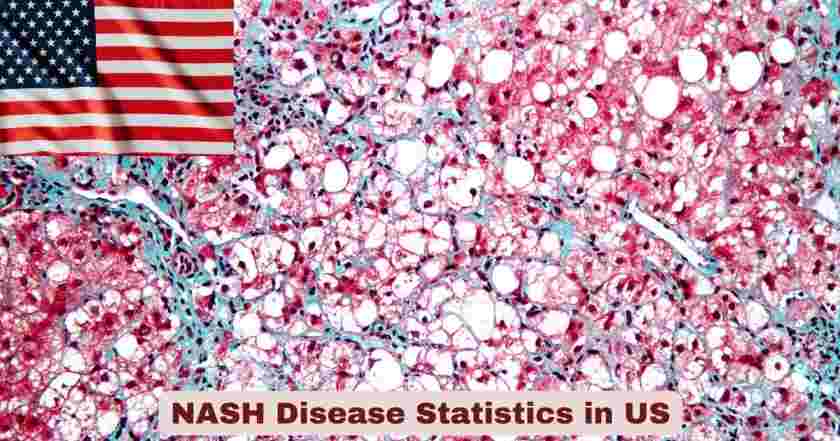
What is NASH Disease?
Nonalcoholic steatohepatitis (NASH) — now increasingly referred to by its updated clinical name, metabolic dysfunction-associated steatohepatitis (MASH) — is the progressive, inflammatory, and potentially fatal subtype of the most common chronic liver disease in the United States. It sits at the severe end of a disease spectrum formally known as nonalcoholic fatty liver disease (NAFLD) or, under the newer 2023 nomenclature, metabolic dysfunction-associated steatotic liver disease (MASLD). While the milder form of this spectrum — simple steatosis, or fat accumulation in the liver — is relatively benign in most people, NASH/MASH is an entirely different clinical beast. It is defined by the simultaneous presence of hepatic fat, active liver cell inflammation, and hepatocyte ballooning injury, a combination that creates the conditions for progressive scarring, or fibrosis, that can lead to cirrhosis, liver failure, hepatocellular carcinoma (HCC), and death. Unlike alcohol-related liver disease, NASH is driven entirely by metabolic factors — obesity, insulin resistance, type 2 diabetes, dyslipidemia, and hypertension — which explains why its prevalence has risen so sharply in lockstep with the American obesity and diabetes epidemics. What makes NASH especially dangerous is its silence: the overwhelming majority of patients experience no symptoms until the disease has reached an advanced and often irreversible stage, making it one of the most underdiagnosed serious chronic diseases in the country.
In 2026, NASH/MASH stands at a genuine inflection point in the United States. The disease already affects an estimated 11–15 million Americans under conservative diagnostic criteria, with broader estimates suggesting the number could be far higher given how dramatically underdiagnosed the condition is across the country. The burden is accelerating: a Markov model published in PMC projects that NASH cases in the US will increase by 82.6% over the next two decades, with advanced liver disease cases rising by nearly 78% between 2020 and 2039. At the same time, 2024 brought a landmark moment in the treatment of this disease — on March 14, 2024, the FDA granted accelerated approval to resmetirom (Rezdiffra), marking the first ever drug specifically approved to treat NASH/MASH with liver fibrosis. That approval, after more than two decades of failed clinical trials, fundamentally changed the treatment landscape. Yet with tens of millions undiagnosed, diagnosis gaps persisting across race and socioeconomic lines, and the disease already the leading indication for liver transplantation in women and those over 65 in the US, the NASH crisis in America in 2026 is far from resolved. The numbers that follow tell the story of exactly how big and how fast-moving this challenge has become.
Interesting NASH Facts in the US 2026
Understanding the clinical fundamentals and key biological facts about NASH is essential for grasping why this disease has become such a dominant force in the American liver disease and public health landscape.
| Key Fact | Detail |
|---|---|
| Full name (old terminology) | Nonalcoholic Steatohepatitis (NASH) — progressive inflammatory subtype of NAFLD |
| New terminology (2023 consensus) | Metabolic Dysfunction-Associated Steatohepatitis (MASH) — under the MASLD/MASH nomenclature adopted by AASLD and major hepatology societies |
| Nomenclature overlap | The AASLD confirmed 99% overlap between MASLD and NAFLD definitions — old ICD codes for NASH remain valid |
| Disease spectrum | MASLD → MASH (with or without fibrosis) → cirrhosis → hepatocellular carcinoma (HCC) → liver failure → death |
| Key histologic features of NASH | Hepatic steatosis + hepatocyte ballooning + lobular inflammation — liver biopsy remains gold-standard diagnosis |
| Fibrosis staging | F0 (none) through F4 (cirrhosis) — fibrosis stage is the single most important predictor of all-cause mortality in NASH |
| NASH as a “silent” disease | Most patients are completely asymptomatic until advanced disease is present — fatigue, jaundice, ascites appear late |
| NAFLD to NASH progression | Approximately 20% of individuals with simple fatty liver (NAFLD/MASLD) progress to NASH |
| NASH to cirrhosis progression | 10%–25% of patients with NASH will eventually develop cirrhosis |
| NASH and cancer | NASH is the fastest-rising cause of hepatocellular carcinoma (HCC) globally and in the US — HCC can develop even without cirrhosis in NASH patients |
| NASH as leading transplant cause | NASH/MASH is the leading indication for liver transplantation in the US for women and for those with HCC as of 2025 |
| First and only FDA-approved NASH drug | Resmetirom (Rezdiffra) — approved March 14, 2024, for noncirrhotic NASH with moderate-to-advanced fibrosis (F2–F3) |
| CVD as primary cause of death | Despite being a liver disease, cardiovascular disease (CVD) is the leading cause of death among patients with NASH/MASLD — not liver failure |
| NASH patients twice as likely to die from CVD | NASH patients have been shown to be 2 times more likely to die from cardiovascular disease than from liver disease |
| Obesity and NASH risk | Prevalence of NASH rises from 2.7% in normal-weight individuals to 27%–37% in morbidly obese subjects undergoing bariatric surgery |
| NASH and type 2 diabetes | The prevalence of NASH among patients with type 2 diabetes who have undergone liver biopsy is approximately 37.3% globally |
| PNPLA3 gene variant | The I148M variant of PNPLA3 gene is the most strongly studied genetic risk factor for NASH — it is twice as common in Hispanic Americans as in other populations |
| Weight loss threshold | Losing 7% of body weight is the minimum recommended target to achieve NASH resolution and reduce liver injury in the US |
Source: NIH/NIDDK — NAFLD and NASH Definition & Facts (October 2025); American Liver Foundation — NASH Facts (2024); FDA — Approval of Resmetirom (Rezdiffra), March 14, 2024; AJMC — FDA Approves Resmetirom; AASLD / Hepatology — MASLD Nomenclature Consensus Statement (2023)
The foundational facts about NASH demand careful reading because they overturn several common assumptions about how liver disease works. The most counterintuitive of these is perhaps the most clinically critical: cardiovascular disease, not liver failure, is the leading cause of death among NASH patients — a finding that transforms how clinicians should think about the risk profile of every patient with this diagnosis. The reason is straightforward in retrospect: NASH is rooted in the same metabolic dysfunction — insulin resistance, obesity, dyslipidemia — that drives atherosclerosis and coronary artery disease, meaning that the liver disease and the cardiovascular disease are parallel consequences of the same broken metabolic machinery. The fact that NASH patients are twice as likely to die from CVD as from liver disease means that hepatologists treating NASH in the US in 2026 cannot afford to manage this as a single-organ disease. The arrival of resmetirom (Rezdiffra) as the first FDA-approved NASH-specific treatment in March 2024 — after more than two decades of clinical trial failures — is genuinely historic. But the equally important footnote is that resmetirom is approved only for noncirrhotic NASH with F2–F3 fibrosis, meaning the vast majority of American patients who are undiagnosed, or who are diagnosed only after reaching cirrhosis, fall outside its current approved indication. The drug is a milestone. The diagnosis gap remains the most urgent problem.
NASH Prevalence Statistics in the US 2026
Getting an accurate read on how many Americans have NASH is inherently complicated by the fact that the disease is largely asymptomatic, diagnosis has historically required an invasive liver biopsy, and noninvasive testing produces widely varying estimates depending on the methodology used.
| Prevalence Metric | Data |
|---|---|
| MASLD (fatty liver disease) prevalence — US adults (NHANES 2017–2020) | 25.6% of US adults — confirmed by two NHANES cycles |
| Steatotic liver disease (SLD) overall prevalence — US adults (NHANES 2017–2023) | 28.7% of US adults (CAP >300 dB/m by transient elastography) |
| MASLD prevalence decrease (2017–2020 vs 2021–2023) | Decreased from 26.8% to 23.6% between the two NHANES survey cycles (age-standardized) |
| Liver fibrosis prevalence — US adults (NHANES 2017–2023) | 11.3% — with fibrosis prevalence increasing from 10.4% to 12.7% between the two survey cycles |
| NASH/MASH prevalence — general US adult population | 3%–5% of all US adults under traditional biopsy-confirmed criteria |
| NASH prevalence using FAST score (NHANES 2017–2018) | 1.3%–4.8% (3.3–12.2 million US adults) depending on FAST score cutoff |
| High-risk NASH (NAFLD Activity Score ≥4 and fibrosis ≥F2) — US adults | At least 2 million adults — per NHANES 2017–2018 FAST score analysis (PubMed) |
| MASLD “at-risk MASH” prevalence — US adults | 12.7% (95% CI: 10.8%–14.5%) among US adults with MASLD — per Communications Medicine, 2024 |
| Total Americans with NAFLD/MASLD (broader estimate) | 80–100 million Americans affected — American Liver Foundation 2024 |
| MASLD projected US prevalence by 2040 | Projected to increase to more than 55% of all US adults — Younossi et al., CMH, February 2025 |
| MASLD projected US population by 2025 (modeling) | 83.1 million (2015) projected to 100.9 million by 2025 — a 21% increase — American Liver Foundation Fact Sheet, 2025 |
| NASH cases projected increase (2020–2039) | +82.6% increase in total prevalent NASH cases in the US over 20 years — PMC Markov model (Younossi et al., 2023) |
| Advanced liver disease cases projected (2020–2039) | Total advanced disease (F3 + F4 + DCC + HCC) rising +77.9% from 1.51 million to 2.67 million |
| MASH advanced fibrosis (F2+) cases in US as of 2025 | Approximately 4.3 million cases — AJMC / Younossi et al., September 2025 |
| Projected MASH advanced fibrosis cases by 2040 | Nearly 5 million — with approximately 200,000 new cases every 5 years |
Source: PMC / Hepatology — Unalp-Arida & Ruhl, NIDDK/NIH — NHANES 2017–March 2020 and August 2021–August 2023 MASLD/Fibrosis Prevalence Study (published November 2025); JHEOR — Fishman et al., NASH Prevalence Using NIT Methods, NHANES 2017–2020 (February 2024)
The prevalence data for NASH in the United States in 2026 delivers two simultaneous messages that are both alarming in their own right. The first is sheer scale: with 80–100 million Americans affected by some degree of fatty liver disease and approximately 20% of those progressing to NASH, the pool of Americans with active liver inflammation, hepatocyte injury, and progressive fibrosis runs well into the tens of millions. The second message is the directional trend: the most rigorous, nationally representative data — the dual-cycle NHANES analysis published by NIDDK in November 2025 — found that while MASLD prevalence itself has modestly declined between the two survey cycles (26.8% to 23.6%), liver fibrosis prevalence has increased from 10.4% to 12.7%. This divergence is precisely what clinicians fear most: it suggests that the pool of Americans with the most dangerous, treatment-urgent stage of this disease is growing even as detection improves. The 82.6% projected increase in total NASH cases over the next two decades — published using a rigorous Markov modeling approach by the Global NASH Council’s lead researcher — is not a worst-case scenario. It is the projection based on current obesity and diabetes trends simply continuing unchanged.
NASH Fibrosis Staging and Disease Progression Statistics in the US 2026
The fibrosis stage is the single most important prognostic variable in all of NASH medicine — it is the number on which a patient’s risk of cirrhosis, liver cancer, transplant, and death all pivot.
| Fibrosis / Progression Metric | Data |
|---|---|
| Fibrosis stage scale | F0 (no fibrosis) → F1 (mild) → F2 (moderate) → F3 (advanced) → F4 (cirrhosis) |
| Fibrosis as mortality predictor | Fibrosis stage is the single most important predictor of all-cause mortality, liver events, and CVD in MASLD |
| Proportion of MASLD adults with any fibrosis — US (NHANES 2017–2023) | 11.3% of all US adults — fibrosis prevalence rising between the two survey cycles |
| NASH progression to cirrhosis | 10%–25% of patients with NASH will eventually develop cirrhosis |
| Cirrhosis development in MASH | An estimated 25% of MASH patients will eventually develop cirrhosis |
| NASH progression to HCC | NASH/MASH is the fastest-rising cause of HCC in the US — HCC can develop even in the absence of cirrhosis |
| Advanced liver disease growth — US (2020–2039) | DCC cases: +118.4%; HCC cases: +237.1%; liver transplants (obese NASH): +107.4% — PMC Markov model |
| Non-obese NASH advanced disease growth — US (2020–2039) | DCC: +15.1%; HCC: +165.1% — even non-obese patients face major escalation |
| NASH-related HCC incidence in adults 65+ (1990–2021) | More than doubled in incidence, deaths, and disability-adjusted life years over 31 years — AJMC, December 2025 |
| F2+ fibrosis prevalence in T2DM + MASH patients | MASH with F2+ fibrosis affects 1 in 6 adults with obesity and/or T2DM — PMC, Frontiers (2025) |
| Annual mortality rate — NASH vs NAFLD | NASH patients have 1.7 times higher annual mortality than those with simple fatty liver (NAFLD without inflammation) |
| NASH cirrhosis hospitalizations — MASH patients (US) | Substantially higher PPPY costs with each progression step — JMCP Optum cohort study, September 2024 |
| 11% of NASH patients | 11% will develop cirrhosis or liver failure — American Liver Foundation 2024 |
| NASH-related liver transplants — obesity-driven | Obesity projected to account for 81.58% of cumulative NASH-related liver transplants over the next two decades in the US |
| Fastest-growing NASH age group | Ages 18–44 — advanced liver disease proportion rising most sharply in young adults, from 6.08% to 7.18% |
Source: PMC — Younossi et al., Growing Economic and Clinical Burden of NASH in the US, Markov Model (PMC10213853, 2023); PMC / NIDDK / Hepatology — Unalp-Arida, NHANES MASLD/Fibrosis Prevalence Study (November 2025); AJMC — Global MASH Burden Projected to Double (December 2025); PMC — A Call for Doubling MASH Diagnosis Rate (Frontiers, July 2025)
The fibrosis and disease progression data for NASH in the US forms the clinical core of why this disease demands urgent, system-wide attention. The projected figures from the most rigorous US Markov model — showing HCC cases rising by 237% and decompensated cirrhosis (DCC) rising by 118% among the obese NASH population over the next two decades — are not distant abstractions. They are statistical forecasts of what is already beginning to materialize in American liver transplant centers and hepatology clinics. The fact that NASH-related HCC already more than doubled in incidence, deaths, and disability-adjusted life years (DALYs) among American adults over 65 between 1990 and 2021 shows that this trajectory is not a future risk — it is a present and accelerating reality. Perhaps most striking is the data on young adults: the 18–44 age group is experiencing the fastest rate of advanced liver disease growth in the entire US NASH cohort, reflecting the long-term consequences of the childhood obesity epidemic now reaching the ages at which metabolic disease causes measurable liver injury. This is the cohort that will drive NASH-related liver transplant demand, HCC incidence, and healthcare costs for the next 30 to 40 years.
NASH Demographic and Risk Factor Statistics in the US 2026
NASH does not distribute itself evenly across the American population. The data on who is most affected, and why, is as clinically important as the raw prevalence numbers.
| Demographic / Risk Factor Metric | Data |
|---|---|
| Gender — MASLD risk | Male sex is associated with significantly higher odds of MASLD in multivariable analysis — NHANES 2017–2023 |
| Gender — liver transplant | MASH is the leading indication for liver transplantation in women specifically, and in those with HCC — CMH/Younossi 2025 |
| MASLD prevalence — Hispanic adults (NHANES) | Hispanic ethnicity is associated with higher risk of steatotic liver disease (SLD) for all age groups — Communications Medicine 2024 |
| MASH prevalence among Hispanic US adults (meta-analysis) | 61% of Hispanic adults with MASLD have MASH — PubMed, Tincopa et al. 2024 |
| MASLD prevalence — US Hispanic adults (pooled) | 41% (95% CI: 30%–52%) — Hepatology, pooled meta-analysis (2024) |
| MASH advanced fibrosis — Hispanic vs non-Hispanic | Hispanic adults have relative risk of 1.42 for MASH and 1.50 for MASLD vs non-Hispanic adults |
| PNPLA3 I148M gene variant | This high-risk genetic polymorphism is twice as common in Hispanic Americans — driving elevated NASH/MASH risk |
| MASH frequency by race — NASH CRN biopsy data | 63% Hispanic, 62% non-Hispanic White, 52% non-Hispanic Black, 52% Asian — among biopsy-proven MASLD patients |
| MASLD — non-Hispanic Black | Inversely associated with MASLD diagnosis in multivariable NHANES models — though metabolic risk factors remain high |
| MASLD and diabetes | Both MASLD and fibrosis strongly associated with diabetes in NHANES 2017–2023 analysis |
| MASLD and obesity | Associated with higher BMI and higher waist-to-hip ratio in all NHANES analyses |
| NASH in normal-weight individuals | Prevalence of NASH is 2.7% in normal-weight individuals — rising to 27%–37% in morbidly obese subjects |
| Insulin resistance | A primary driver of NASH pathogenesis — metabolic syndrome triples NASH risk independent of age, gender, and BMI |
| Obstructive sleep apnea (OSA) and NASH | OSA patients are 3 times more likely to have NASH than those without OSA |
| MASLD and T2DM prevalence | 51.8%–53.1% of US adults with type 2 diabetes have MASLD; 37.3% of biopsied T2DM patients have NASH |
| Food insecurity | Emerging research links food insecurity to MASLD in the US population — American Liver Foundation 2025 |
| Age group with highest MASLD prevalence | Ages 65+ show the highest MASLD prevalence (29.0%) compared to ages 45–64 (27.0%) and 18–44 (21.4%) |
Source: PMC / Hepatology — NHANES 2017–2023 MASLD and Fibrosis Prevalence (NIDDK, Unalp-Arida, November 2025); Communications Medicine / Nature — Díaz et al. (October 2024); Hepatology — Tincopa et al., US Hispanic MASLD/MASH Meta-Analysis, 756,088 subjects, 22 studies (June 2025); PMC — Racial and Ethnic Disparities in MASLD (OAEPublish, February 2024)
The demographic picture of NASH in the United States reveals a disease shaped in powerful and medically significant ways by genetics, metabolic background, and the structural determinants of health. The elevated MASH risk in Hispanic Americans — driven by a combination of the PNPLA3 I148M gene variant (which is twice as common in this population), higher rates of obesity and type 2 diabetes, and socioeconomic factors — creates a particularly urgent diagnostic challenge, as this is one of the fastest-growing demographic groups in the country. The 61% MASH frequency among Hispanic adults with MASLD — confirmed in a pooled meta-analysis of 22 studies covering 756,088 subjects — means that when a Hispanic American is found to have fatty liver disease, the probability that it has already advanced to the inflammatory, fibrotic MASH stage is strikingly high. The inverse association between non-Hispanic Black race and MASLD diagnosis in NHANES models is nuanced and should not be read as protection: it is at least partly driven by diagnostic disparities and healthcare access inequities, not biological immunity. The 37.3% NASH prevalence among biopsied type 2 diabetes patients — from a 2024 meta-analysis of 123 studies covering 2.2 million T2DM patients — underscores why the American diabetes epidemic is simultaneously an unrecognized NASH epidemic, and why routine NASH screening in T2DM patients has become an increasingly urgent clinical priority in 2026.
NASH Economic Burden Statistics in the US 2026
The financial cost of NASH to the United States healthcare system is already staggering — and is projected to escalate dramatically without effective intervention at scale.
| Economic Metric | Data |
|---|---|
| Annual direct healthcare costs of MASLD/MASH in the US | Approximately $15.7 billion per year — based on per-person costs of $16,744–$300,408 × total US MASH population |
| Annual direct costs of NASH-only (without fibrosis) | $7.35 billion per year (US-specific, GAIN study; highest among all countries studied) |
| GAIN study — national US annual medical NASH costs | Up to $80 billion per year (total NAFLD national medical cost estimate including all fibrosis stages) |
| Current annual direct medical costs — US (2021 estimate) | $34.97 billion per year (MASH Markov projection model, 2021 baseline) |
| Projected annual direct medical costs — US by 2040 | $78.59 billion per year — more than doubling without intervention (AJMC, September 2025) |
| Work productivity losses — US, projected to double by 2040 | Work productivity losses projected to more than double alongside direct costs — AJMC December 2025 Markov model |
| Per-patient annual costs — MASH without cirrhosis | Range from $16,744 to $300,408 per person depending on disease stage — JMCP 2024 |
| Per-patient costs — MASH with cirrhosis (JMCP Optum study) | Significantly higher costs per-patient-per-year (PPPY) for those with cirrhosis vs. without — JMCP September 2024 |
| Post-COVID cost increase | MASH management costs were notably higher during and after COVID-19 compared to the pre-pandemic period — JMCP Optum 2024 |
| 20-year costs — NASH with T2DM | $55.8 billion over 20 years (Diabetes Care — Younossi et al., 2020 model, 6.4 million T2DM + NASH patients) |
| 20-year NASH-T2DM: transplants, CVD deaths, liver deaths | 65,000 liver transplants, 1.37 million CVD-related deaths, 812,000 liver-related deaths projected — Diabetes Care 2020 |
| Annual cost of MASH-related liver transplants — US | Based on 8,219 transplants × $878,400 estimated billed charges — AMCP Resources 2023 (adjusted) |
| MASH total mortality rate — US (2025) | 247.21 per 100,000 — the highest among 9 countries modeled — AJMC September 2025 |
| Projected US MASH mortality rate by 2040 | 261.08 per 100,000 — continuing to lead globally |
Source: JMCP — Cost Burden of Cirrhosis and Disease Progression in MASH, Optum Clinformatics Cohort (October 2015–December 2022; published September 2024); AJMC — Global MASH Burden Projected to Double Costs, Younossi et al. (December 2025, doi:10.1016/j.cgh.2025.09.002); PMC / PharmacoEconomics
The economic burden data for NASH in the United States is among the most striking in all of chronic disease medicine — particularly because the projected trajectory makes clear that the costs are not plateauing. The modeling published in Clinical Gastroenterology and Hepatology in September 2025 — covering nine countries with the US as the primary case — projects US direct annual medical costs from MASH more than doubling from $34.97 billion to $78.59 billion by 2040 without meaningful intervention. When the GAIN study’s broader national medical cost estimate is applied, the current annual burden is already approaching $80 billion when all fibrosis stages of MASLD are included. The $55.8 billion projected over 20 years just from the T2DM + NASH cohort — a calculation that also forecasts 1.37 million cardiovascular deaths from this population — illustrates how deeply NASH is entangled with America’s most expensive chronic diseases. The per-patient cost range of $16,744 to $300,408 depending on disease stage reflects just how dramatically costs escalate as patients progress through the fibrosis spectrum: a patient with early MASH costs the healthcare system roughly the same as a moderately complex chronic condition, but a patient with decompensated cirrhosis or HCC requiring transplantation enters a cost tier that rivals the most expensive treatments in American medicine. Every undiagnosed or delayed NASH diagnosis is a patient silently progressing along that cost curve.
NASH and Comorbid Disease Statistics in the US 2026
NASH rarely exists in isolation. It is almost always embedded within a cluster of metabolic diseases that both drive the liver condition and are, in turn, made worse by it.
| Comorbid Disease / Association Metric | Data |
|---|---|
| Type 2 diabetes (T2DM) + MASLD — US prevalence | 51.8%–53.1% of US adults with T2DM have MASLD; most MASLD+T2DM patients have NASH |
| NASH/MASH prevalence in T2DM patients (biopsy) | 37.3% globally — most biopsied T2DM patients with NAFLD have NASH/MASH |
| Advanced fibrosis in T2DM + NAFLD (biopsy data) | 17.0% of biopsied T2DM+NAFLD patients have advanced fibrosis — meta-analysis of 123 studies, 2.2M patients (CGH 2024) |
| T2DM and NASH risk | Presence of metabolic syndrome independently triples NASH risk irrespective of age, gender, and BMI |
| Cardiovascular disease — primary death cause in NASH | CVD is the most common cause of death among MASLD/NASH patients — ahead of liver-related mortality |
| NASH patients twice as likely to die from CVD | 2 times more likely to die from cardiovascular disease than from liver disease |
| CVD-related MASH death rate — US (2025) | 52.58 per 100,000 — projected to reach 55.12 per 100,000 by 2040 |
| Liver-related MASH death rate — US (2025) | 11.62 per 100,000 — projected to reach 12.42 per 100,000 by 2040 |
| MASLD and chronic kidney disease | MASLD is associated with increased risk of developing de novo chronic kidney disease — CMH/Younossi 2025 |
| MASLD and sarcopenia | Association between MASLD and sarcopenia is increasingly documented in US and global studies |
| MASLD and extrahepatic cancers | MASLD is associated with increased risk of extrahepatic cancers beyond HCC — CMH/Younossi 2025 |
| Obstructive sleep apnea (OSA) and NASH | Patients with OSA are 3 times more likely to have NASH vs. patients without OSA |
| MASLD in US children with obesity | MASLD affects up to 38% of children with obesity in the US; present in nearly half of a 408-child obesity cohort |
| NAFLD-related T2DM development | MASLD is associated with increased risk of developing de novo T2DM — creating a bidirectional risk cycle |
| High-risk NASH (F2+ fibrosis) in T2DM patients — US | Prevalence of high-risk NASH among individuals with T2DM ranges 8.7%–22.5% — NHANES 2017–2018 |
Source: PMC / Hepatology — NHANES 2017–2023 MASLD/Fibrosis Study (NIDDK, Unalp-Arida, November 2025); PubMed — Global Epidemiology of NAFLD/NASH in T2DM, Younossi et al. (CGH, October 2024, 123 studies, 2.2M patients); PubMed — High-Risk NASH Prevalence in T2DM, NHANES 2017–2018 (FAST score)
The comorbidity data for NASH in the United States reveals a disease that does not operate in a clinical silo but rather sits at the intersection of America’s most prevalent chronic conditions, feeding and being fed by each of them. The relationship between NASH and type 2 diabetes is perhaps the most clinically consequential of these connections: with more than half of American T2DM patients having MASLD, and 37% of biopsied T2DM+NAFLD patients having full NASH, the US diabetes epidemic is simultaneously a hidden NASH epidemic that primary care physicians, endocrinologists, and diabetes specialists are only beginning to systematically screen for. The children’s data is among the most alarming facts in the entire NASH literature: MASLD affecting up to 38% of American children with obesity means that the next wave of American adults presenting with advanced NASH fibrosis in their 30s and 40s — the generation that will overwhelm hepatology clinics in the 2030s and 2040s — is already in the pipeline, their livers already quietly scarring in elementary and middle school. The bidirectional relationship between MASLD and T2DM — where each condition worsens the other — creates a self-reinforcing cycle of metabolic deterioration that is exceptionally difficult to interrupt without early, proactive identification of both conditions simultaneously.
NASH Treatment and Clinical Care Gap Statistics in the US 2026
Despite the historic FDA approval of resmetirom in 2024, the gap between available treatment and the actual delivery of care to the millions of Americans with NASH remains one of the most pressing challenges in the entire disease management landscape.
| Treatment / Care Gap Metric | Data |
|---|---|
| First FDA-approved NASH treatment | Resmetirom (Rezdiffra) — accelerated approval March 14, 2024 by the FDA |
| Approved patient population for resmetirom | Adults with noncirrhotic NASH/MASH with moderate-to-advanced liver fibrosis (F2–F3) — in conjunction with diet and exercise |
| Annual cost of resmetirom | $47,400 per year — aligning with ICER health-benefit price benchmark of $39,600–$50,100/year |
| Resmetirom MAESTRO-NASH trial outcomes (52 weeks) | Fibrosis improvement of ≥1 stage: 24% (80mg) and 26% (100mg) vs placebo; NASH resolution without worsening fibrosis: statistically significant |
| Resmetirom — ongoing outcomes study | MAESTRO OUTCOMES trial (NCT05500222) — near full enrollment as of 2025; testing all-cause mortality and clinical liver outcomes |
| Treatment pipeline in 2025–2026 | Semaglutide (Novo Nordisk) — positive Phase 3 ESSENCE trial data; potential approval expected in 2025–2026 |
| Additional agents in late-stage trials | Multiple agents targeting GLP-1R, GIP-GLP-1R (dual agonists), FXR, PPAR — several expected to receive FDA decisions in 2026–2027 |
| First-line management (non-pharmacological) | Weight loss of 7% of body weight (minimum) to resolve NASH; 10%+ weight loss recommended for fibrosis improvement |
| Bariatric surgery and NASH | Shown to dramatically improve or resolve NASH in morbidly obese patients — significant histological improvement documented |
| Gold-standard diagnosis method | Liver biopsy — invasive, costly, and risky, limiting routine use; noninvasive tests (FIB-4, FibroScan, MRE, MRI-PDFF) increasingly used |
| Diagnosis rate for MASH — current status | Dramatically underdiagnosed — a 2025 PMC call for doubling the MASH diagnostic rate explicitly acknowledges current diagnosis rates are wholly inadequate |
| Undiagnosed NASH in the US | An estimated large majority of Americans with NASH have not received a formal diagnosis — the disease is largely asymptomatic until late stage |
| Insurance coverage | Resmetirom is covered by most commercial insurers for F2–F3 noncirrhotic MASH — but prior authorization requirements create access barriers |
| Medicare/Medicaid MASH patients | Represent a disproportionately large share of advanced MASH — but face additional formulary and access challenges |
| Hepatology workforce gap | A predicted critical shortage of hepatologists in the US — modeling published in Hepatology projects workforce supply will be unable to meet rising MASH patient demand |
Source: FDA — Approval of Resmetirom (Rezdiffra), March 14, 2024; AJMC — FDA Approves Resmetirom (March 2024); Clinical Gastroenterology and Hepatology — Expert Panel Recommendations on Resmetirom (2024); NEJM — Harrison et al., Phase 3 MAESTRO-NASH Trial (2024)
The treatment and care gap data for NASH in the United States in 2026 captures a pivotal but deeply imperfect moment in the evolution of this disease. The FDA approval of resmetirom in March 2024 was genuinely transformational — it ended a 20-plus-year drought in which NASH had no liver-directed pharmacological option whatsoever, and in which lifestyle modification was the only tool available to clinicians beyond managing metabolic comorbidities. The Phase 3 MAESTRO-NASH trial results — showing 24%–26% of patients achieving ≥1 stage fibrosis improvement at 52 weeks — are clinically meaningful in a disease where fibrosis stage is literally the determinant of long-term survival. But the treatment data must be read against the backdrop of a healthcare system that is still dramatically undertreated for NASH at scale. The 2025 PMC paper explicitly calling for doubling the diagnostic rate of at-risk MASH acknowledges what hepatology practitioners across the country already know: the vast majority of Americans who meet treatment criteria for resmetirom have never been identified, staged, or referred to a specialist. The hepatology workforce shortage projected by the modeling published in Hepatology adds another structural layer to this crisis — even as the treatment pipeline expands with semaglutide and other agents expected in 2026, the number of clinicians equipped to diagnose, stage, and manage these patients at scale in the United States remains critically and dangerously insufficient.
Disclaimer: The data reports published on The Global Files are sourced from publicly available materials considered reliable. While efforts are made to ensure accuracy, no guarantees are provided regarding completeness or reliability. The Global Files is not liable for any errors, omissions, or damages resulting from the use of these reports.