
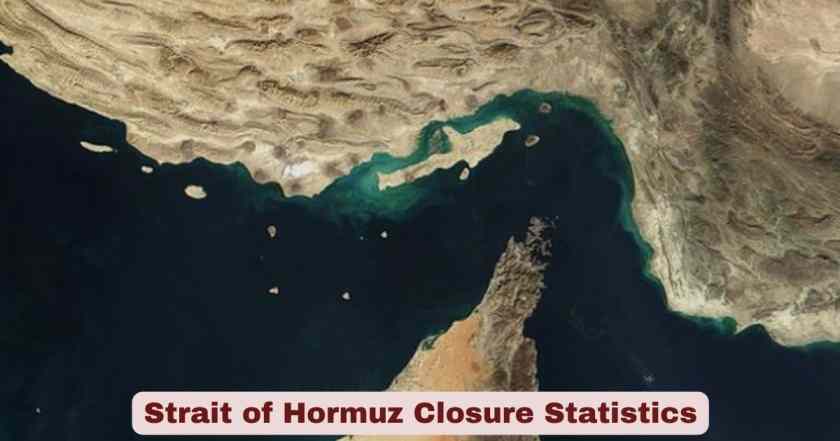
Strait of Hormuz Closure in 2026
The closure of Strait of Hormuz is the effective shutdown of the world’s single most important maritime energy corridor, triggered by the outbreak of open war between the United States, Israel, and Iran beginning 28 February 2026. Joint military strikes, codenamed Operation Epic Fury, targeted Iranian military infrastructure, nuclear facilities, and senior leadership — including the killing of Supreme Leader Ali Khamenei. Iran’s Islamic Revolutionary Guard Corps (IRGC) responded almost immediately, launching retaliatory drone and missile attacks on US military bases, Israeli territory, Gulf state energy infrastructure, and commercial vessels operating in and around the Persian Gulf. By 2 March 2026, a senior IRGC official formally declared the strait shut, warning that any ship attempting to transit would be “set ablaze.” Within 24 hours, virtually no commercial tankers in the strait were broadcasting Automatic Identification System (AIS) signals — maritime tracking data’s equivalent of a dead silence. What had been a theoretical worst-case scenario in energy risk models for decades had become the lived reality of global energy markets overnight.
The Strait of Hormuz — just 21 miles wide at its narrowest point — normally carries approximately 20 million barrels of oil per day, representing roughly 20% of global oil consumption and about 20% of the world’s LNG trade. It is the sole maritime export route for Saudi Arabia, Iraq, Kuwait, the UAE, Qatar, Bahrain, and Iran. As of 10 March 2026, vessel traffic through the corridor had collapsed by more than 90%, Gulf producers including Iraq, Kuwait, the UAE, and Saudi Arabia had begun cutting oil production due to overflowing storage, Qatar had halted LNG production and declared Force Majeure, oil prices had surged more than 35% in a single week — the largest weekly gain in the history of crude futures — and the G7 was holding emergency meetings to discuss the largest coordinated Strategic Petroleum Reserve (SPR) release in history. Former IEA head of oil Neil Atkinson told CNBC on 9 March that this was “a potentially game-changing and unprecedented energy crisis.” Energy analyst Helima Croft at RBC Capital Markets called it “the biggest energy crisis since the oil embargo in the 1970s.”
Strait of Hormuz Closure 2026 – Key Facts at a Glance
| Fact | Data / Detail |
|---|---|
| Crisis Start Date | 28 February 2026 — US-Israel joint strikes on Iran (Operation Epic Fury) |
| IRGC Official Closure Declaration | 2 March 2026 — senior IRGC official Ebrahim Jabari: “We will attack and set ablaze any ship attempting to cross” |
| Strait Width at Narrowest Point | 21 miles (34 km) |
| Normal Daily Oil Flow (pre-closure) | ~20 million barrels per day (mb/d) — ~20% of global oil consumption |
| Normal Daily Vessel Transits (pre-closure) | More than 153 vessel transits per day (AIS data — Starboard Maritime/CSIS) |
| Tanker Traffic Drop — 28 Feb | 105 transits — down ~32% from normal (CSIS) |
| Tanker Traffic Drop — 2 March | 13 transits — down 92% from normal; only 1 oil tanker (CSIS) |
| Traffic Drop — 8 March | 2 outbound transits — both Iranian-flagged; zero inbound (Windward AI) |
| Traffic Drop — Peak Collapse | Over 90% below pre-war levels (FinancialContent/Windward AI, 9 March) |
| Vessels Anchored — Outside Strait | ~500 ships (1% of global tonnage) waiting off UAE and Oman coast (Clarksons/Al Jazeera) |
| Vessels Trapped — Inside Persian Gulf | ~3,200 ships (~4% of global tonnage) idle in Gulf (Clarksons Research via AP) |
| Chinese Ships Trapped in Gulf | 55 Chinese-flagged ships trapped inside Persian Gulf (CSIS) |
| Chinese Ships Transiting Since 1 March | Only 2 Chinese-flagged vessels observed transiting vs. 49 in the week prior (CSIS) |
| P&I War Risk Insurance Cancelled | Effective 5 March 2026 — International Group of P&I Clubs withdrew war risk coverage |
| War Risk Premium Jump | From ~0.125% of vessel value pre-crisis → ~1% post-closure (Al Jazeera/Wikipedia) |
| VLCC Daily Freight Rate — Record | $423,736 per day recorded on 3 March 2026 — all-time high (CNBC/LSEG) |
| JMIC Risk Level | Upgraded to ‘Critical’ — attacks “almost certain” |
| Confirmed Vessel Strikes (28 Feb–9 Mar) | More than 10 oil tankers targeted (IRGC/Al Jazeera); at least 4 confirmed struck (Seatrade Maritime) |
| Casualties Confirmed | At least 2 Indian crew members killed (MV Skylight, 1 March); multiple crew injured across vessels |
| Cruise Ships Stranded | 15,000 passengers on 6 major cruise ships stranded (Wikipedia) |
| Monthly Oil Volume at Risk | Approximately 500 million barrels per month (Lloyd’s List) |
| Historical Scale | Largest oil supply disruption in history — Rapidan Energy consulting firm |
Source: CSIS Analysis (10 March 2026); Wikipedia — 2026 Strait of Hormuz Crisis (updated 10 March 2026); Windward AI Maritime Intelligence Daily (9 March 2026); Clarksons Research via AP; Al Jazeera (4 March 2026); Seatrade Maritime News (3 March 2026); Watson Farley & Williams (March 2026); CNBC/LSEG
The sheer speed and totality of the 2026 Strait of Hormuz closure is what most distinguishes it from every prior geopolitical disruption to global energy markets. Iran did not need a conventional naval blockade, underwater mines, or a submarine fleet to shut down the world’s most important oil corridor. As Helima Croft of RBC Capital Markets explained bluntly: “All Iran had to do was several drone strikes in the vicinity of the strait, and all of a sudden, insurers and shipping companies decided it was unsafe to traverse that very narrow S-curve of that waterway.” The mechanism was not military force alone — it was the interaction between drone attacks and the insurance market. Once P&I war risk insurance was withdrawn effective 5 March, shipowners had no viable commercial or legal mechanism to proceed. A vessel worth $100 million saw its single-voyage war risk premium jump from roughly $200,000 to approximately $1 million overnight — and that was before factoring in the real possibility that the ship would be struck mid-transit.
The numbers from the first ten days of closure capture the scale of what has happened. A waterway that averaged more than 153 vessel transits per day was reduced to 2 transits on 8 March — both Iranian-flagged, both outbound, and zero inbound. ~3,200 ships representing 4% of global tonnage are now idle in the Persian Gulf with nowhere to go, while ~500 more ships representing 1% of global tonnage wait outside in the Gulf of Oman. Oil barrels are physically piling up at terminals in Basra, Kuwait, and Abu Dhabi with no tankers arriving to collect them. Iraq’s three main southern oil fields have cut production by 70% as a direct consequence. And cargo ships are now rerouting around the entire continent of Africa — Cape of Good Hope transits surged 89% in a single day on 9 March — adding 10–14 days of sailing time and thousands of dollars in additional fuel costs per voyage. This is not a market correction. It is a structural rewiring of global trade, in real time.
Strait of Hormuz Closure 2026 – Oil Price Impact Statistics
| Price Metric | Data |
|---|---|
| Brent Crude Pre-War Price (~mid-Feb 2026) | ~$72 per barrel (FinancialContent, 9 March 2026) |
| Brent Crude Pre-War Price (28 Feb 2026) | Mid-$60s per barrel (CBS News) |
| Brent by Midweek Post-War (early March) | ~$80 per barrel — up ~10% since conflict started (CNBC/Al Jazeera) |
| Brent Settled — Friday 7 March 2026 | $92.69 per barrel |
| WTI Settled — Friday 7 March 2026 | $90.90 per barrel |
| WTI Weekly Gain — Week Ending 7 March | +35.63% — largest weekly gain in US crude futures history (since 1983) |
| Brent Weekly Gain — Week Ending 7 March | +28% — largest weekly gain since April 2020 |
| Brent Intraday High — 8 March 2026 | $119.50 per barrel |
| WTI Intraday High — 8 March 2026 | $119.48 per barrel |
| $100/barrel Threshold Crossed | 8 March 2026 — first time since Russia’s 2022 Ukraine invasion |
| Brent Settled — 8 March 2026 | $98.96 per barrel — pulled back on G7 SPR release discussion news |
| Brent Intraday High — 9 March 2026 | $108.20 (FilmoGaz/FinancialContent) |
| Brent Settled — 9 March 2026 (11.6% intraday) | $103.47 per barrel (CNBC) |
| WTI — 9 March 2026 | $94.77 per barrel (extended trading: down to $85.27 on Trump remarks) |
| Brent — 9 March 2026 (extended trading) | $88.43 per barrel — fell after Trump said he was “thinking about taking over” the strait |
| Brent Spot Backwardation Spread (March 2026) | $14.20 premium — immediate barrels vs next-month futures (extreme backwardation) |
| US Gasoline National Average — 9 March 2026 | $3.45 per gallon — up 51 cents in one week (GasBuddy) |
| Oil Price Rise Since Conflict Began — Total | ~35–50% depending on benchmark and date measured |
| Analyst Forecast — If Closure Continues to End of March | $150 per barrel (unnamed analyst cited by FilmoGaz) |
| Oil Contracts for 2027 Delivery | Trading well below 2026 spot prices — traders see this as temporary |
Source: CNBC (7, 8, 9 March 2026); CBS News (9 March 2026); FilmoGaz (10 March 2026); GasBuddy via CBS News (9 March 2026); FinancialContent (9 March 2026); Invezz (9 March 2026); NPR (4 March 2026)
The oil price impact of the 2026 Strait of Hormuz closure has been historically extraordinary by almost every measurable market metric. WTI crude posting a +35.63% weekly gain — the largest in the history of the US crude futures contract dating back to 1983 — captures the scale of what markets absorbed in a single week. In nominal terms, Brent crude moved from the mid-$60s before the war to intraday highs of $119.50 within ten days — a gain of more than $50 per barrel driven almost entirely by physical supply disruption rather than speculative positioning. The extreme backwardation in the crude market — where immediate delivery barrels command a $14.20 premium over next-month futures — is a technical indicator screaming that buyers are desperate for any available cargo that can actually be delivered, right now.
For ordinary consumers, the speed of transmission from the Hormuz closure to the fuel pump has been striking. US national average gasoline prices jumped by 51 cents per gallon in a single week, the fastest rate of increase in years according to GasBuddy’s petroleum analysis head Patrick De Haan. Energy analysts at Eurasia Group published a note on 9 March warning that “the combination of escalating conflict, ongoing disruption of Hormuz, and announcements of producer shut-ins indicates the crisis is unlikely to be resolved any time soon.” Warren Patterson at ING Group summarised the market mechanics simply: “The bottom line is that, as long as we don’t see oil moving through the Strait of Hormuz, oil prices will only move higher.” The only factor preventing an immediate push toward $130–$150 per barrel is the prospect of coordinated G7 strategic reserve releases — an intervention still under negotiation as of 10 March 2026.
Strait of Hormuz Closure 2026 – Gulf Oil Production Cuts Statistics
| Country / Producer | Production Cut / Impact Detail |
|---|---|
| Iraq — Production Pre-War | ~4.3 million barrels per day (mb/d) from southern fields |
| Iraq — Production as of 8 March | ~1.3 mb/d from southern fields — a 70% collapse |
| Iraq — Formal Cut Announced | 1.5 mb/d reduction — confirmed by Iraqi officials to Reuters (4 March) |
| Iraq — Export Activity (9 March) | Zero oil and commercial vessel entries into Iraqi ports (Windward AI) |
| Iraq — Tankers Loading (9 March) | Only 2 tankers loading at southern terminals, each ~2 mb; vessels remained in Gulf |
| Iraq — Root Cause | Onshore storage at maximum capacity; Rumaila oil field shutdown began 3 March (Bloomberg) |
| Kuwait — January Production | ~2.6 mb/d (OPEC’s 5th largest producer) |
| Kuwait — Cut Announced | Up to 300,000 bpd (weekend 7–8 March); force majeure declared 7 March |
| Kuwait — Reason Stated | “Iranian threats against safe passage of ships” — Kuwait Petroleum Corporation |
| Kuwait Petroleum Corp. Statement | “Remains fully prepared to restore production levels once conditions allow” |
| UAE — Production Status | Oil production lowered (Wikipedia, 7 March); extent not formally disclosed |
| Saudi Arabia — Production Status | Began output cuts 9 March at two undisclosed fields (Reuters, via OilPrice.com) |
| Saudi Arabia — Rerouting Action | Rerouting some crude via East-West Petroline to Yanbu (Red Sea port) |
| Qatar — LNG Production | Halted 2 March following attacks on Ras Laffan and Mesaieed facilities |
| Qatar — Force Majeure | Declared on gas contracts, 4 March 2026 |
| Qatar — Warning (6 March) | Energy Minister Saad Sherida al-Kaabi: “This will bring down economies of the world” |
| JPMorgan Estimate | Production cuts could exceed 4 mb/d by end of next week if strait stays closed (JPMorgan note, 7 March) |
| JPMorgan Trigger Point | Gulf Arab states will exhaust storage and shut all production within 3 weeks of closure (Natasha Kaneva, JPMorgan) |
Source: CNBC (7, 9 March 2026); OilPrice.com (10 March 2026); Wikipedia — 2026 Strait of Hormuz Crisis (10 March 2026); Windward AI Maritime Intelligence Daily (9 March 2026); Reuters via CNBC; Al Jazeera (4 March 2026); Bloomberg (3 March 2026)
The production cut cascade triggered by the 2026 Strait of Hormuz closure is arguably the most damaging secondary consequence of the maritime shutdown — and the one with the most serious long-term supply implications. The dynamic is straightforward and brutal: with no tankers arriving to collect crude, onshore storage tanks fill up, and producers are physically forced to shut down upstream output. Iraq’s southern oil fields — which account for the vast majority of the country’s production and export revenues — have been the hardest hit, with output collapsing 70% from 4.3 mb/d to approximately 1.3 mb/d in less than ten days. Iraq’s Rumaila oil field, one of the largest in the world, began shutting down as early as 3 March when Bloomberg reported storage had reached maximum capacity. By 9 March, Windward AI’s Maritime Intelligence Daily recorded zero oil and commercial vessel entries into Iraqi ports — a figure that would have been unthinkable two weeks ago.
What makes the JPMorgan analysis particularly alarming is the timeline it puts on the broader Gulf supply collapse. JPMorgan’s head of global commodities research, Natasha Kaneva, warned clients on 7 March that Gulf Arab producers as a group would exhaust storage capacity and be forced to shut down all oil production within three weeks of the closure — and that total cuts could exceed 4 mb/d by as early as the end of next week. A sustained removal of 4+ mb/d from the global supply base would push Brent crude well above $100 on a structural basis, independent of any war premium. Saudi Arabia beginning output cuts on 9 March — as confirmed by Reuters and reported by OilPrice.com — is the clearest sign yet that even the world’s largest oil exporter, with the most extensive bypass infrastructure via the East-West Petroline, is not immune to the storage and logistics constraints flowing from the closure. The situation is not stabilising. As of 10 March 2026, it is still deteriorating.
Strait of Hormuz Closure 2026 – Shipping & Insurance Statistics
| Metric | Data |
|---|---|
| Major Shipping Lines Suspended | Maersk, Hapag-Lloyd, MSC, CMA CGM — all suspended transits |
| P&I War Risk Insurance Withdrawn | Effective 5 March 2026 — International Group of P&I Clubs |
| War Risk Zone Status | Strait declared a high-risk zone — crew entitled to extra pay and right of refusal |
| US MARAD Advisory Issued | MARAD Maritime Alert 2026-001A — vessels advised to avoid the region |
| BIMCO War Risk Clauses Invoked | 2025 BIMCO War Risks Clauses allow owners to refuse charterer employment orders in war zone |
| VLCC Freight Rate — 3 March | $423,736 per day — all-time record high (CNBC/LSEG) |
| VLCC Freight Rate Prior Level | ~$200,000 per day (already elevated pre-war levels, 27 Feb) |
| War Risk Premium Pre-Crisis | 0.125% of vessel value per voyage |
| War Risk Premium Post-Closure | Approximately 1% of vessel value per voyage — an 8x increase |
| Cost for $100m Vessel — War Risk | ~$1 million per voyage vs. ~$125,000 previously |
| Cape of Good Hope Rerouting | 89 crossings on 9 March — up 89% day-on-day, exceeding 7-day average (Windward AI) |
| Suez Canal Traffic | Declined below recent averages (Windward AI, 9 March) |
| Jebel Ali (UAE) Port Delays | 10 transshipment delay cases — up +233% day-on-day (9 March) |
| Dammam (Saudi Arabia) Port Delays | 5 delay cases — up +400% day-on-day (9 March) |
| Umm Qasr (Iraq) Port Activity | Zero vessel entries (Windward AI, 9 March) |
| “Dark Transit” Activity | At least 1 tanker confirmed dark transit — AIS disabled, reappeared days later (Windward AI) |
| MV Pola Transit | Switched AIS off, transited successfully to Abu Dhabi; one of very few successful crossings |
| DFC Insurance Offer (Trump, 3 March) | US DFC to provide insurance to ships transiting — experts note legal/financial limitations |
| Navy Escort Proposal (Trump, 3 March) | US Navy to escort tankers “as soon as possible” — industry skeptical pending safety guarantees |
| French Proposal | President Macron proposed naval escort mission led by aircraft carrier Charles de Gaulle |
| Industry Response to Escorts | CEO Stamatis Tsantanis (Seanergy/United Maritime): normal traffic won’t resume until “genuinely safe” |
Source: Watson Farley & Williams (March 2026); Seatrade Maritime News (3 March 2026); Windward AI (9 March 2026); CNBC/LSEG; Al Jazeera (4 March 2026); NPR (4 March 2026); CBS News (9 March 2026); Wikipedia (10 March 2026)
The shipping and insurance statistics from the 2026 Strait of Hormuz closure expose just how completely the commercial maritime industry has withdrawn from the corridor — and how difficult resumption will be even if the security picture improves. The all-time record VLCC freight rate of $423,736 per day on 3 March, combined with an 8x increase in war risk premiums, might theoretically attract risk-tolerant operators willing to brave the strait for outsized returns. But the withdrawal of P&I war risk insurance effective 5 March removed that option for virtually all mainstream operators. Without insurance, a $100 million tanker and its cargo have no financial protection — meaning shipowners are not just weighing risk, they are facing the possible uninsured total loss of an asset worth hundreds of millions of dollars. As Seatrade Maritime’s editor Marcus Hand summarised: “Is the Strait of Hormuz legally closed? No. Is it effectively closed to almost all international commercial shipping? Yes.”
The rerouting statistics reinforce how genuine — and costly — the industry’s response has been. Cape of Good Hope transits surged 89% in a single day on 9 March, as operators accelerated their shift to the long-haul African bypass route. Adding 10–14 days of sailing time per round trip means higher fuel costs, longer inventory cycles, and wider bid-ask spreads on physical cargo markets across Asia and Europe. Port congestion data from Windward AI’s 9 March Maritime Intelligence Daily captures the logistical strain spreading upstream: a +400% spike in transshipment delays at Dammam and +233% at Jebel Ali in a single day. These are early warning signs of supply chain dysfunction spreading beyond the strait itself into the wider Gulf logistics network. The CEO of two major Greek shipping firms, Stamatis Tsantanis, stated plainly that even with US naval escorts and government insurance offers, normal traffic will not resume until companies are satisfied that transit is “genuinely safe” — a bar that has not yet been cleared as of 10 March 2026.
Strait of Hormuz Closure 2026 – Country-by-Country Impact Statistics
| Country | Hormuz Dependency | Impact as of 10 March 2026 |
|---|---|---|
| Japan | 95% of crude from Middle East; ~70% via Hormuz | Refiners asked government to release stockpiled oil; emergency procurement underway |
| South Korea | ~68% of crude imports via Hormuz | Emergency sourcing from alternative suppliers; LNG spot market competition |
| China | ~40% of oil imports + ~30% of LNG imports via Hormuz | 55 ships trapped in Gulf; Beijing directed refiners to halt fuel exports (5 March); Liaowang-1 intelligence vessel deployed to Gulf of Oman |
| India | ~60% of oil imports from Middle East; >50% of LNG imports Gulf-linked | Government proposed deploying Navy to safeguard oil supplies; emergency procurement |
| Pakistan | Heavily import-dependent | Formally requested Saudi Arabia reroute oil via Yanbu Red Sea port (4 March); one vessel arranged |
| Thailand | Biggest net oil importer in Asia at 4.7% of GDP; each 10% oil price rise = ~0.5% of GDP current account hit | Among hardest hit Asian economies (Nomura framework) |
| Europe | 12–14% of LNG from Qatar via Hormuz | Competing for spot LNG at record prices; Qatar force majeure disrupting contracts |
| Iraq | 100% of crude exports via Hormuz — zero bypass | Production collapsed 70%; southern field output ~1.3 mb/d vs prior 4.3 mb/d |
| Kuwait | 100% of crude exports via Hormuz — zero bypass | Force majeure declared; production cuts up to 300,000 bpd; storage filling |
| Qatar | ~93% of LNG exports via Hormuz — no bypass | LNG production halted 2 March; force majeure declared 4 March |
| Saudi Arabia | Partial bypass via East-West Petroline to Yanbu | Began production cuts 9 March; rerouting some crude to Yanbu — cannot cover full volume |
| UAE | Partial bypass via ADCOP to Fujairah | Lowered oil production; partial rerouting possible but insufficient at scale |
| United States | Low direct dependency; ~2.5% of Hormuz crude | $3.45/gallon national gas average (9 March); up 51 cents in one week; Trump considering navy escorts and Hormuz “takeover” |
Source: CSIS (10 March 2026); CNBC (3, 7, 9 March 2026); Wikipedia — 2026 Strait of Hormuz Crisis (10 March 2026); CBS News (9 March 2026); Windward AI (9 March 2026); Al Jazeera (4 March 2026); GasBuddy via CBS News
The country-by-country exposure data for the 2026 Strait of Hormuz closure reveals a clear and deeply unequal distribution of pain — with Asian energy importers bearing by far the greatest structural burden. Japan’s dependency is existential in the short term: with 95% of crude from the Middle East and ~70% of that arriving via Hormuz, Japanese refiners made emergency requests for government stockpile releases within days of the closure. China, despite being the world’s largest crude oil importer with the deepest exposure, is somewhat better positioned than its neighbours — it has built significant strategic reserves over the past year and has greater flexibility to substitute Middle Eastern crude with coal and other sources. However, 55 Chinese ships trapped in the Persian Gulf, combined with China directing refiners to halt fuel exports on 5 March as a domestic supply protection measure, indicate that even Beijing is far from comfortable with the situation. The deployment of the Liaowang-1 intelligence vessel to the Gulf of Oman by China on 9 March signals that Beijing is also moving to protect its interests through direct military positioning.
India faces what analysts describe as a “dual physical and financial shock”: more than half its LNG imports are Gulf-linked, and a significant share is Brent-indexed, meaning that a Hormuz-driven crude price spike simultaneously raises both its oil import costs and its LNG contract prices. The Indian government’s proposal to deploy the Indian Navy to safeguard oil supply routes is a signal of how serious New Delhi regards the threat. Pakistan has zero buffer — it has already formally requested Saudi Arabia reroute supplies via Yanbu, and Saudi Arabia has confirmed at least one shipment. Thailand stands out in Nomura’s analytical framework as one of the most financially exposed economies in Asia: as the region’s biggest net oil importer at 4.7% of GDP, every 10% increase in oil prices worsens Thailand’s current account by approximately 0.5 percentage points of GDP — and oil prices have risen by 35–50% in the past week alone.
Strait of Hormuz Closure 2026 – Global Response & Emergency Measures Statistics
| Measure / Response | Detail |
|---|---|
| G7 Emergency Meeting | Finance ministers met virtually 9 March 2026 to discuss coordinated SPR release; IEA participated |
| G7 Joint Statement | “We stand ready to take necessary measures, including to support global supply of energy such as stockpile release” |
| G7 Nations Supporting SPR Release | At least 3 G7 nations including the US indicated support (FT, 9 March) |
| Proposed SPR Release Volume | 400 million barrels — would be largest coordinated reserve release in history (FinancialContent) |
| Prior Largest SPR Release | IEA coordinated release of ~180 mb in 2022 (Russia-Ukraine war) |
| US DFC Insurance Offer (3 March) | President Trump announced US DFC would provide insurance to all ships transiting Persian Gulf |
| US Navy Escort Announcement (3 March) | Trump announced Navy would escort tankers “as soon as possible” |
| Trump — 9 March Statement | “Thinking about taking [the strait] over”; said war was “very complete, pretty much” |
| Trump Warning to Iran (9 March) | “If they do anything bad, that would be the end of Iran” |
| Trump — Russia Oil Sanctions | Considering reducing oil sanctions on Russia to ease crude prices (Reuters, 3 sources) |
| French Proposal | President Macron proposed naval escort mission led by aircraft carrier Charles de Gaulle |
| Japan Response | Refiners asked government to release strategic oil stockpiles |
| India Response | Government proposed deploying Indian Navy to protect supply routes |
| Pakistan Response | Requested Saudi Arabia reroute crude via Yanbu (Red Sea) — confirmed by Pakistan Ministry of Energy (4 March) |
| Saudi Arabia Response | Assurances to Pakistan; rerouting crude via East-West Petroline to Yanbu; began production cuts 9 March |
| China Response | Directed refiners to halt fuel exports (5 March); deployed Liaowang-1 intelligence ship to Gulf of Oman; officially urged “all parties to keep strait open” |
| IEA Role | In emergency coordination talks with G7; expected to participate in any SPR release mechanism |
| Iran — New Supreme Leader | Mojtaba Khamenei (son of Ali Khamenei) appointed — signals continued hardliner control (Wikipedia) |
| Trump on Mojtaba Appointment | Called it “unacceptable” |
| Qatari Energy Minister Warning | Al-Kaabi (6 March): if war continues, other Gulf producers may halt exports — “this will bring down economies of the world” |
Source: CNBC (8, 9 March 2026); CBS News (9 March 2026); Financial Times (9 March 2026) via CNBC; Invezz (9 March 2026); Wikipedia — 2026 Strait of Hormuz Crisis (10 March 2026); Al Jazeera (4, 6 March 2026); FinancialContent (9 March 2026); Reuters via CNBC
The global response to the 2026 Strait of Hormuz closure has been swift, co-ordinated at the diplomatic level, and — as of 10 March — still largely insufficient to restore commercial shipping through the corridor. The G7’s proposed 400-million-barrel SPR release would, if executed, be more than double the scale of the 2022 coordinated release triggered by Russia’s invasion of Ukraine — itself the largest in IEA history at the time. That it is already being discussed at this scale, within ten days of the crisis starting, speaks volumes about how seriously governments are treating the supply disruption. Oil markets initially pulled back from $119 intraday highs toward the $88–$98 range on news of the G7 discussions alone — indicating that the credible threat of reserve releases does carry meaningful market weight as a psychological circuit breaker, even before any barrels are actually released.
But analysts and industry leaders have been consistent in tempering expectations. William Henagan of the Council on Foreign Relations noted that the US DFC’s insurance offering faces both legal and financial constraints: the agency has to comply with environmental and social standards, it operates in specified countries, and it has a finite budget that cannot realistically cover all maritime trade in an active war zone. Shipping CEO Stamatis Tsantanis reinforced the point that commercial confidence requires actual physical safety — not just financial instruments. Meanwhile, the appointment of Mojtaba Khamenei as Iran’s new Supreme Leader — a hardliner with no indication of readiness to negotiate — signals that the political conditions for a rapid de-escalation are not yet in place. As Neil Atkinson, former IEA head of oil, told CNBC on 9 March: unless something changes very soon, markets are looking at “a potentially game-changing and unprecedented energy crisis” — a statement that, as of 10 March 2026, remains the most accurate single-sentence description of where the world stands.
Disclaimer: The data reports published on The Global Files are sourced from publicly available materials considered reliable. While efforts are made to ensure accuracy, no guarantees are provided regarding completeness or reliability. The Global Files is not liable for any errors, omissions, or damages resulting from the use of these reports.