
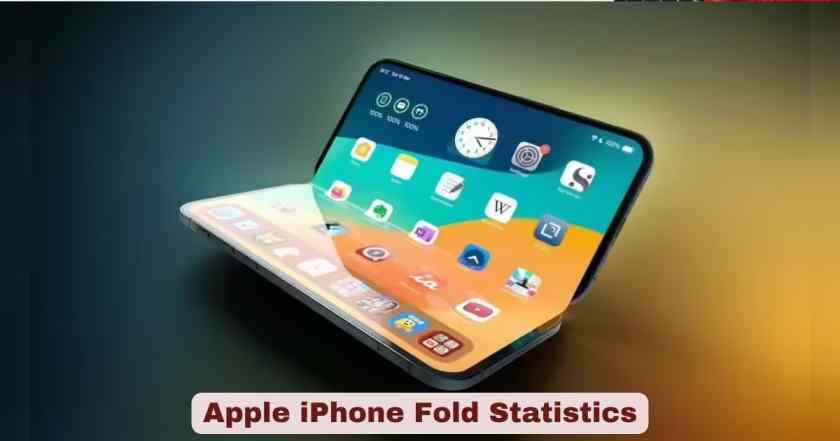
What is the Apple iPhone Fold?
The Apple iPhone Fold 2026 is Apple’s first-ever foldable smartphone — a product that has been in development for nearly a decade and is, by any measure, the most consequential hardware launch Apple has attempted since the original iPhone in 2007. Internally codenamed V68, the device is expected to launch in September 2026 alongside the iPhone 18 Pro and iPhone 18 Pro Max, with a final availability window that Bloomberg’s Mark Gurman confirmed on March 26, 2026 will arrive after the Pro models ship — placing the iPhone Fold potentially as late as November or December 2026. What separates the iPhone Fold from every Android foldable that preceded it is the specific problem Apple refused to launch without solving: the crease. While Samsung, Huawei, and Google have iterated through seven generations of foldables with visible hinge lines that users simply learned to accept, Apple’s design philosophy reportedly required that the crease be eliminated entirely before the product could ship. As of March 13, 2026, Samsung Display — the exclusive OLED panel supplier — confirmed scheduled mass production beginning in May 2026, clearing the final major milestone on the path to a fall 2026 global retail launch.
The scale of anticipation surrounding the iPhone Fold is matched only by the scale of the engineering challenge Apple has undertaken to build it. The device will open to a 7.8-inch inner OLED display with a 4:3 aspect ratio — essentially an iPad mini in your pocket — and fold down to a 5.5-inch cover screen compact enough to use as a standard smartphone. It will carry the same A20 chip on TSMC’s 2nm process as the iPhone 18 Pro, it will run iOS 27 with a redesigned multitasking interface purpose-built for the folded form factor, and it will be constructed from a titanium alloy frame with a Liquidmetal hinge — an amorphous zirconium-based alloy Apple has been developing since acquiring licensing rights in 2010. At a starting price analysts estimate at $2,000–$2,500, it will be the most expensive iPhone Apple has ever produced and, according to IDC projections published December 2025, it is expected to capture over 22% of global foldable unit share and a remarkable 34% of total foldable market value in its very first year — before a single unit has shipped. That is the weight of what the Apple iPhone Fold 2026 represents: not just a new product category for Apple, but potentially a defining moment in the history of the smartphone.
Interesting Facts: Apple iPhone Fold 2026
| Fact | Detail |
|---|---|
| Apple’s foldable development history | Apple first received foldable display supply offers from Samsung in 2019 — the iPhone Fold arrives 7 years later |
| Internal codename | V68 — confirmed by multiple supply chain sources |
| Expected launch event | September 2026 alongside iPhone 18 Pro / Pro Max — final availability may be November–December 2026 |
| Mark Gurman confirmation (March 26, 2026) | iPhone Fold will NOT ship in September alongside Pro models — arrives later in fall |
| OLED panel supplier | Samsung Display — exclusive supplier for both inner and outer panels |
| Samsung Display mass production start | Confirmed scheduled for May 2026 |
| Samsung Display panel generation | 8.6th-generation OLED — more efficient than 6th gen; supplied to zero other devices as of March 2026 |
| Foxconn production ramp target | Full assembly begins approximately July 2026 — per BW Businessworld supply chain report |
| Production target raised (March 2026) | Apple raised initial production target approximately 20%, per Digitimes (March 12, 2026) |
| Initial shipment volume (Ming-Chi Kuo estimate) | 3–5 million units in 2026 — conservatively managed first-gen posture |
| Total lifecycle supply chain order | Apple placed orders for approximately 15–20 million units over initial lifecycle |
| Thinnest Apple device ever | 4.5 mm when unfolded — thinner than iPad Pro’s 5.1 mm |
| Crease status (Bloomberg’s Gurman) | Crease is “significantly reduced but not perfect” — not fully eliminated |
| Apple’s crease mission | Pursued eliminating crease “regardless of cost” — per MacRumors February 2026 report |
| IDC projected foldable market growth (2026) | 29.7–30% YoY growth — Apple’s entry is primary driver |
| IDC projected Apple foldable market share (Year 1) | 22% unit share and 34% of total foldable market value |
| Counterpoint Research projected Apple market share | 28% share in 2026 — placing Apple second only to Samsung (31%) in first year |
| Foldable market ASP vs. standard smartphone | iPhone Fold’s $2,400 average selling price is approximately 3× higher than a typical smartphone |
| iOS 27 iPad-style multitasking (Bloomberg, March 2026) | iPhone Fold will support two apps side-by-side — first iPhone to offer true split-screen multitasking |
| Foldable CAGR through 2029 (IDC) | 17% CAGR — vs. less than 1% for traditional smartphones |
Source: MacRumors (March 26, 2026), IBTimes UK (March 2026), BW Businessworld (March 2026), IDC Worldwide Quarterly Mobile Phone Tracker (Dec 9, 2025), Bloomberg/Mark Gurman, TechStory (March 13, 2026), Counterpoint Research (March 2026), Digitimes (March 12, 2026)
The interesting facts table for the Apple iPhone Fold 2026 tells the story of a company that chose to be seven years late rather than ship something imperfect. Apple’s refusal to enter the foldable market until it had pursued crease elimination “regardless of cost” — a phrase attributed to Apple’s internal engineering mandate by MacRumors in February 2026 — is the defining narrative arc behind every supply chain milestone, leaked render, and analyst projection in this list. The 20% production target increase confirmed by Digitimes on March 12, 2026 is perhaps the most commercially significant single data point of the entire pre-launch period: when a company raises its own production targets before a product is announced, it reflects internal demand signal data derived from pre-order interest, carrier conversations, and retailer commitments that outside analysts cannot fully see. Apple’s willingness to absorb the additional manufacturing risk of scaling Foxconn’s assembly lines upward before the first public reveal signals genuine institutional confidence in the product’s commercial reception.
The market structure data from IDC and Counterpoint Research deserves attention as a standalone narrative. IDC’s projection that the iPhone Fold will capture 34% of total foldable market value in year one — despite holding only 22% of unit share — is a precise quantification of the Apple premium: it sells fewer units than Samsung but generates far more revenue per unit, commanding a per-device value that will immediately reshape the economics of the entire foldable category. Counterpoint Research’s more aggressive forecast of 28% market share in 2026 would place Apple in second position behind Samsung’s 31% before it has shipped a single commercial unit — a market disruption without precedent in any product category. The IDC finding that foldables will grow at a 17% CAGR through 2029 compared to less than 1% for traditional smartphones frames the iPhone Fold not as a premium curiosity but as Apple’s entry into what the firm’s own data identifies as the fastest-growing segment in all of consumer electronics hardware.
Apple iPhone Fold 2026 Specs | Rumored Technical Specifications
| Specification | iPhone Fold 2026 (Rumoured / Leaked) |
|---|---|
| Inner display size | 7.76–7.8 inches flexible OLED (MacRumors: 7.76″; TrendForce: 7.8″) |
| Inner display resolution | 2,713 × 1,920 pixels (leaked CAD data, December 2025) |
| Inner display aspect ratio | 4:3 — iPad mini-style landscape format when open |
| Outer (cover) display size | 5.49–5.5 inches |
| Outer display resolution | 2,088 × 1,422 pixels |
| Outer display aspect ratio | 3:2 — same as original iPhone; standard slab smartphone format |
| Display technology | Flexible OLED (Samsung Display, 8.6th-generation panels) |
| Display crease status | “Nearly invisible” / “significantly reduced” per Gurman; crease-free technology via laser-drilled metal plate |
| Chipset | Apple A20 (same as iPhone 18 Pro) — TSMC 2nm process |
| RAM | 12 GB (widely expected, consistent with Pro tier) |
| Storage options | 256 GB / 512 GB / 1 TB |
| Rear cameras | Dual rear camera — space constraints prevent triple-lens system |
| Rear camera resolution (main) | 48 MP (consistent with Pro Camera rumours; full spec unconfirmed) |
| Telephoto | No periscope telephoto — design thinness prevents third lens |
| Front camera (outer display) | Single punch-hole camera on cover screen |
| Front camera (inner display) | Camera on inner display (under-panel or in-fold configuration) |
| Biometrics | Touch ID side button — no Face ID (hinge prevents TrueDepth alignment) |
| Notch / Dynamic Island | Neither — no Dynamic Island; first iPhone since 2022 without it |
| Frame material | Titanium alloy |
| Hinge material | Liquidmetal — zirconium-based amorphous alloy; Apple has held licensing since 2010 |
| Hinge supplier | Fine M-Tec (South Korea) — shared with Samsung Galaxy Z Fold 8 laser-drilled stress plate |
| Dimensions (folded) | Approximately 9.0–9.6 mm thick, 120.6 mm tall, 83.8 mm wide (CAD leaks, Dec 2025) |
| Dimensions (unfolded) | 4.5–4.8 mm thick — thinner than iPad Pro (5.1 mm) and thinnest Apple device ever |
| Weight | Not officially confirmed — expected heavier than iPhone 18 Pro Max |
| Battery | 5,500 mAh (widely cited; GSMArena specification page) |
| Connectivity | Wi-Fi 7, Bluetooth 5.4, Apple C2 modem (Apple’s own next-gen cellular modem), NFC, UWB |
| Operating system | iOS 27 — iPad-style multitasking, side-by-side apps, foldable-optimised UI |
| 5G | Sub-6 GHz and mmWave support via Apple C2 modem |
| Water resistance | Expected IP68 — exact rating unconfirmed |
| Colors confirmed in testing | Black and White — Gurman noted additional options may be added before reveal |
| Charger in box | Not confirmed — Apple has removed chargers from all recent iPhone boxes |
Source: MacRumors Fold Roundup (updated March 28, 2026), GSMArena iPhone Fold spec page, CAD leak report via iPhone-Ticker.de (Dec 17, 2025), IBTimes UK (March 2026), BW Businessworld (March 2026), Bloomberg/Gurman (March 2026), TrendForce
The iPhone Fold’s technical specification profile is shaped by one overriding constraint that has cascaded through every hardware decision Apple’s engineers made: thinness. The ambition to produce a device that unfolds to 4.5 mm — thinner than any iPad or iPhone Apple has ever made — while housing two large OLED panels, a Liquidmetal hinge mechanism, and a 5,500 mAh battery is a feat of miniaturisation that directly explains several of the more controversial specification choices. The absence of Face ID is not a feature deprioritisation — it is a geometric impossibility. The TrueDepth camera system requires a minimum stack height and precise alignment relative to the user’s face that a centred hinge and ultra-thin chassis cannot accommodate. The Touch ID side button solution, borrowed from iPads, preserves biometric authentication without sacrificing the slim profile. Similarly, the dual rear camera rather than the Pro’s three-lens array reflects the same constraint: there is physically no depth budget for a third lens module when the unfolded device measures 4.5 mm.
The choice of Apple’s own C2 cellular modem — rather than a Qualcomm chipset — is strategically significant beyond the iPhone Fold itself. Apple has been developing its own modem technology for years, and the C2 represents the generation at which the company believes the in-house solution is ready for its most demanding flagship product. Deploying it in the iPhone Fold — a device carrying Apple’s highest per-unit cost and margin of any iPhone — signals confidence in the C2’s readiness that the mainstream iPhone 18 series alone could not demonstrate. The 4:3 inner display aspect ratio is the spec that most directly ties the iPhone Fold’s identity to the iPad ecosystem rather than to Android foldables: Samsung’s Galaxy Z Fold 7 uses a 21:9 outer and 20:18 inner ratio in a tall, narrow book format, while Apple’s wider, squatter 4:3 form deliberately mimics the iPad mini’s proportions to make the transition between iPhone closed-screen use and iPad-style open-screen use as cognitively natural as possible.
Apple iPhone Fold 2026 Global Price | Analyst Estimates & Storage Tiers
| Source / Analyst | Estimated Starting Price (256 GB) | Top Config Estimate |
|---|---|---|
| Ming-Chi Kuo (Apple analyst) | $2,000–$2,500 range | Up to $2,500 for 1 TB |
| Bloomberg / Mark Gurman | ~$2,000 starting | — |
| UBS analysts | $1,800–$2,000 | — |
| Fubon Research | $2,400 | — |
| TechStory (supply chain analysis, March 2026) | $2,320 for 256 GB | $2,900 for 1 TB |
| IDC average selling price (ASP) used in forecast | ~$2,400 | — |
| Gadget Hacks analysis | ~$2,399 | — |
| MacRumors pricing summary | “Over $2,000” confirmed — most expensive iPhone ever | — |
| BOM (bill of materials) estimate | Approximately $759 material cost | Gross margin 53–58% |
| Storage options expected | 256 GB / 512 GB / 1 TB | 128 GB not expected |
| Comparable competitor: Samsung Galaxy Z Fold 6 | $1,899 (launch price) | iPhone Fold ~$500 more at midpoint |
| Comparable competitor: Google Pixel 9 Pro Fold | $1,799 | iPhone Fold ~$600 more at midpoint |
| iPhone Fold vs. iPhone 18 Pro Max (expected) | iPhone 18 Pro Max expected at ~$1,199 — Fold represents ~67% premium | |
| Pre-order window | Expected ~1–2 weeks before official launch date | |
| Apple Trade-In credit (expected) | Likely significant trade-in program — details unconfirmed at time of publishing |
Source: MacRumors (March 2026), Ming-Chi Kuo research notes, Bloomberg/Gurman, UBS analyst note, Fubon Research, TechStory (March 13, 2026), IDC (December 9, 2025), Gadget Hacks analysis (December 2025)
The pricing data for the Apple iPhone Fold in 2026 occupies a uniquely contested zone where analyst estimates cluster between $1,800 and $2,500 — a wider range of uncertainty than is typical for Apple flagship pricing, reflecting both the unprecedented nature of the product and the genuine variation in analyst assumptions about Apple’s margin strategy for a first-generation device. The most reliable estimates from Ming-Chi Kuo (who has the strongest supply chain track record on Apple hardware) and Bloomberg’s Mark Gurman converge on approximately $2,000–$2,400 for the base 256 GB configuration. The $759 bill-of-materials figure — derived from component cost analysis — yielding a 53–58% gross margin at the $2,320–$2,400 price point is consistent with Apple’s historical approach to first-generation premium hardware: price to achieve strong margins while the manufacturing complexity is highest, then gradually reduce cost through supply chain optimisation as the product matures into subsequent generations.
The competitive pricing gap is striking and strategically deliberate. At its expected midpoint of roughly $2,200, the iPhone Fold sits approximately $300–$400 above the Samsung Galaxy Z Fold 6 — a premium that would have seemed difficult to justify before the crease elimination technology and the iOS 27 multitasking software gave Apple a differentiated story to tell. The fact that IDC used $2,400 as its average selling price assumption in its market share and revenue modelling — and still arrived at a projection of Apple commanding 34% of total foldable market value in year one — tells you everything about the degree to which Apple’s brand premium creates genuine pricing power in categories it enters late. The ~67% premium over the expected iPhone 18 Pro Max price positions the iPhone Fold explicitly as a product for Apple’s highest-value existing customers rather than a mainstream volume play — at least in its first generation, which is precisely how Apple has always managed the introduction of new product categories.
Apple iPhone Fold 2026 Display Technology | Crease, OLED & Hinge Stats
| Metric | Detail |
|---|---|
| Inner display crease status | “Nearly invisible” per multiple sources; Gurman: “significantly reduced, not perfect” |
| Apple’s engineering approach to crease | Proprietary panel structure, lamination method, and material process — designed by Apple |
| Samsung Display’s CES 2026 panel demo | Branded “Mont Flex” — demonstrated “no crease at all” in hands-on testing (Tom’s Guide) |
| CES 2026 clarification by Samsung | Panel shown as “R&D concept” — not confirmed for Galaxy Z Fold 8 production |
| Crease elimination mechanism | Laser-drilled metal plate — distributes bending stress across wider area vs. single fold line |
| Fine M-Tec (hinge supplier) role | Supplies laser-drilled stress-dispersing metal plate component — shared with Samsung Galaxy Z Fold 8 |
| Apple’s Liquidmetal hinge | Zirconium-based amorphous alloy — Apple holds licensing since 2010 — superior elasticity vs. steel |
| Display glass technology | Testing Ultra-Thin Flexible Glass (UFG) — Apple evaluated multiple materials before settling on design |
| OLED panel generation | Samsung Display 8.6th-generation — more efficient than current 6th-gen used in Galaxy Z Fold 7 |
| Samsung Display exclusive supply | Exclusive supplier for both screens — no LG or BOE panels in iPhone Fold supply chain |
| Mass production confirmed start | May 2026 — per leaker “Instant Digital” on Weibo (March 13, 2026 report) |
| Inner display resolution | 2,713 × 1,920 pixels — pixel density significantly higher than iPad mini |
| Outer display resolution | 2,088 × 1,422 pixels |
| Inner display aspect ratio | 4:3 — iPad mini-style proportions |
| Peak brightness | Not officially confirmed — expected at least 2,000 nits given Samsung 8.6 gen capability |
| Refresh rate | LTPO adaptive — 1 Hz to 120 Hz expected |
| ProMotion on inner display | Expected — consistent with Pro-tier iPhone hardware |
| Under-display camera (inner panel) | Architecture for inner display front camera under exploration; confirmed front cameras on both screens |
Source: MacRumors (CES 2026 display report, January 6, 2026), IBTimes UK (March 2026), BW Businessworld (March 2026), Gadget Hacks CES 2026 report, WCCFTech (January 2026), TechStory (March 2026), CAD leak via Zeera Wireless (Dec 2025)
The display technology story of the iPhone Fold 2026 is not one story but three interlocking ones — the crease, the supplier, and the software — each of which has its own distinct arc. The crease narrative has dominated iPhone Fold coverage since Apple first confirmed its foldable ambitions through supply chain leaks, and for good reason: it is the one technical challenge that most directly separates a device people will use comfortably in public from one they will quietly find embarrassing. Apple’s pursuit of crease elimination “regardless of cost” produced the laser-drilled metal plate design — developed in partnership with Fine M-Tec in South Korea — that disperses the bending stress across a wider surface area rather than concentrating it at the fold line. What Samsung demonstrated at CES 2026 as the “Mont Flex” panel — causing global media coverage of what appeared to be a crease-free display — was later clarified by Samsung as an R&D concept, but the underlying technology is the same generation Apple is using: the innovation exists, it works, and the degree to which it qualifies as “crease-free” versus “nearly crease-free” depends on viewing angle, lighting conditions, and the benchmark you apply.
The supplier dimension is commercially critical for both Apple and Samsung simultaneously. Samsung Display supplying exclusively both inner and outer panels for the iPhone Fold, using its new 8.6th-generation OLED manufacturing process — a process it has not deployed in any other commercial device as of March 2026 — means that Apple is receiving Samsung’s most advanced display technology before Samsung’s own Galaxy Z Fold 8 ships. This is an extraordinary commercial arrangement: Samsung’s Mobile Experience division, which competes directly with Apple in the smartphone market, is dependent on Samsung Display — a separate Samsung subsidiary — delivering its best OLED engineering to Apple first. The financial logic is straightforward: Samsung Display earns component revenue regardless of which brand’s phone sells, and the 15–20 million unit lifetime order commitment Apple has placed represents exactly the kind of volume guarantee that justifies deploying a new manufacturing generation. The software dimension — iOS 27’s iPad-style multitasking interface, side-by-side apps, and sidebar navigation — transforms the display from hardware into a complete experience, and Bloomberg’s March 2026 confirmation that the UI is explicitly modeled on iPadOS suggests the software is as intentionally designed as any physical component.
Apple iPhone Fold 2026 vs. Competitors | Foldable Comparison Statistics
| Feature | Apple iPhone Fold | Samsung Galaxy Z Fold 7 | Google Pixel 9 Pro Fold | Honor Magic V6 (MWC 2026) |
|---|---|---|---|---|
| Expected / launch price | ~$2,000–$2,400 | ~$1,899 | ~$1,799 | ~$1,499 |
| Inner display | 7.76–7.8″ OLED, 4:3 ratio | 8″ OLED, 20:18 ratio | 8″ OLED | 7.95″ BOE OLED |
| Outer display | 5.49–5.5″, 3:2 ratio | 6.5″, 21:9 ratio | 6.3″ | 6.43″ |
| Inner peak brightness | TBC — 8.6 gen Samsung OLED | ~2,600 nits | ~2,700 nits | 5,000 nits (BOE OLED) |
| Chipset | Apple A20 (TSMC 2nm) | Snapdragon 8 Elite Gen 2 | Google Tensor G5 | Snapdragon 8 Elite Gen 2 |
| Crease | “Nearly invisible” / “not perfect” (Gurman) | Visible at angles | Visible | Near-invisible (Super Steel Hinge) |
| Hinge material | Liquidmetal (zirconium alloy) | Standard steel | Standard steel | Super Steel (2,800MPa, air-grade forged) |
| Rear cameras | Dual (no telephoto) | Triple (50MP+10MP+50MP) | Triple | Triple |
| Biometrics | Touch ID side button | Under-display fingerprint | Face Unlock + fingerprint | Side fingerprint |
| Dynamic Island | No — neither Island nor notch | Pill punch-hole | Punch-hole | Punch-hole |
| Operating system | iOS 27 | Android 16 / One UI 8.5 | Android 16 | Android 16 / MagicOS 9 |
| Battery | 5,500 mAh | ~5,000 mAh | ~4,900 mAh | ~5,100 mAh |
| Unfolded thickness | 4.5–4.8 mm | ~5.5 mm est. | ~5.1 mm | 4.35 mm |
| Software update promise | iOS: 5–6 years est. | 7 years | 7 years | 4 years |
| S Pen / Stylus | No | No (removed since Z Fold 6) | No | No |
| Market position | Late entry — Apple first foldable | 7th-gen, market leader | 2nd-gen, strong software | Strong China / mid-premium |
Source: MacRumors (March 2026), BW Businessworld (March 2026), GSMArena, Tom’s Guide (Dec 2025), Honor MWC 2026 announcement
The competitive comparison table for the Apple iPhone Fold 2026 reveals a device that is simultaneously the most expensive, the thinnest when open, the least equipped with cameras, and the only one running iOS — a combination of trade-offs that Apple has made with clear strategic intent. The dual rear camera against competitors’ triple-lens arrays is the most quantifiably apparent hardware gap: Samsung’s Galaxy Z Fold 7 carries a 50MP main, 10MP telephoto, and 50MP ultra-wide while Apple’s Fold ships with only two lenses due to the thinness constraint. For a company that has positioned its Pro and Pro Max cameras as best-in-class for years, shipping a foldable with fewer lenses than those models is a notable concession — but it is one Apple has apparently decided is worth the design integrity of a 4.5 mm unfolded profile. The Honor Magic V6’s 5,000-nit BOE OLED panel and 4.35 mm unfolded thickness show that Chinese manufacturers are competing aggressively on the same dimensions Apple prizes, at a price point $500–$900 lower.
Where the iPhone Fold’s competitive data becomes most interesting is in the software and ecosystem dimension, which no specification table can fully capture. The March 2026 Bloomberg report confirming side-by-side app multitasking as a launch feature — the first time any iPhone has supported true split-screen — reflects the full force of Apple’s integrated hardware and software advantage. When the iPhone Fold opens, iOS 27 will not be porting the existing iPhone interface onto a larger screen: it will switch to a completely different UI paradigm, with sidebars, app pairs, and iPad-style window management, enabling productivity workflows that the Android foldable ecosystem has struggled to standardise across its diverse device range. The Apple ecosystem lock-in — Continuity Camera, AirDrop, iMessage, iCloud, Apple Watch integration, CarPlay — gives every existing Apple product owner a seamless adoption pathway into the iPhone Fold that Android foldable buyers simply do not have. IDC’s projection that Apple will grow its foldable market share to 34% by 2029 reflects exactly this: once the ecosystem logic kicks in, the growth tends to compound.
Apple iPhone Fold 2026 Market Impact & Sales Forecast Statistics
| Metric | Data Point |
|---|---|
| IDC foldable market growth forecast (2026, YoY) | 29.7–30% — Apple entry is primary driver |
| IDC iPhone Fold unit share (Year 1) | Over 22% of total global foldable shipments |
| IDC iPhone Fold revenue share (Year 1) | 34% of total global foldable market value |
| IDC ASP used in forecast | ~$2,400 |
| Counterpoint Research: iPhone Fold market share (2026) | 28% — placing Apple 2nd globally, behind Samsung (31%) |
| Counterpoint: Samsung 2026 foldable share | 31% (down from more dominant position in 2025) |
| Counterpoint: Huawei 2026 foldable share | ~23% |
| Global foldable shipments forecast (2025) | 20.6 million units (IDC) |
| Global foldable shipments forecast (2026, post-Apple) | Expected approximately 26–27 million units at 30% growth |
| Foldable market share of total smartphone market (2025) | ~1.6% of total smartphone sales |
| Foldable market share of total smartphone market (2029) | Over 10% of total smartphone market value (IDC) |
| Foldable CAGR (2026–2029) | 17% — vs. <1% for traditional smartphones |
| Analyst iPhone overall sales impact (2026) | Projected 10% increase in overall iPhone revenue if Fold resonates |
| Initial production target (2026, Apple) | 3–5 million units (Ming-Chi Kuo) |
| Scale-up target (2027) | 20–25 million units — raised from earlier 10–15 million estimate |
| Foldable iPhone sales projection by 2028 | Up to 45 million units annually (supply chain analyst estimate) |
| Book-style foldable share of total (2026 forecast) | 65% of total foldable shipments in book format — up from 52% in 2025 |
| Apple’s foldable market share by 2029 (IDC) | Expected to grow to 34% from year-one 22% |
| Samsung’s response: “Wide Fold” development | Samsung developing competing wide-fold, passport-style format specifically to counter iPhone Fold |
| Mizuho Securities minority view | Small risk of 2027 delay tied to hinge design — all other major sources confirm 2026 |
Source: IDC Worldwide Quarterly Mobile Phone Tracker (December 9, 2025), Counterpoint Research (March 25, 2026), Tom’s Guide (December 12, 2025), Ming-Chi Kuo research notes, Apple Insider (December 2025), IBTimes AU (March 2026), BW Businessworld (March 2026)
The market impact and sales forecast statistics for the Apple iPhone Fold constitute one of the most comprehensively bullish analyst consensus in recent consumer electronics history — and the numbers carry the weight of IDC, Counterpoint Research, Ming-Chi Kuo, and Mark Gurman all pointing in the same direction. The IDC projection that the foldable market will grow 30% in 2026 as a direct consequence of Apple’s entry — accelerating from just 6% growth in the prior forecast period — is perhaps the most succinct encapsulation of what the iPhone Fold represents to the category. Samsung, Google, Huawei, and Honor have collectively spent seven years building a foldable ecosystem that reached 20.6 million units in 2025 — approximately 1.6% of total smartphone sales. Apple’s arrival at the premium end of that market in H2 2026 is projected to compress into a single product launch the kind of category legitimisation that took the smartwatch industry two years to achieve after Apple Watch launched in 2015. The 2027 scale-up target of 20–25 million units — raised from earlier estimates of 10–15 million as Apple absorbed positive supply chain signals — suggests internal conviction that this is a volume product by its second year.
The competitive response data embedded in these market projections is as telling as the projections themselves. Samsung developing a “Wide Fold” — a passport-style foldable specifically designed to counter the iPhone Fold’s 4:3 wider format — is a remarkable concession: the world’s dominant foldable manufacturer is redesigning part of its product line around Apple’s unreleased device. The book-style format’s projected jump from 52% to 65% of all foldable shipments in 2026 directly reflects Apple’s influence: because the iPhone Fold uses the book-fold format, Apple will immediately make it the dominant form factor simply by selling its first foldable in volume. The Counterpoint Research projection that Apple will hold 28% market share before the year is out — compared to Samsung’s 31% — is, if accurate, one of the fastest ascents from zero to near-market-leadership in the history of any product category. And the IDC projection of Apple reaching 34% foldable market share by 2029, while Samsung’s relative share declines, places the iPhone Fold on a trajectory where Apple becomes the global foldable leader within three years of its market entry — the exact historical playbook the company has executed in smartphones, tablets, and smartwatches before it.
Apple iPhone Fold 2026 Software & AI Features | iOS 27 & Multitasking
| Feature | Detail |
|---|---|
| Operating system at launch | iOS 27 — unveiled at WWDC 2026 (June 2026) |
| Multitasking — key new capability | Two apps side-by-side when inner display open — first ever on an iPhone |
| Sidebar navigation | Many apps will feature left-side navigation sidebars on inner display — iPad app layout |
| App developer tools | Apple providing developers tools to adapt existing iPhone apps for foldable interface |
| Folded-to-unfolded UI transition | Seamless automatic interface switch — phone-style UI folded, iPad-style UI unfolded |
| iOS 27 Siri (LLM-based rebuild) | Complete large language model rebuild of Siri — arriving with iOS 26.4 in March 2026 as pre-release; full version in iOS 27 |
| Siri “World Knowledge Answers” | New feature functioning similarly to ChatGPT — comprehensive responses to general queries |
| Apple Intelligence features (Fold-specific) | Larger inner display enables more ambitious Apple Intelligence AI workflows on-device |
| Apple Intelligence: on-device vs. cloud | A20 chip’s enhanced NPU enables more tasks on-device — aligned with Apple’s privacy-first positioning |
| Foldable-specific iOS 27 optimisations | WWDC 2026 announcement confirmed iOS 27 includes optimisations specifically for foldable form factor |
| App continuity (folded → unfolded) | Apps remain active and resize automatically when device opens or closes |
| Picture-in-picture enhancement | Existing iPhone PiP feature expands meaningfully on 7.8″ inner display |
| Stage Manager (Fold adaptation) | iPad’s Stage Manager feature expected to adapt for iPhone Fold inner display |
| Split-screen gaming | Larger inner display enables game + streaming side-by-side — previously impossible on iPhone |
| Productivity workflows | Email + Calendar, Notes + Safari, Messages + Maps — all confirmed to support split-view |
| Apple Ecosystem integration | Full Continuity Camera, AirDrop, Universal Clipboard, Handoff — seamless with Mac, iPad, Apple Watch |
Source: Bloomberg/Mark Gurman (March 11, 2026 — iPad multitasking confirmation), MacRumors (iOS 27 WWDC 2026 announcement), Gadget Hacks (January 2026), Apple Insider (December 2025)
The iOS 27 and software feature set for the Apple iPhone Fold is, in the assessment of Bloomberg’s Mark Gurman, whose March 11, 2026 report explicitly confirmed the iPad-style multitasking design, the element that will most differentiate Apple’s foldable from every Android device that preceded it. The fundamental insight driving Apple’s software approach is clean and decisive: the iPhone Fold is not a large iPhone and not a small iPad — it is both, simultaneously, and the software must be designed to shift fluently between those two identities. When folded, iOS 27 presents a standard iPhone interface optimised for one-handed use on the 5.5-inch cover screen. When opened, the interface automatically reconfigures into an iPad-style layout with sidebars, split-screen apps, and resizable windows — making the transition as natural as opening a notebook. The fact that Apple is providing developers with specific tools to adapt their existing apps for the foldable interface — rather than asking them to build from scratch — signals an understanding that the App Store’s breadth is the iPhone Fold’s most important competitive advantage on day one.
The LLM-based Siri rebuild arriving in iOS 27 is the software story that will most directly benefit from the iPhone Fold’s larger inner display. A genuinely capable AI assistant — one that can answer complex queries, synthesise information across multiple sources, take multi-step actions, and maintain conversational context — becomes dramatically more useful on a 7.8-inch display where it can present information visually, open multiple apps simultaneously in response to a single request, and display its reasoning in a format that the compact iPhone screen could never accommodate. The A20 chip’s enhanced NPU processing on-device means that many of these AI interactions will happen without cloud dependency — addressing the privacy concerns that have slowed enterprise adoption of AI assistants on mobile devices. Together, the hardware (inner display, A20 NPU), the software (iOS 27 multitasking, LLM Siri), and the ecosystem (Apple Intelligence across iPhone, Mac, iPad) create a foldable experience whose total value proposition is fundamentally different from anything the Android foldable market has assembled — not because any individual component is more advanced, but because the entire stack has been engineered as a single coherent system from the ground up.
Disclaimer: The data reports published on The Global Files are sourced from publicly available materials considered reliable. While efforts are made to ensure accuracy, no guarantees are provided regarding completeness or reliability. The Global Files is not liable for any errors, omissions, or damages resulting from the use of these reports.