
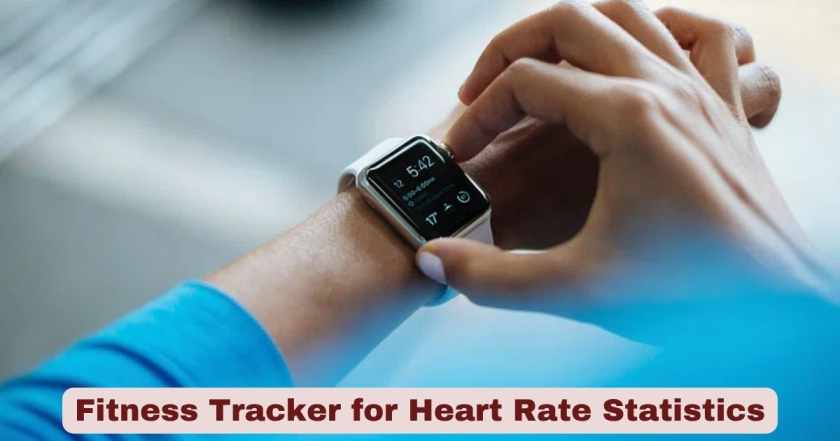
What Is Fitness Tracker for Heart Rate?
A fitness tracker for heart rate is a wearable device — most commonly worn on the wrist, finger, or upper arm — that continuously or intermittently monitors the wearer’s pulse using optical photoplethysmography (PPG) technology. PPG works by shining LED light (typically green) into the skin, measuring the changes in light absorption caused by blood volume pulses with each heartbeat. The resulting signal is processed by onboard algorithms to calculate heart rate (HR) in beats per minute, and in more advanced devices, metrics including heart rate variability (HRV), resting heart rate trends, VO2 max estimates, stress scores, and ECG-based rhythm detection. What began as simple step-counting wristbands has evolved into a medically significant category of consumer electronics: modern fitness trackers from Apple, Garmin, Samsung, Fitbit (Google), Whoop, Oura, and others now embed multi-sensor arrays that can detect cardiac arrhythmias, track recovery, alert users to abnormal rhythms, and — in a growing body of clinical evidence — contribute meaningfully to cardiovascular disease prevention and early diagnosis. The American College of Sports Medicine (ACSM) ranked wearable technologies as the #1 fitness trend for 2024, based on a survey of over 4,500 health and fitness professionals, reflecting a field that has moved decisively from consumer gadget to mainstream health infrastructure.
The market behind these devices is one of the fastest-growing in the entire healthcare technology sector. The global fitness tracker market was valued at approximately $60.9–72 billion in 2024 depending on the research methodology used, and multiple research firms project it will reach between $72 and $93 billion in 2026 — with the longest-horizon projections showing a market in the range of $154 billion to $486 billion by the early-to-mid 2030s, growing at a CAGR of roughly 16–24%. The heart rate monitoring and activity tracking application segment holds the largest application share, at 39.23% of the total fitness tracker market in 2025 (Mordor Intelligence), reflecting the fundamental centrality of heart rate data to everything these devices do. Globally, smartwatch users — the primary platform for advanced heart rate tracking — numbered an estimated 454 million in 2024 and are projected to reach 640 million by 2026. The clinical and public health implications of this scale are profound: hundreds of millions of people are now carrying continuous heart rate monitors in their pockets and on their wrists, creating an unprecedented dataset for cardiovascular research and, increasingly, a real-world screening tool for conditions like atrial fibrillation that have historically been difficult to detect.
Interesting Facts about Fitness Tracker Heart Rate
| Fact | Detail |
|---|---|
| Global fitness tracker market (2024) | ~$60.9 billion (Grand View Research) |
| Global fitness tracker market (2025) | ~$71–79 billion (range across research firms) |
| Global fitness tracker market (2026) | ~$72–93 billion (range across research firms) |
| Highest 2026 projection | $93.35 billion (Precedence Research) |
| Lowest 2026 projection | $72.61 billion (Mordor Intelligence) |
| Market CAGR (2025–2030/2031) | 16–24% depending on timeframe and research firm |
| Heart rate tracking application share | 39.23% of total fitness tracker market (2025) — largest application segment (Mordor Intelligence) |
| Smartwatch segment share | Largest product type: 48.5–50%+ of fitness tracker market (2024) |
| Hand-wear dominance | Wrist and hand-wear devices: 84.22% of fitness tracker market (2025) |
| North America market share | 41.7–47% of global market (2024) — dominant region |
| US fitness tracker market (2025) | $12.12 billion in revenue (Statista consumer segment) |
| Online sales channel share | 44.47–65% of global fitness tracker sales via online channels (2024–2026) |
| Global wearable device shipments (2026) | Projected 614.1 million units (2026 forecast) |
| Global smartwatch users (2024) | ~454.69 million users worldwide |
| Global smartwatch users (2026) | Projected ~640.15 million users |
| Global fitness tracking app users (2026) | Projected 462.65 million users |
| US wearable device ownership (2020) | 1 in 5 Americans regularly used a fitness monitoring device (Pew Research Center) |
| Global wearable use for fitness monitoring | 53.70% of respondents in a 2022 global survey reported using a wearable to monitor fitness activity |
| Primary HR sensing technology | Photoplethysmography (PPG) — optical LED-based sensor |
| Advanced feature: ECG | Single-lead ECG available in Apple Watch, Samsung Galaxy Watch, and others |
| Apple Heart Study (NEJM 2019) | Largest study: ~420,000 participants; PPV of 84% for AF notification concordance |
| Fitness tracker AFib detection (RCT, JACC 2026) | Smartwatch-based screening detected AF in 9.6% of intervention group vs 2.3% control — HR 4.40 |
| #1 fitness trend (ACSM 2024) | Wearable technologies ranked #1 by 4,500+ health and fitness professionals |
| ACSM wearables identified as top trend for | 2024 — American College of Sports Medicine |
| Asia-Pacific CAGR (2026–2031) | 19.67% — fastest growing regional market (Mordor Intelligence) |
| Glucose monitoring CAGR | 19.97% — fastest growing application segment through 2031 (Mordor Intelligence) |
| Key market players | Apple, Samsung, Garmin, Google (Fitbit), Huawei, Xiaomi, Whoop, Oura, Amazfit, Fossil |
Source: Grand View Research (Fitness Tracker Market 2030), Mordor Intelligence (Fitness Tracker Market 2031, updated January 2026), Precedence Research (December 2025), Fortune Business Insights (Fitness Tracker Market 2034), Statista Fitness Trackers forecast, News.market.us Fitness Tracker Statistics (January 2026), Pew Research Center (January 2020), PMC Keeping Pace with Wearables (2024), NEJM Apple Heart Study (2019), JACC van Steijn et al. (January 2026)
The $72–93 billion range you see across research firms for the 2026 market is not statistical noise — it reflects genuinely different methodological choices about which products to include (just dedicated fitness bands vs. the full smartwatch category vs. adding smart scales) and how to handle the rapidly blurring line between consumer electronics and medical devices. What every firm agrees on is the direction: the market is growing rapidly, driven by falling hardware costs, rising chronic disease prevalence, and an increasingly health-conscious global consumer base that views heart rate tracking not as a novelty but as a baseline expectation from any wearable device. The 39.23% application share of heart rate monitoring within the fitness tracker market reflects how thoroughly this single metric anchors the entire category’s value proposition — it is why people buy these devices, wear them daily, and upgrade to newer models.
The North American market’s 41–47% global share reflects both the US’s lead in adopting wearable technology and the presence of the industry’s dominant players — Apple, Google (Fitbit), Garmin — who design, manufacture, and primarily market their products for US consumers first. The US fitness tracker revenue of $12.12 billion in 2025 (Statista consumer segment) represents a meaningful portion of the global total and reflects per-capita adoption rates that consistently lead global rankings. The online sales channel commanding 44–65% of sales mirrors broader consumer electronics purchasing patterns: these are highly research-intensive purchases where consumers compare specifications, read user reviews, and buy from Amazon, Apple.com, or Garmin.com rather than walking into a retail store.
Heart Rate Tracking Technology | How Fitness Trackers Measure HR
| Technology / Feature | Detail |
|---|---|
| Primary technology: PPG | Photoplethysmography (PPG) — LED light (green, red, infrared) shines into skin; changes in light absorption from blood volume pulses calculate HR |
| PPG wearing positions studied | Upper arm, forearm, wrist — upper arm shows best accuracy across exercise intensities |
| ECG-based HR measurement | Single-lead ECG electrodes in Apple Watch (Series 4+), Samsung Galaxy Watch — most accurate for arrhythmia detection |
| Apple Watch ECG AFib sensitivity | 96% sensitivity for detecting AF from ECG PDF waveform (Circulation, post-cardiac surgery patients) |
| Apple Watch ECG AFib specificity | 100% specificity — no false positives in the above study |
| Apple Watch ECG overall agreement | 98.9% agreement with telemetry (κ statistic = 0.98) |
| Apple Heart Study (NEJM, 2019) | ~420,000 participants; 84% positive predictive value of AF notifications; 34% of notification recipients confirmed AFib on ECG patch |
| Apple Watch AF detection meta-analysis | Systematic review: Apple Watch ECG sensitivity and specificity “comparable to standard 12-lead ECG” for AF |
| Fitbit Inspire 3 — cardiac rehab validation | Acceptable validity for HR monitoring during cardiopulmonary exercise testing (CPX) in CVD patients; MAPE ≤10% threshold met |
| Fitbit Inspire 3 — caveat | Less accurate during high-intensity exercise, especially in heart failure patients — clinicians should interpret with caution |
| Polar Verity Sense (upper arm PPG) | Described as “highly accurate and reliable alternative” to ECG chest strap across sedentary to high-intensity activities |
| Smartwatch HR accuracy (rest, clinical) | Apple Watch: 99.9% accuracy vs clinical pulse oximeter (PMC study) |
| General PPG HR accuracy range | Research shows range from 79.8% to 99.9% accuracy across devices and conditions |
| Factors reducing PPG accuracy | Motion artifacts, sweating, dark skin tones (melanin absorbs more light), contact pressure, atrial fibrillation itself |
| Photoplethysmography–ECG comparison | PPG suitable for HR monitoring at rest and moderate exercise; ECG more reliable for arrhythmia characterization |
| Heart Rate Variability (HRV) | Advanced metric — time variation between heartbeats; associated with autonomic nervous system health; available in Whoop, Apple Watch, Garmin |
| HRV and cardiovascular risk | Low HRV in a 2-minute strip predicts risk of coronary heart disease and mortality (ARIC Study, Circulation) |
| Chest strap (gold standard consumer) | Polar H10 chest strap — considered reference standard for consumer HR monitoring; validated against ECG |
| AAMI standard for wearable HR accuracy | ±5 bpm or ≤5% MAPE is broadly considered acceptable for consumer cardiac monitoring applications |
| SpO2 / blood oxygen | Available in Apple Watch, Fitbit, Samsung, Garmin — measures blood oxygen saturation via PPG |
| ECG classifiable HR range (Apple Watch) | 50–150 bpm — classifies as SR, SR with high HR, AFib, AFib with high HR, inconclusive, or poor recording |
Source: JMIR Cardio (Schweizer et al., March 2025), JMIR Cardio (Kitagaki et al., October 2025), PMC El-Amrawy and Nounou (2015), NPJ Cardiovascular Health (September 2025), NEJM Apple Heart Study (2019), Circulation Apple Watch AFib (2019), PMC Apple Watch meta-analysis (February 2025), JMIR Formative Research Hardon et al. (2025), Apple Healthcare arrhythmia detection document
The technology behind fitness tracker heart rate monitoring has advanced from novelty sensor to clinically meaningful tool in roughly a decade — but that advance has been uneven across use cases. For resting heart rate and moderate-intensity activity, consumer PPG-based trackers from Apple, Garmin, Fitbit, and others now achieve accuracy levels that rival basic clinical instruments. The multiple peer-reviewed validations showing Apple Watch accuracy of 99.9% against a clinical pulse oximeter at rest, and Polar Verity Sense performing comparably to ECG chest straps across most activity intensities, represent genuine technological maturity. The 98.9% ECG agreement between Apple Watch and cardiac telemetry for arrhythmia detection — published in Circulation and supported by the massive Apple Heart Study — represents something categorically more significant: a consumer wearable contributing to a clinical-grade function.
Where caution is still warranted is at the extremes: during high-intensity exercise, particularly in patients with cardiovascular disease or heart failure, PPG accuracy degrades due to motion artifacts, changes in peripheral blood flow, and the device’s inability to update its algorithm fast enough to track rapid heart rate changes. The JMIR Cardio 2025 validation of Fitbit Inspire 3 in cardiac rehabilitation patients is particularly instructive — acceptable for most patients, but specifically cautioning that heart failure patients at high exercise intensity represent a scenario where the tracker may mislead. Similarly, the growing evidence that dark skin tones and contact pressure variations can systematically affect PPG accuracy reflects an equity concern that device manufacturers are actively working to address through multi-wavelength sensing and improved algorithms.
Heart Rate Fitness Tracker Market Statistics 2026
| Market Segment | Data |
|---|---|
| Global fitness tracker market (2024) | $60.9 billion |
| Global fitness tracker market (2025) | $71.2 billion (GVR) / $72.08 billion (Fortune BI) / $71.93 billion (Toward Healthcare) |
| Global fitness tracker market (2026) | $72.61–93.35 billion (range across sources) |
| Global fitness tracker market (2030) | $162.8 billion at 18% CAGR |
| Global fitness tracker market (2034/2035) | $363–487 billion |
| CAGR (2025–2030) | 18.0% |
| CAGR (2026–2031) | 16.31% |
| CAGR (2026–2035) | 18.04% |
| Smartwatch segment share (2024) | 48.5–50%+ of total market |
| Smart bands segment | Growing fastest within product type segment |
| Heart rate monitoring application share | 39.23% — largest application segment (2025) |
| Running tracking application share | 22.8% (2024) / 42.41% projected (2026) |
| Glucose monitoring CAGR | 19.97% — fastest growing application |
| North America market share (2024) | 41.7–47.07% depending on source |
| US fitness tracker revenue (2025) | $12.12 billion (B2C consumer) |
| Asia-Pacific CAGR | 19.67% — fastest growing region (Mordor Intelligence, through 2031) |
| Online distribution share (2024) | 65.1% of global sales |
| Online distribution share (2026) | 44.47% globally |
| Hand-wear share (wrist + ring) | 84.22% of fitness tracker market (2025) |
| Leg-wear growth | Fastest growing wear type at 21.53% CAGR (insoles, leg wraps) |
| Global wearable shipments (2021 peak) | 533.6 million units — peak year |
| Global wearable shipments (2026 forecast) | 614.1 million units |
| Smartwatch users (2025) | 562.86 million globally |
| Smartwatch users (2026) | 640.15 million globally |
| Smartwatch users (2029) | 740.53 million globally |
| Fitness tracking app users (2026) | 462.65 million globally |
| UK digital fitness device users (2026) | 17.45 million users |
Source: Grand View Research (Fitness Tracker Market 2030), Mordor Intelligence (January 2026), Precedence Research (December 2025), Fortune Business Insights, Toward Healthcare (February 11 2026), Statista Fitness Trackers Worldwide Forecast, News.market.us Fitness Tracker Statistics (January 2026)
The fitness tracker market data tells a compelling growth story, but the wide variance between analyst projections ($72B vs $93B for 2026 alone) is worth understanding rather than dismissing. Narrower-scope studies like Mordor Intelligence ($72.61B) tend to use stricter product definition criteria and more conservative CAGR assumptions; broader projections like Precedence Research ($93.35B) include the full spectrum of wearable health monitoring devices and apply higher CAGRs driven by emerging markets. What matters most for any publisher, investor, or healthcare planner is the directional consistency: every major research firm agrees the market will roughly double between 2024 and 2030, and the drivers — aging population, chronic disease prevalence, consumer health consciousness, and integration of fitness trackers into clinical pathways — are structural rather than cyclical.
The Asia-Pacific region’s 19.67% CAGR as the fastest-growing market reflects both a massive addressable population and a leapfrog dynamic: consumers in China, India, South Korea, and Southeast Asia are adopting wearable health monitoring without a lengthy legacy hardware cycle to displace. Xiaomi’s affordable fitness bands, Huawei’s expanding smartwatch ecosystem, and the deep penetration of Indian brands like Noise and boAt (not yet captured in Western research coverage) are driving volume adoption at price points Western markets rarely see. The glucose monitoring application’s 19.97% CAGR is the single most significant emerging trend: non-invasive continuous glucose monitoring in consumer wearables — pioneered by Samsung’s wrist-based glucose trends in 2024 and anticipated in further devices — would potentially add hundreds of millions of diabetic and pre-diabetic users to the addressable market for fitness trackers in the next five years.
Fitness Tracker Heart Rate & Cardiovascular Health | Clinical Data
| Clinical Finding | Data |
|---|---|
| AFib prevalence in US | Over 5 million Americans have atrial fibrillation — most common cardiac arrhythmia |
| Undiagnosed AFib (US estimate) | ~700,000 Americans may have undiagnosed atrial fibrillation |
| AFib stroke risk | AFib increases stroke risk 5-fold vs general population |
| AFib US stroke contribution | AFib accounts for 15–25% of all strokes in the US |
| Apple Heart Study — enrolled participants | ~420,000 participants |
| Apple Heart Study — PPV of notification | 84% of AF notifications concordant with AF on ECG patch |
| Apple Heart Study — AF confirmation | 34% of participants notified of irregular pulse later confirmed AF on ECG patch |
| EQUAL RCT — smartwatch AF screening | 437 patients ≥65 with elevated stroke risk — 6 months Apple Watch screening |
| EQUAL RCT — AF detection rate (smartwatch group) | 9.6% new-onset AF detected in smartwatch group vs 2.3% in standard care |
| EQUAL RCT — risk difference | 7.3 percentage points higher AF detection; hazard ratio 4.40 (95% CI 1.66–11.66) |
| EQUAL RCT — asymptomatic AF | Several episodes detected only through smartwatch monitoring — silent AF identified |
| Fitbit Heart Study (Circulation, 2022) | Large-scale study: Fitbit PPG algorithm for AF detection in real-world population |
| Wearable AFib detection (PPG meta-analysis) | Smartwatches/smartphones show “high sensitivity and specificity” for AF detection (Prasitlumkum et al.) |
| ACC/AHA 2023 guidelines | Recommend using consumer-accessible ECG devices (e.g., smartwatches) for AF recurrence monitoring |
| ESC 2020 guidelines | Encourage AI-driven AF detection via wearables; caution against unvalidated mHealth apps in clinical practice |
| Bipolar disorder mood detection (2024) | Fitbit data detected 89.1% of manic episodes and 80.1% of depressive episodes (Brigham and Women’s Hospital, November 2024) |
| HRV and coronary heart disease | Low HRV in 2-minute ECG strip predicts coronary heart disease and mortality (ARIC Study) |
| Pediatric cardiology validation | Corsano CardioWatch bracelet and Hexoskin smart shirt validated in children with heart disease — Erasmus MC, 2025 |
| CSAT for remote cardiac monitoring | Wearables recommended as promising solution for remotely monitoring HR during home-based cardiac rehabilitation |
Source: NEJM Apple Heart Study (2019), JACC van Steijn et al. (January 2026), PMC Apple Watch review (PMC6787392, 2019), PMC Apple Watch meta-analysis (February 2025), NPJ Cardiovascular Health (September 2025), JMIR Cardio Kitagaki et al. (October 2025), JMIR Formative Research Hardon et al. (September 2025), Toward Healthcare (February 2026)
The cardiovascular clinical evidence base for fitness tracker heart rate monitoring has grown from promising observational studies into genuinely practice-changing randomized controlled trial data. The EQUAL RCT — published in the Journal of the American College of Cardiology in January 2026 — is perhaps the most important single piece of evidence in this space: a prospective, multicenter, randomized controlled trial (the gold standard of clinical evidence) showing that 6 months of Apple Watch-based AF screening detected 4.4 times more new-onset atrial fibrillation than standard clinical care in patients aged 65+ with elevated stroke risk. The fact that several of those AF episodes were entirely asymptomatic — detected only through the smartwatch — is precisely the clinical gap that wearable screening was designed to address. AF’s first clinical presentation in up to 18% of cases is stroke; the ability to catch it silently, before that catastrophic event, is the public health prize that makes this research line so compelling.
The ACC/AHA 2023 guidelines’ recommendation that consumer-accessible ECG devices like smartwatches be used for AF recurrence monitoring represents a formal clinical legitimization of what was previously considered a consumer wellness category. The fact that guidelines from the American College of Cardiology, American Heart Association, and European Society of Cardiology now explicitly reference smartwatches in clinical recommendations means that the bridge between consumer fitness device and medical monitoring tool has been officially crossed for this indication. This regulatory and clinical recognition, combined with the ongoing development of additional features (continuous glucose monitoring, blood pressure sensing, early cardiac amyloidosis detection), positions fitness trackers with heart rate monitoring as one of the most consequential consumer health technologies of the decade — one that is simultaneously driving one of the fastest-growing market segments in global healthcare.
Disclaimer: The data reports published on The Global Files are sourced from publicly available materials considered reliable. While efforts are made to ensure accuracy, no guarantees are provided regarding completeness or reliability. The Global Files is not liable for any errors, omissions, or damages resulting from the use of these reports.