
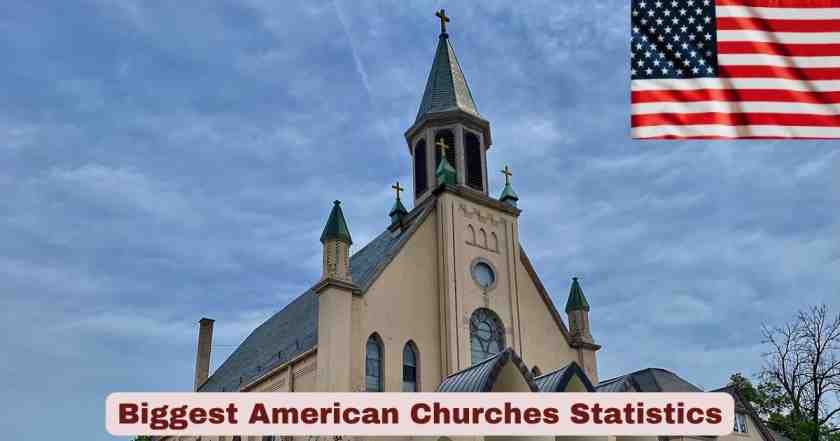
Biggest American Churches in 2026
America has a complicated, fascinating, and uniquely modern relationship with organized religion — and nowhere is that relationship more visible than in the rise of the megachurch. Defined as a Protestant or evangelical congregation with a consistent weekly attendance of at least 2,000 people, a megachurch is far more than an oversized sanctuary. It is a full-service religious enterprise that functions, in many respects, like a mid-sized corporation: staffed by teams of hundreds, operating multi-million-dollar annual budgets, deploying sophisticated marketing and media strategies, broadcasting sermons to millions via streaming and television, and managing sprawling multi-site campus networks that can span an entire state or multiple states simultaneously. According to the Hartford Institute for Religion Research (HIRR) — the nation’s most authoritative academic tracker of megachurch data — there are now an estimated 1,800 megachurches in the United States as of 2024, a number that continues to grow. These congregations collectively draw tens of millions of Americans through their physical and digital doors every week, represent billions of dollars in annual economic activity, and wield cultural influence that extends well beyond the walls of any sanctuary. The biggest American churches are not just religious institutions — they are, in many cases, among the most influential social and cultural organisations in their states and cities.
As of 2026, the landscape of American megachurches reflects both the enduring power of faith-based community and the seismic demographic and cultural shifts reshaping American religious life. The most recent data — compiled from the 2025 Outreach 100 survey conducted by Lifeway Research in partnership with the Hartford Institute for Religion Research, based on verified in-person weekend attendance averages from February and March 2025, and from Pew Research Center’s landmark 2023–24 Religious Landscape Study released in February 2025 — tells a nuanced story. Life.Church in Edmond, Oklahoma holds the top position among surveyed churches with 85,000 weekly attendees. Lakewood Church in Houston, Texas, led by Joel Osteen, remains arguably the most globally recognised megachurch with 45,000 weekly in-person attendees and an estimated 10 million U.S. television viewers weekly. Meanwhile, broader church attendance across America has stabilized after decades of decline, with approximately 30% of Americans attending religious services weekly or nearly every week — a number that is no longer falling sharply but remains dramatically below the 32% of Americans who attended weekly just two decades ago in 2000. The biggest churches are getting bigger. But the overall pool of regular churchgoers is not growing.
Interesting Key Facts About the Biggest American Churches in 2026
| Key Fact | Verified Statistic / Detail |
|---|---|
| #1 Largest church by 2025 Outreach survey | Life.Church, Edmond, OK — 85,000 weekly attendees (Pastor Craig Groeschel) |
| #2 Largest church (Outreach 2025) | Church of the Highlands, Birmingham, AL — 60,000 weekly (Pastor Chris Hodges) |
| #3 Largest church (Outreach 2025) | CCV (Christ’s Church of the Valley), Peoria, AZ — 54,142 weekly (Pastor Ashley Wooldridge) |
| #4 Largest church (Outreach 2025) | Lakewood Church, Houston, TX — 45,000 weekly (Pastor Joel Osteen) |
| #5 Largest church (Outreach 2025) | North Point Ministries, Alpharetta, GA — 37,000 weekly (Pastor Andy Stanley) |
| #6 Largest church (Outreach 2025) | Crossroads Church, Cincinnati, OH — 34,000 weekly (Pastor Brian Tome) |
| #7 Largest church (Outreach 2025) | Christ Fellowship Church, Palm Beach Gardens, FL — 29,500 weekly (Pastor Todd Mullins) |
| #8 (tied) Largest church (Outreach 2025) | Saddleback Church, Lake Forest, CA — 28,000 weekly (Pastor Andy Wood) |
| #8 (tied) Largest church (Outreach 2025) | Southeast Christian Church, Louisville, KY — 28,000 weekly (Pastor Kyle Idleman) |
| #10 Largest church (Outreach 2025) | Eagle Brook Church, Centerville, MN — 26,696 weekly (Pastor Jason Strand) |
| Lakewood Church — weekly TV viewership | ~10 million U.S. viewers weekly (all broadcasts) |
| Total megachurches in the US (HIRR 2024) | ~1,800 megachurches with 2,000+ weekly attendance |
| Total US churches (all sizes) | ~350,000 churches across America |
| Americans attending church weekly (2026) | ~20% — down from 32% in 2000 (Gallup) |
| Americans attending at least once a month | ~40–41% (Gallup / Pew Research) |
| Americans who seldom or never attend | 55–57% (Gallup) |
| US adults identifying as Christian (2023–24 RLS) | ~62% — stabilized after decline from 78% in 2007 (Pew Research) |
| Religiously unaffiliated (“nones”) share | 29% — up from 16% in 2007 (Pew Research 2023–24 RLS) |
| Median annual budget of a US megachurch | $5.5 million (Hartford Institute / Freakonomics, 2025) |
| Mean annual budget — US megachurch | ~$7 million; some top $100 million+ (HIRR 2024) |
| Share of megachurch income from tithes/offerings | 96% (Hartford Institute) |
| Median per-person annual donation — megachurch | ~$1,800/year (Hartford Institute) |
| Elevation Church annual revenue (2024) | $91.35 million in tithes and offerings (MinistryWatch, March 2025) |
| Elevation Church annual revenue (2023) | $108 million in tithes and offerings (MinistryWatch) |
| Life.Church estimated annual revenue | ~$150+ million (nearly twice Lakewood; Freakonomics 2025) |
| Lakewood Church last disclosed annual revenue | $78.7 million contributions / $90.6 million budget (fiscal year 2017) |
| Megachurches with externally audited finances | ~78% (Hartford Institute) |
| Megachurches NOT required to file IRS Form 990 | All — churches are auto-exempt from nonprofit disclosure requirements |
| Average lead pastor salary — megachurch | $147,000/year vs. $48,000 average pastor salary (Hartford / NTDaily, 2025) |
| Staff at a typical megachurch | At least 50 full-time paid staff (Hartford Institute) |
| Nondenominational megachurches — share of top 100 | Majority — 40%+ of all 1,500+ megachurches are nondenominational (24/7 Wall St.) |
| Megachurch movement origin | Surged in 1970s–1980s — driven by postwar suburbanization (HIRR 2024) |
| Churches at 85% of pre-pandemic attendance (2025) | Average US church at 85% of pre-pandemic level (Lifeway Research) |
| Texas alone — number of megachurches | 200+ megachurches (Dallas Morning News / NTDaily, 2025) |
| Gen Z attending church (monthly) | 25–30% — youngest cohort showing stability, not growth (Pew Research 2025 NPORS) |
Source: Outreach 100 / Lifeway Research — 2025 Largest Participating Churches (February–March 2025 attendance survey, published 2025); Hartford Institute for Religion Research (HIRR) Megachurch Research (2024); Pew Research Center — 2023–24 Religious Landscape Study (RLS), released February 26, 2025; Pew Research Center — “Religion Holds Steady in America,” December 2025 NPORS; Gallup — “Church Attendance Has Declined in Most U.S. Religious Groups” (January 2026); MinistryWatch — Elevation Church Annual Report (March 2025); Freakonomics Radio — “Megachurches” podcast episode (January 2026); ReachRight Studios — Church Statistics 2026 (December 2025); ChurchTrac — State of Church Attendance 2026; Michigan Journal of Economics — “The Economics of Megachurches” (January 2026, citing HIRR 2024)
The top-line statistics for American megachurches in 2026 paint a picture of an institution that is simultaneously thriving at the extremes and contracting in the middle. Life.Church at 85,000 weekly attendees is not just the largest church in America by the Outreach 100 survey — it is the largest by a considerable margin, nearly 42% larger than its nearest rival, Church of the Highlands. When you add in Life.Church’s online and app-based ministry — which the organisation claims reaches nearly ten times its in-person count — the total reach becomes extraordinary. Similarly, Lakewood Church’s 10 million weekly TV viewers means Joel Osteen’s ministry is experienced by roughly 3% of the entire U.S. population every week, a cultural footprint that dwarfs that of most media organizations. The fact that the median annual megachurch budget is $5.5 million — nearly 46 times higher than the typical small neighborhood church’s budget of about $120,000 — confirms that megachurches are operating in an entirely different financial universe from most of American religious life.
The broader religious context makes the megachurch statistics even more striking. In a country where 57% of Americans now seldom or never attend religious services and where weekly church attendance has fallen from 32% to 20% over just two decades, the sustained growth of America’s largest churches defies the broader trend. This is not a paradox — it reflects a well-documented phenomenon called religious consolidation, where the overall pool of regular churchgoers has shrunk but those who do attend are increasingly gravitating toward the largest, most media-savvy, most programmatically rich congregations. Smaller churches are losing members not just to secularism but to the megachurch down the road. The Hartford Institute describes this as a redistribution of religious participation rather than new conversion — the religious “market share” is concentrating in the biggest players, even as the total market contracts.
Top 20 Largest Churches in America in 2026 — Attendance Rankings
Outreach 100 — Top 20 Largest Participating US Churches by 2025 Weekend Attendance
| Rank | Church Name | City, State | Senior Pastor | Weekly Attendance | Denomination |
|---|---|---|---|---|---|
| #1 | Life.Church | Edmond, OK | Craig Groeschel | 85,000 | Evangelical Covenant |
| #2 | Church of the Highlands | Birmingham, AL | Chris Hodges | 60,000 | Nondenominational |
| #3 | CCV (Christ’s Church of the Valley) | Peoria, AZ | Ashley Wooldridge | 54,142 | Nondenominational |
| #4 | Lakewood Church | Houston, TX | Joel Osteen | 45,000 | Nondenominational |
| #5 | North Point Ministries | Alpharetta, GA | Andy Stanley | 37,000 | Nondenominational |
| #6 | Crossroads Church | Cincinnati, OH | Brian Tome | 34,000 | Nondenominational |
| #7 | Christ Fellowship Church | Palm Beach Gardens, FL | Todd Mullins | 29,500 | Nondenominational |
| #8 | Saddleback Church | Lake Forest, CA | Andy Wood | 28,000 | Southern Baptist |
| #9 | Southeast Christian Church | Louisville, KY | Kyle Idleman | 28,000 | Christian Churches |
| #10 | Eagle Brook Church | Centerville, MN | Jason Strand | 26,696 | Nondenominational |
| #11 | Fellowship Church | Grapevine, TX | Ed Young | 24,162 | Nondenominational |
| #12 | LCBC Church | Manheim, PA | Jason Mitchell | 23,181 | Nondenominational |
| #13 | Dream City Church | Phoenix, AZ | Luke Barnett | 22,500 | Assemblies of God |
| #14 | The Church of Eleven22 | Jacksonville, FL | Joby Martin | 21,633 | Southern Baptist |
| #15 | Lakepointe Church | Rockwall, TX | Josh Howerton | 21,311 | Southern Baptist |
| #16 | Central Church | Henderson, NV | Jud Wilhite | 21,055 | Independent Christian |
| #17 | Mariners Church | Irvine, CA | Eric Geiger | 20,547 | Nondenominational |
| #18 | Community Bible Church | San Antonio, TX | Ed Newton | 20,318 | Southern Baptist |
| #19 | Bayside Church | Roseville, CA | Ray Johnston | 20,000 | Nondenominational |
| #20 | Prestonwood Baptist Church | Plano, TX | Jack Graham | 19,600 | Southern Baptist |
Source: Outreach 100 / Lifeway Research — 2025 Largest Participating Churches (2025 in-person, weekend attendance averages, February–March 2025); Hartford Institute for Religion Research (HIRR); WorldPopulationReview.com — Biggest Church by State, 2026
The geographic distribution of America’s 20 largest churches is immediately striking: Texas dominates with five entries in the top 20 — Fellowship Church (Grapevine), Lakepointe Church (Rockwall), Lakewood Church (Houston), Community Bible Church (San Antonio), and Prestonwood Baptist (Plano). Florida, Arizona, California, and Georgia each claim two entries, and the pattern aligns almost perfectly with the Sunbelt Sun Belt growth corridor — the fast-expanding suburban metro areas of the South and Southwest where land is cheap, population is growing, and evangelical Christianity remains culturally dominant. Minnesota is the notable outlier, with Eagle Brook Church at #10 representing the largest church in that state and a remarkable success story in a less traditionally evangelical region. The denominational breakdown is equally revealing: of the top 20, 13 are nondenominational or independent, 4 are Southern Baptist, 1 is Assemblies of God, 1 is Evangelical Covenant, and 1 is an independent Christian church. This confirms the Hartford Institute’s finding that nondenominational churches represent the single largest and fastest-growing segment of the megachurch movement.
The attendance numbers require important context. The Outreach 100 is a self-reported survey based on in-person weekend attendance averages from February and March 2025 — the same two months the Lifeway Research team uses every year for consistency. Not every major American megachurch participates: Lakewood Church, for example, has historically not always submitted its own figures and the 45,000 listed here reflects publicly reported data. Gateway Church in Southlake, Texas — which has claimed weekly attendance of up to 100,000 across all campuses including prison ministries — does not appear in the top rankings because its methodology of counting prison campus attendees is non-standard. The Outreach 100 figures represent in-person weekend worship attendance, not membership rolls, streaming audiences, app users, or TV viewers — all of which would produce significantly higher numbers for virtually every church on this list.
American Megachurch Financial Statistics in the US 2026
Megachurch Revenue, Budgets & Financial Breakdown — Key Data 2024–2025
| Financial Metric | Figure | Source |
|---|---|---|
| Median annual megachurch budget | $5.5 million | Hartford Institute / Freakonomics (2025) |
| Mean annual megachurch budget | ~$7 million (some exceed $100 million+) | HIRR 2024 / Michigan Journal of Economics (2026) |
| Typical small neighborhood church budget | ~$120,000/year — 46x less than megachurch median | Hartford Institute / Freakonomics (2025) |
| Share of megachurch income from tithes/offerings | 96% of all income | Hartford Institute (Scott Thumma) |
| Median per-person annual donation — megachurch | ~$1,800/year | Hartford Institute / Freakonomics (2025) |
| Average weekly donation per churchgoer (all churches) | $17/week (~$884/year) | EnterpriseAppsToday / Church Revenue Statistics 2024 |
| Average annual per-person church donation (2022) | $2,848 (~4.35% of avg. household income) | Church Revenue Statistics 2024 |
| Online church donations (US churches, 1 year) | Over $2.2 billion given online | Church Revenue Statistics 2024 |
| Online giving boost from live-streaming | Up to 70% increase in tithes | Church Revenue Statistics 2024 |
| Elevation Church — tithes and offerings (2024) | $91.35 million (down from $108M in 2023) | MinistryWatch, March 28, 2025 |
| Elevation Church — largest cost (2024) | Personnel: $31.88M (35% of budget) | MinistryWatch, March 28, 2025 |
| Elevation Church — outreach spending (2024) | $12.16 million (cumulative total: $118.16M) | MinistryWatch, March 28, 2025 |
| Life.Church estimated annual revenue | ~$150+ million (nearly twice Lakewood) | Freakonomics Radio (January 2026) |
| Lakewood Church last disclosed budget (FY 2017) | $90.6 million total / $78.7 million contributions | Christian Post / Fox Business |
| Lakewood Church — mission/outreach spend (FY 2017) | $1.2 million = 1.3% of budget | Evangelical Focus / Houston Chronicle |
| Typical megachurch staff cost share | ~50% of expenditures on staff salaries/benefits | Hartford Institute / Freakonomics (2025) |
| Megachurch — buildings/operations share | ~20% of expenditures | Hartford Institute |
| Megachurch — programming/education share | ~20% of expenditures | Hartford Institute |
| Megachurch — missions/benevolence share | ~10% of expenditures | Hartford Institute |
| Megachurches with externally audited finances | ~78% | Hartford Institute / Michigan Journal of Economics (2026) |
| Megachurches required to file IRS Form 990 | Zero — all auto-exempt under section 501(c)(3) | IRS / Freakonomics (2025) |
| Average lead megachurch pastor annual salary | $147,000 vs. average pastor $48,000 | NTDaily (April 2025) / Hartford Institute |
| Christians tithing (giving 10% of income) in US | 1.5 million out of 247 million Americans | EnterpriseAppsToday / Church Revenue Statistics 2024 |
| Americans donating less to churches vs. prior years | 17% of households | Church Revenue Statistics 2024 |
| Christians giving as % of income (today) | 2.5% — far below historical 10% tithe norm | Church Revenue Statistics 2024 |
| Texas — megachurches alone | 200+ megachurches | Dallas Morning News / NTDaily (2025) |
Source: Hartford Institute for Religion Research (Scott Thumma) / Freakonomics Radio Podcast — “Megachurches” (January 5, 2026); Michigan Journal of Economics — “The Economics of Megachurches” (January 11, 2026); MinistryWatch — Elevation Church Annual Report Analysis (March 28, 2025); EnterpriseAppsToday — Church Revenue Statistics 2024; NTDaily — “Megachurches Commercialize Religion” (April 2025); Christian Post / Fox Business — Lakewood Church financial data; IRS Section 501(c)(3)
The financial scale of American megachurches is one of the most underappreciated economic stories in the United States. The combined annual revenues of America’s 1,800 megachurches — conservatively estimated at the $5.5 million median budget — represent a total annual economic footprint of approximately $9.9 billion in donation income alone, all of it completely tax-free under Section 501(c)(3) of the Internal Revenue Code and, uniquely, exempt from the standard nonprofit financial disclosure requirements that apply to every other charitable organisation of comparable size. The 96% reliance on member tithes and offerings means that megachurch finances are almost entirely a function of how effectively they recruit and retain committed donors — which explains why the Hartford Institute finds that megachurches spend approximately 50% of their budgets on staff whose primary roles often blend pastoral care with marketing, community engagement, and social media outreach. The largest megachurches have effectively become what researchers describe as “full-service religious organisations” with programming seven days a week, coffee shops, bookstores, childcare, schools, sports leagues, and counselling services — all designed to deepen member engagement and, ultimately, giving.
The transparency gap in megachurch finances remains one of the most discussed issues in American religious media. While 78% of megachurches do subject themselves to some form of external audit — a voluntary step many take to build member trust following high-profile financial scandals — the underlying absence of mandatory IRS Form 990 disclosure means the public has no legal right to examine how these billions of dollars are spent. Elevation Church’s annual reports are a rare model of voluntary transparency: its 2024 report disclosed that 35% went to personnel, 28% to central operations, and $12.16 million to outreach — a level of detail that most megachurches do not publicly share. By contrast, Lakewood Church’s last publicly disclosed financial report (for fiscal year 2017) revealed that of its $90.6 million budget, only $1.2 million — just 1.3% — was directed toward mission and outreach, while $25.1 million went to its television ministry. That single data point sparked significant national debate about the priorities of prosperity gospel megachurches, a debate that has only intensified in the years since.
US Church Attendance & Religious Landscape Statistics in 2026
US Church Attendance Trends — Key Metrics 2020–2026
| Attendance / Religious Identity Metric | 2000 | 2021 | 2023–24 / 2025–26 |
|---|---|---|---|
| Americans attending weekly (Gallup) | 32% | ~22% | ~20% (2026) |
| Americans attending at least monthly | ~45%+ | ~35% | ~40–41% (Gallup/Pew) |
| Americans seldom or never attending | ~40% | ~54% | 55–57% (2026, Gallup) |
| US adults identifying as Christian (Pew RLS) | ~78% (2007 base) | ~63% | ~62% (2023–24 RLS, stabilized) |
| Religiously unaffiliated — “nones” (Pew) | 16% (2007) | ~28% | 29% (2023–24 RLS) |
| Adults aged 18–24 identifying as Christian | — | — | 46% vs. 80% for 74+ yr-olds (Pew 2025) |
| Young adults (18–29) who are “nones” | — | ~38% | 44% (2023–24 RLS) |
| Millennials attending weekly (Barna) | — | — | 39% — an increase over prior years |
| Gen Z attending services monthly (Pew 2025 NPORS) | — | — | 26–30% — stable, not growing |
| Church membership — US adults below 50% | Not reached until 2020 | ~47–49% | Stabilized at ~47–50% |
| Gallup: clergy rated high in ethics/honesty | 56% (2001) | ~40% | 30% (2025) |
| Churches at 85% of pre-pandemic attendance | — | — | Average US church (Lifeway Research) |
| Nondenominational churches in US — growth | — | — | +6,000 new since 2010; +6.5M attendees (US Religion Census) |
| Americans leaving church congregations daily (pre-pandemic) | — | ~3,500/day | ~3,500/day (1.2M/year) |
| Pre-pandemic people leaving church annually | — | ~1.2M/year | Rate slowed post-2022 stabilization |
Source: Pew Research Center — 2023–24 Religious Landscape Study (released February 26, 2025); Pew Research Center — “Religion Holds Steady in America” (December 8, 2025 NPORS); Gallup — “Church Attendance Has Declined in Most U.S. Religious Groups” (January 2026); Gallup — Pastor ethics/honesty rating 2025; ReachRight Studios — Church Statistics 2026 (December 2025); ChurchTrac — State of Church Attendance: Trends and Statistics 2026; Lifeway Research (via ReachRight 2026); Barna Group — State of the Church; joinit.com citing Gallup and Pew (2026); US Religion Census (via ReachRight 2026)
The most significant development in American religious statistics in 2025–26 is the finding from Pew Research Center’s landmark 2023–24 Religious Landscape Study — the largest religious survey in American history, covering 36,908 adults over eight months — that the long-term decline in Christian identification in the U.S. appears to have stabilized. For the first time in two decades of consistent downward data, the share of Americans identifying as Christian has held at approximately 62% since 2021, rather than continuing its steady decline from 78% in 2007. Pew’s senior associate director of religion research called it “very striking” to observe stability after a long period of decline. Simultaneously, the religiously unaffiliated share has also stabilized at 29%, rather than continuing to grow. And weekly church attendance, while still low at around 20%, appears to have reached a floor rather than continuing its downward trajectory. This stabilization is the central religious story of 2026 — and it is particularly meaningful for the country’s largest churches, which have been the primary beneficiaries of consolidation dynamics during the years of broader decline.
However, Pew’s own researchers are clear that stabilization is not revival. The generational data tells a sobering long-term story: adults aged 18–24 are only 46% likely to identify as Christian, compared to 80% of those aged 74 and older. Only 26% of young adults born between 1995 and 2002 attend religious services at least monthly, compared to 43% of the oldest Americans. Gallup’s finding that trust in clergy has collapsed from 56% in 2001 to just 30% today — the lowest ever recorded — adds another structural headwind. These numbers mean that even if attendance has stabilized today, the pipeline of future churchgoers is demographically constrained. The biggest American churches are responding to this reality through aggressive digital engagement, youth programming, music ministries, and social justice initiatives designed to attract younger adults — with some notable successes. Elevation Worship, the music arm of Elevation Church, accumulated over 2.3 billion platform streams in 2024 and won multiple industry awards, functioning effectively as a mainstream recording label while also serving as one of the most powerful tools in its parent church’s growth strategy.
Biggest American Churches by State in the US 2026
Largest Church by State — Select Key States & Notable Entries
| State | Largest Church | City | Weekly Attendance | Pastor |
|---|---|---|---|---|
| Oklahoma | Life.Church | Edmond | 85,000 | Craig Groeschel |
| Alabama | Church of the Highlands | Birmingham | 60,000 | Chris Hodges |
| Arizona | CCV (Christ’s Church of the Valley) | Peoria | 54,142 | Ashley Wooldridge |
| Texas | Lakewood Church | Houston | 45,000 | Joel Osteen |
| Georgia | North Point Ministries | Alpharetta | 37,000 | Andy Stanley |
| Ohio | Crossroads Church | Cincinnati | 34,000 | Brian Tome |
| Florida | Christ Fellowship Church | Palm Beach Gardens | 29,500 | Todd Mullins |
| California | Saddleback Church | Lake Forest | 28,000 | Andy Wood |
| Kentucky | Southeast Christian Church | Louisville | 28,000 | Kyle Idleman |
| Minnesota | Eagle Brook Church | Centerville | 26,696 | Jason Strand |
| Pennsylvania | LCBC Church | Manheim | 23,181 | Jason Mitchell |
| Nevada | Central Church | Henderson | 21,055 | Jud Wilhite |
| North Carolina | Elevation Church | Matthews | 17,373 (in-person) | Steven Furtick |
| Illinois | Willow Creek Community Church | South Barrington | ~25,000 | Historical peak |
| Tennessee | World Outreach Church / Cross Point | Various | Large multisite | Various |
| Colorado | Red Rocks Church / Flatirons | Various | ~15,000+ | Various |
Source: WorldPopulationReview.com — Biggest Church by State 2026 (updated February 2026); Outreach 100 / Lifeway Research 2025; MinistryWatch — Elevation Church Annual Report (March 2025); Hartford Institute for Religion Research (HIRR) Megachurch Database
The state-by-state picture of America’s largest churches shows almost perfect alignment with the Sun Belt population growth corridor. Oklahoma, Alabama, Arizona, Texas, Georgia, Florida, and Kentucky — all states with strong evangelical Protestant traditions, favorable land costs for large facility development, and fast-growing suburban populations — claim the top eight spots. The concentration is not accidental. Megachurches grow fastest in fast-growing communities: when a new suburb springs up outside Phoenix, Atlanta, or Dallas, it lacks the established denominational infrastructure of older cities, creating an opening for a well-funded, programmatically sophisticated nondenominational church to fill the social and spiritual void. This sociological dynamic explains why Texas alone has more than 200 megachurches — more than any other state — and why the Sun Belt accounts for the overwhelming majority of America’s 1,800 megachurches.
The case of North Carolina’s Elevation Church under Pastor Steven Furtick is one of the most instructive in modern megachurch history. Despite having only 17,373 in-person weekly attendees across 19 campuses — a figure that places it well outside the top 10 in physical attendance — Elevation Church generated $91.35 million in tithes and offerings in 2024 and reached an estimated 450,000 online viewers live on Sundays plus 750,000 YouTube views weekly. Its music arm, Elevation Worship, streams over 2.3 billion times annually across all platforms. This is the defining model of the modern megachurch in 2026: physical attendance is only one metric of scale, and often not the most economically significant one. Digital reach, music publishing, sermon downloads, books, and conference revenue have transformed the largest American churches into multi-platform media and spiritual enterprises whose influence vastly exceeds what any in-person attendance figure can capture.
American Megachurch Trends & Growth Statistics in the US 2026
Megachurch Growth, Demographics & Structural Trends — US 2020–2026
| Trend / Metric | Data Point | Source |
|---|---|---|
| Total US megachurches (2,000+ weekly) | ~1,800 (HIRR 2024) — growing | HIRR / Michigan Journal of Economics (Jan 2026) |
| Megachurches in 1970 | ~50 nationally | HIRR historical research |
| Megachurch growth trigger decade | 1970s–1980s — postwar suburbanization | HIRR 2024 / Michigan Journal of Economics |
| Churches with 10,000+ weekly (“gigachurches”) | ~50 churches had 10,000–47,000 in 2010 | HIRR (Wikipedia megachurch list, updated March 2026) |
| Share of megachurches that are nondenominational | >40% of all 1,500+ megachurches | 24/7 Wall St. / HIRR |
| Share of megachurches that are Evangelical | ~95% | Hartford Institute (Scott Thumma / Freakonomics 2025) |
| Megachurch pastor tenure and growth | Most grow to mega-scale in <10 years under a single pastor | HIRR Megachurch Research |
| Megachurch senior pastors who are male | Nearly all (>98%) | HIRR research |
| Multi-site churches — megachurch share | Majority of the largest churches operate multiple campuses | HIRR 2024 / Outreach 100 |
| Live-streaming boost to church attendance | Online services grow attendance 50–195% for some churches | Church Revenue Statistics 2024 |
| Millennials returning to church (+18% since 2019) | 18% increase in Millennial church attendance since 2019 | Church Revenue Statistics 2024 |
| Gen Z — skeptical of church but engaged in charity | 72% of non-attending Gen Z doubt God; yet 77% interested in churches helping poor | Church Revenue Statistics 2024 |
| Churches on Facebook | 85% of congregations active on Facebook | Church Revenue Statistics 2024 |
| Online tithing adoption impact | Churches with online tithing see +32% overall donations | Church Revenue Statistics 2024 |
| Monthly church donors | Only 14% of church donors give monthly | Church Revenue Statistics 2024 |
| Fastest-growing megachurch type | Multi-site nondenominational evangelical — same model as Life.Church, CCV | Outreach 100 2025 |
| Southern Baptist Convention — megachurch decline | Experiencing attendance losses; Saddleback and others departed SBC in 2023 | MinistryWatch / SBC Annual Meeting data |
| US Religion Census nondenominational growth | ~6,000 more nondenominational churches since 2010; +6.5 million attendees | US Religion Census (via ReachRight 2026) |
Source: Hartford Institute for Religion Research (HIRR) — Megachurch Research Page (2024); Michigan Journal of Economics — “The Economics of Megachurches” (January 11, 2026); Outreach 100 / Lifeway Research 2025; Church Revenue Statistics 2024 — EnterpriseAppsToday; ReachRight Studios — Church Statistics 2026 (December 2025); Wikipedia — List of Megachurches in the United States (updated March 2026); MinistryWatch (2025)
The structural trajectory of American megachurches in 2026 is one of continued growth in both number and scale, even against the backdrop of broader religious decline. From approximately 50 megachurches in 1970 to 1,800 today, the movement has grown more than 35-fold in five decades — driven by the combination of postwar suburbanization, the rise of a consumer culture that applies market logic to spiritual choice, the technological democratization of worship through streaming and social media, and the extraordinary personal magnetism of the charismatic senior pastors who build these institutions almost entirely by the force of their own leadership and communication gifts. The Hartford Institute’s finding that nearly all megachurch pastors are male, nearly all are viewed as having considerable personal charisma, and nearly all are the singular dominant leader of their church tells a sociological story about the type of institution the megachurch is — it is, in the language of organizational theory, a founder-dependent charismatic institution, whose long-term sustainability without its founding or current senior pastor is one of the most important and unresolved questions in American religious life.
The digital transformation of megachurch ministry is the defining strategic story of 2026. The 18% increase in Millennial church attendance since 2019 — combined with the finding that churches offering online tithing see a 32% increase in overall donations and that live streaming can boost attendance by 50–195% — means that the biggest American churches are investing heavily in digital infrastructure, not as a replacement for in-person worship but as its indispensable amplifier. Life.Church’s YouVersion Bible App, used by hundreds of millions of people worldwide, is perhaps the most extraordinary example of megachurch digital reach — a product conceived by a single evangelical congregation in Oklahoma that has become the most-downloaded religious app in the history of the App Store. The megachurch is no longer just a building in a suburb. It is increasingly a global digital ministry platform that happens to also have a physical home base — and the biggest American churches are only getting better at using that platform.
Disclaimer: The data reports published on The Global Files are sourced from publicly available materials considered reliable. While efforts are made to ensure accuracy, no guarantees are provided regarding completeness or reliability. The Global Files is not liable for any errors, omissions, or damages resulting from the use of these reports.