
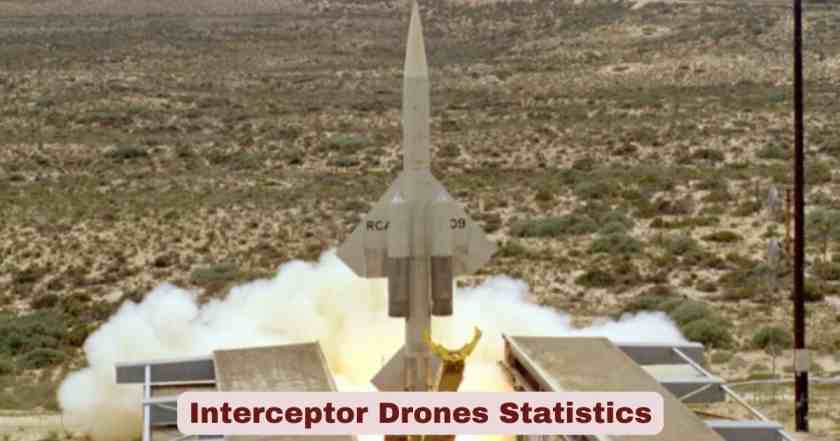
What Are Interceptor Drones?
Interceptor drones are a rapidly emerging class of unmanned aerial vehicle specifically engineered not to carry out surveillance, deliver supplies, or strike ground targets — but to hunt, identify, and physically destroy other drones in flight. They represent one of the most strategically consequential technology developments in modern warfare: a direct response to the asymmetric economics of the contemporary drone threat environment, where a $500 commercial quadcopter packed with explosives or a $25,000 Shahed-136 loitering munition can force a defending military to fire a $1 million to $4 million interceptor missile — bleeding defence budgets at a rate that no major economy can sustain across a prolonged conflict. The interceptor drone concept flips this equation by answering a cheap drone with an equally cheap — or cheaper — autonomous flying system that crashes into the threat, rams it, or detonates near it to destroy it. The concept was pioneered in combat in Ukraine, where the weight of Russian drone attacks since 2022 created an urgent battlefield laboratory that produced, by March 2026, a globally competitive industry of interceptor drone systems priced from as low as $1,000 per unit (SkyFall’s P1-SUN) to “low hundreds of thousands of dollars” (Anduril’s Roadrunner-M) — each occupying a different tier of the threat-response spectrum. What unites them is the principle that the best way to stop a drone is often another drone: faster, smarter, and cheap enough to be used at scale.
As of March 14, 2026, interceptor drones have moved from an experimental battlefield concept into an established, procured, and globally proliferating weapons category. Ukraine’s armed forces were shooting down approximately 80% of all Russian drones in October 2025 — and interceptor drones played a decisive role in that statistic. The Wild Hornets Sting alone had destroyed over 3,900 Geran/Shahed drones by March 6, 2026. SkyFall’s P1-SUN was dowing Shaheds for $1,000 per intercept compared to over $1 million for an AIM-9X NASAMS missile. The US military had formally procured the Bumblebee V2 (Perennial Autonomy, $5.2M, Jan 2026), the Merops Surveyor (Project Eagle, $5.2M, Jan 2026), and the Coyote Block 2 (RTX, $75M, Jan 2024) as complementary interceptor systems — while Anduril’s Roadrunner-M was being deployed on US Navy Arleigh Burke destroyers in a precedent-setting maritime counter-drone configuration. Iran’s campaign of 2,000+ drones in the first six days of Operation Epic Fury had driven the US military into an emergency pivot toward interceptor drones that would have seemed improbable as recently as 2023. The interceptor drone is no longer the future of air defence — it is the present, and the statistics that define this new era are extraordinary.
Interesting Facts About Interceptor Drones 2026
| Fact | Detail |
|---|---|
| Global C-UAS Market Value (2025) | $3.11–$5.12 billion (range across Fortune Business Insights, MarkNtel, BIS Research, Grand View) |
| Global C-UAS Market Value (2026) | $3.88–$10.63 billion (Fortune BI: $3.88B; MarkNtel: $8.5B; Fortune Counter-UAS: $10.63B) |
| Market CAGR Range | 19.79%–26.5% (Fortune BI to MarketsandMarkets) — one of fastest-growing defence segments globally |
| Projected Market Size (2030) | $14.5–$19.6 billion (MarketsandMarkets to various) |
| Projected Market Size (2032) | $27.98 billion (MarkNtel Advisors, published March 13, 2026) |
| Projected Market Size (2034) | $69.67 billion (Fortune Business Insights, Counter UAS) |
| Projected Market Size (2035) | $36.42 billion (BIS Research) |
| AI-Enhanced Kinetic Defeat Segment (2025) | $600 million — fastest-growing C-UAS sub-segment (Research and Markets, February 27, 2026) |
| AI-Enhanced Kinetic Defeat Segment (2030 projected) | $1.4 billion – $4.1 billion |
| North America Market Share | 44–52% of global C-UAS market |
| Asia-Pacific Growth Rate | 32.1% CAGR — fastest of any region |
| Military & Defence End-User Share (2026) | 74% of all C-UAS market (MarkNtel, March 13, 2026) |
| Mitigation & Neutralisation Systems Share (2026) | 42% of total C-UAS market — largest product category |
| Interdiction Segment Share (2026) | 53.49% (Fortune BI, anti-drone market) |
| Ground-Based Platform Share (2026) | 68.30% |
| UAV Platform CAGR (2026–2034) | ~20.2% — drone-on-drone category fastest growing within platform types |
| US DoD C-UAS Spending (FY2026 request) | $3.1 billion (pending legislation) |
| US Pentagon C-UAS Spend (current FY) | $7.4 billion — over 50% more than a decade ago |
| Ukraine’s Drone Kill Rate (Oct 2025) | ~80% of all Russian drones downed — Ukrainian Air Force |
| FPV Drones as % of Ukraine Combat Losses (Russian) | Majority of frontline casualties — Wild Hornets’ own assessment; widely cited |
| UAE–Raytheon Coyote JV (Apr 2025) | Tawazun Council signed term sheet with Raytheon for joint production of Coyote in UAE — extending 2023 cooperation agreement |
| Epirus Series D Funding (2025) | $250 million — brings total Epirus capital raised to $550 million+ |
| First Interceptor vs Jet-Powered Drone | Sting (Wild Hornets) — first confirmed downing of the Russian Geran-3 jet-powered Shahed variant, December 2025 |
| Cheapest Combat-Proven Interceptor | SkyFall P1-SUN — $1,000 per unit for Ukrainian forces |
| Most Expensive Reusable Interceptor | Anduril Roadrunner-M — “low hundreds of thousands of dollars” per unit |
Source: MarkNtel Advisors (March 13, 2026), Fortune Business Insights (2026), BIS Research (March 2026), MarketsandMarkets (2026), Research and Markets (February 27, 2026), Polaris Market Research (2026), Fact.MR (2026), Military Times (March 11, 2026), Wild Hornets official website, Interesting Engineering (March 11, 2026), The War Zone (March 28, 2025), Polaris Market Research (2026)
The market statistics for interceptor drones in 2026 describe an industry that has compressed a decade of normal growth into roughly 24 months — driven entirely by the demonstration in Ukraine that drone-on-drone interception works, is scalable, and is economically transformative for any defender willing to adopt it. The $7.4 billion the US Pentagon spent on counter-drone systems in its most recent fiscal year — confirmed by Polaris Market Research and multiple defence budget analyses — is more than 50% higher than a decade ago and represents a procurement velocity that no other defence technology category can match. The AI-enhanced kinetic defeat subsegment isolated by Research and Markets in its February 27, 2026 report — valued at $600 million in 2025 and projected to reach $1.4–4.1 billion by 2030 — is the precise segment where interceptor drones compete, and the 5-to-7× growth projection over five years reflects both the Ukraine war acceleration and the Iran conflict’s role as a second massive simultaneous demand signal.
The 32.1% CAGR of the Asia-Pacific region is the market dynamic that most directly reflects geopolitical anxiety rather than active conflict. China’s drone programmes, Taiwan’s vulnerability, South Korea’s border exposure to North Korean drone incursions, and Japan’s rapidly expanding defence budget are all translating simultaneously into C-UAS procurement decisions across the region. The first confirmed downing of Russia’s jet-powered Geran-3 by Ukraine’s Sting interceptor in December 2025 was a milestone that no defence analyst had confidently predicted — the Geran-3, flying significantly faster than the propeller-driven Shahed variants, was considered a step-change in the Russian drone threat that would outrun existing interceptors. The fact that the $2,500 Sting achieved that kill before any Western military system had done so is perhaps the single most striking data point in the entire interceptor drone market’s 2026 story.
US Military Interceptor Drone Systems Statistics 2026
| System | Merops Surveyor | Bumblebee V2 | Coyote Block 2 | Roadrunner-M |
|---|---|---|---|---|
| Manufacturer | Project Eagle (Eric Schmidt) | Perennial Autonomy | RTX / Raytheon | Anduril Industries |
| Type | Fixed-wing FPV | Quadcopter FPV | Jet-powered loitering | VTOL twin-jet loitering |
| Length / Size | 3 feet (0.9 m) | Small (undisclosed) | 36 inches (0.91 m) — Block 1B; Block 2 larger | ~5 ft (1.5 m / 1.8 m varies by source) |
| Weight | ~13 lb (Block 1B ref.) | Small — backpack portable | 13 lb (Block 1B) | ~85 kg (187 lb) |
| Propulsion | Electric propeller | 4 electric rotors | Turbine jet + rocket booster | Twin turbojets (in-house Anduril engines) |
| Max Speed | 175+ mph (282 km/h) | Undisclosed (fast quadcopter) | 345–370 mph (555–595 km/h) | High subsonic (≥480–700 km/h est.) |
| Engagement Range | 5–20 km | Close-in, final phase | 10–15 km | Naval: within 15 km radius |
| Warhead / Effect | Kinetic ram or small warhead | No warhead — kinetic ram | 4 lb (1.8 kg) fragmentation + proximity fuze | High-explosive fragmentation warhead |
| Re-attack Capability | No | No | Yes (Block 2 can re-attack) | Yes — recoverable and reusable |
| Reusability | Parachute recovery if miss | No (expendable) | No (expendable) | Full VTOL return and relaunch |
| AI / Autonomy | AI terminal guidance; jam-proof final phase | AI terminal homing; semi-autonomous | RF seeker; proximity warhead | Full autonomous AI-powered C2 |
| Unit Cost | $14,000–$15,000 | Undisclosed | ~$100,000 | “Low hundreds of thousands” |
| Bulk Cost Projection | $3,000–$5,000 (Army Sec. Driscoll) | N/A | ~$75,000 (volume) | Expected to decline at scale |
| Vs Patriot ($4M) | ~267× cheaper | N/A | 40× cheaper | ~20–40× cheaper |
| Launch Platform | Pickup truck pneumatic launcher | Portable / vehicle | M-ATV; FS-LIDS pallet | Containerised “Nest” enclosure |
| Ukraine Combat Use | Yes — 1,900+ kills (as Merops) | Yes — 1,000+ flights, armoured vehicle kill | Not in Ukraine | No — new system |
| US Army Contract | $5.2M (Jan 2026) JIATF-401 | $5.2M (Jan 2026) JIATF-401 | $75M (Jan 2024); 6,700-unit buy planned | 500 units, DoD (~$400K each) |
| Navy Deployment | Not confirmed | Not confirmed | Arleigh Burke destroyers (Ford Strike Group) | Arleigh Burke destroyers (Ford Strike Group) |
| Iran War Use | Confirmed — CENTCOM | Confirmed alongside Merops/Coyote | Confirmed — CSIS | Not confirmed but available |
| NDAA Compliant | Yes | Yes | Yes | Yes |
Source: Wikipedia (Merops, Raytheon Coyote, Anduril Roadrunner), US Army press releases (Jan–Feb 2026), RTX press release (February 11, 2026), Bloomberg (March 13, 2026), The War Zone (March 28, 2025), CSIS (March 2026), Strategy Page (January 8, 2025), Defence Blog (August 2025), National Interest (October 10, 2025)
The US military’s interceptor drone portfolio as of March 2026 is the most diverse and layered kinetic counter-drone capability any military in the world has ever fielded simultaneously. The four systems in the table above are not redundant — they occupy genuinely distinct operational niches in a layered architecture. Roadrunner-M handles the longest-range, highest-value engagement envelopes: cruises at high subsonic speeds, self-deploys from a containerised Nest without any crew, and can return to base and relaunch if it misses — making it ideal for the kind of persistent patrolling role that was previously occupied by manned aircraft or expensive SAM batteries. Coyote Block 2 handles the medium-range jet-drone threat (Shahed-class) at a fraction of the cost of any missile, with the additional re-attack capability that lets it try again if the first pass misses. Merops Surveyor handles shorter-range interceptions at extremely low cost with AI guidance, and Bumblebee V2 provides the close-in, final-hundred-metres kinetic kill that creates no blast hazard — specifically valuable near allied troops or in urban port environments.
The Navy deployment decision — arming Arleigh Burke destroyers of the Ford Strike Group with both Coyote and Roadrunner-M, confirmed by Navy Adm. Daryl Caudle to Military.com in March 2025 — was the moment the interceptor drone concept jumped from a land-warfare counter-insurgency tool to a front-line naval asset. Destroyers have finite missile magazines: their Mk 41 Vertical Launch Systems carry a fixed number of Standard Missiles, ESSMs, and Tomahawks that cannot be replenished at sea. Every Shahed intercepted by a $100,000 Coyote instead of a $1.5 million SM-2 preserves magazine depth for the higher-end threats — ballistic missiles, cruise missiles, and manned aircraft — that VLS missiles were designed for. The phrase “magazine depth” appears in virtually every US Navy discussion of interceptor drones in 2026, and it captures the operational logic precisely: the interceptor drone is not better than a missile at its job; it is better than a missile at a different, cheaper job, freeing the missile for the jobs only a missile can do.
Ukrainian Interceptor Drone Systems Statistics 2026
| System | Wild Hornets Sting | SkyFall P1-SUN | Win_Hit / Odin | Riki (Piranha Tech) | Octopus |
|---|---|---|---|---|---|
| Developer / Manufacturer | Wild Hornets — Ukrainian volunteer-founded startup | SkyFall — Ukrainian defence startup | Odin (manufacturer name) | Piranha Tech — Lviv; EW specialist turning C-UAS | Ukrspecsystems — multi-manufacturer production |
| Type | Quadcopter FPV | FPV quadcopter / modular 3D printed | Quadcopter | Quadcopter electric | Quadcopter |
| Length / Size | Bullet-shaped frame, 3D-printed; large central dome for warhead | Lightweight 3D-printed modular airframe | Comparatively large quadcopter | Unknown | Quadcopter-bullet layout; large stabilizers |
| Unit Cost | $2,500 | $1,000 (Ukrainian forces) | Unknown | Unknown | Unknown |
| Max Speed | 315 km/h (195 mph) as of August 2025 (up from 160 km/h at Oct 2024 launch) | 280 mph (upgraded from 195 mph) | 280–300 km/h | ~300 km/h | Unknown |
| Engagement Range | Up to 25 miles (40 km) — Sting Wikipedia | Up to 15 miles (24 km) | Unknown | 21 km | Unknown |
| Altitude Ceiling | 10,000 ft (3,000 m) | Unknown | Unknown | 5,000 metres | Unknown |
| Guidance / AI | Thermal imaging (Kurbas cameras by Odd Systems) + AI-assisted targeting | Computer vision + thermal imaging; fiber-optic control | Computer vision AI; autonomous final phase | Unknown — radar guided variant | N/A — early stage |
| Warhead / Kill | Warhead (size undisclosed) | Unknown | Unknown | ~0.5 kg warhead | Kinetic or small warhead |
| Total Kills (as of Mar 6, 2026) | 3,900+ Geran/Shahed drones | 1,500+ Shaheds + 1,000+ other drones (in 4 months of deployment) | Unknown | Unknown | Unknown |
| Historic Milestone | First interceptor to down Geran-3 (jet-powered Shahed variant) — December 2025 | — | — | — | — |
| Monthly Production | 10,000+ units/month (March 2025) | Scaling rapidly | Unknown | Unknown | Multiple manufacturers in production |
| Funding Model | ~90% crowdfunded / donations | Commercial + government contracts | Unknown | Commercial | Government / Ukrspecsystems |
| Operator Interface | VR goggles or ground control station — operator sees live FPV feed | FPV | FPV + AI | Unknown | Unknown |
| Time to Destroy (after detection) | ~10–15 seconds from target detection to kill | Fast | Unknown | Unknown | Unknown |
| International Interest | Yes — Pentagon requesting purchase, Military Times March 11, 2026 | Yes — Pentagon requesting purchase, Military Times March 11, 2026 | Limited | Limited | Limited |
| NATO/US Kill Rate Comparison | AIM-9X NASAMS missile ($1M+) vs Sting ($2,500) = 400:1 cost ratio | AIM-9X vs P1-SUN ($1,000) = 1,000:1 cost ratio | N/A | N/A | N/A |
Source: Wikipedia (Wild Hornets, Sting drone — updated March 13, 2026), Wikipedia (SkyFall P1-SUN), Covert Shores/H.I. Sutton (November 23, 2025), Ukraine Arms Monitor Substack (October 11, 2025), Military Times (March 11, 2026), Interesting Engineering (March 11, 2026), CBS News (March 2026), Army Recognition (UMEX 2026), Wild Hornets official website
The Ukrainian interceptor drone statistics are the most extraordinary numbers in the entire counter-drone landscape of 2026 — systems that were non-existent 18 months ago now accounting for tens of thousands of kills on the most contested airspace on earth. The Wild Hornets Sting story in particular defies every assumption that sophisticated military technology requires large defence corporations, years of development, and billions in funding. Wild Hornets was founded by Ukrainian volunteers with no defence industry background, produces its drones using rows of Elegoo and Bambu Lab consumer-grade 3D printers, employs approximately 25 engineers, and as of March 2025 was producing 10,000+ units per month. Its funding base is approximately 90% donations and crowdfunding — meaning a large fraction of the 3,900+ drone kills recorded as of March 6, 2026 were achieved by hardware financed by Ukrainian civil society rather than government procurement budgets. That fact alone represents one of the most significant shifts in how defence capability is created and funded in the 21st century.
The competitive speed evolution of the Sting is a perfect illustration of how real combat feedback drives exponential improvement. When Wild Hornets introduced the Sting in autumn 2024, its baseline maximum speed was approximately 160 km/h — adequate against propeller-driven Shahed variants cruising at 200–250 km/h in a tail-chase interception profile, but marginal. By August 2025, the company released footage of the Sting reaching 315 km/h — a near-doubling in under a year. The breakthrough of the December 2025 first Geran-3 kill — downing a jet-powered Russian Shahed variant flying significantly faster than propeller versions — was the moment the Sting proved it could keep pace with Russia’s next-generation drone threat as well as its current one. The “from detection to destruction in 10–15 seconds” operational timeline confirms that the system is not just technically capable but tactically practical — fast enough to intercept a drone that may have only been visible on radar for seconds before impact range.
International Interceptor Drone Systems Statistics 2026
| System | Manufacturer | Country | Type | Speed | Status / Notes |
|---|---|---|---|---|---|
| Ghost Hunter | Rafael Advanced Defense Systems | Israel | Twin micro-jet, reusable | Unknown | 50–60 kg; HE warhead; radar guidance; Iron Dome C2 integration; first demo end-2026; market launch 2027 |
| Hunter Eagle | Rafael Advanced Defense Systems | Israel | Quadcopter electric | Unknown | 5–10 kg; EO sensor module; AI autonomy; Iron Dome integration planned; market availability 2026 |
| Blaze | Origin Robotics | Unknown (allied supplier) | Quadcopter interceptor | Unknown | Being supplied to Latvia, Estonia, Belgium; collision-intercept concept; procurement triggered by NATO airspace incursions |
| ARCZ RAM-1 | Aero Rozvedka | Czech Republic | Quadcopter + “Jumper” rocket booster | Unknown | EO/thermal rotating camera; AI-guided terminal; ~100–150g warhead; ceiling >4,000 m; production start planned late 2025 |
| Riki | Piranha Tech | Ukraine | Quadcopter electric | ~300 km/h | 21 km range; 5,000 m ceiling; ~0.5 kg warhead; unveiled UMEX 2026 |
| Octopus | Ukrspecsystems | Ukraine | Quadcopter | Unknown | UK-Ukraine joint development (Build with Ukraine initiative, announced Oct 25, 2025); multiple manufacturers |
| Molot | Unknown (Ukraine) | Ukraine | Portable C-UAS interceptor | Unknown | Thermal imaging seeker; fire-and-forget; designed for low-altitude threats |
| Bolt | Unknown (Ukraine) | Ukraine | Unknown | Unknown | Radar-guided interception; X-band radar seeker (FSTH-LD03/LD02 class) |
| Skvorets-PVO | CBST | Russia | VTOL quadcopter, AI | 270 km/h | AI target acquisition; unveiled Archipelago 2025 forum, Skolkovo; vertical takeoff |
| Kinzhal | CBST | Russia | Quadcopter | 300 km/h | IR seeker; hit-to-kill; faster variant shown at same event as Skvorets |
| VB140 Flamingo | Ukraine | Ukraine | Fixed-wing interceptor | Unknown | Designed specifically to intercept Russian reconnaissance drones (Orlan-10, Supercam) |
| Drone Dome (mobile) | Rafael | Israel | Mobile C-UAS system w/ kinetic interceptors | N/A (system) | Mounted on Plasan StormRider 4×4 armoured vehicle; unveiled May 2025 |
| Stryker Directed Energy C-UAS | BlueHalo + Leonardo DRS | USA | Directed energy + kinetic (Stryker-mounted) | N/A | Live-fire demo defeating Group 1–3 UAS: October 2024 |
| Leonidas HPM | Epirus | USA | High-Power Microwave (HPM) — non-kinetic interceptor | Speed of light (microwave beam) | $43M US Army contract (2026); defeats swarms with a single pulse; Epirus raised $250M Series D (2025) |
| Counter NEXT (Navy) | Anduril (DIU selected) | USA | Drone interceptor for USN | High subsonic | DIU selection for cost-effective drone-killing capability for US Navy |
Source: Militaeraktuell.at (October 28, 2025), Army Recognition (UMEX 2026), Interesting Engineering (March 11, 2026), MarketsandMarkets (2026), BIS Research (2026), Notes from Poland (November 2025), National Interest (October 2025), Defence Blog (August 2025), The War Zone (multiple 2024–2025 reports), Epirus official press releases
The international interceptor drone landscape in 2026 reveals a technology arms race that has spread simultaneously across NATO allies, neutral nations, Ukraine, Russia, and Israel — with every party developing systems that are more or less direct mirrors of what they have seen work on the other side. Rafael’s two-track approach — the large, jet-powered, reusable Ghost Hunter for high-performance interceptions, and the small, electric Hunter Eagle quadcopter for close-in kinetic kills integrated with Iron Dome command networks — reflects Israel’s deep experience with layered air defence and the recognition that no single interceptor covers the full threat spectrum. The Hunter Eagle’s planned integration into Iron Dome’s C2 networks is particularly significant: it would mean that the same command system that currently fires $50,000 Tamir missiles against cheap rockets could instead dispatch a far cheaper quadcopter interceptor for the category of threats that don’t require a missile-level response.
Russia’s parallel development of the Skvorets-PVO and Kinzhal interceptor drones — unveiled at the Archipelago 2025 forum in Skolkovo — is the clearest evidence that the interceptor drone concept has achieved full strategic normalisation in the minds of all major military powers. Russia, which for years relied primarily on electronic warfare and jamming to counter Ukrainian drones, has clearly concluded — based on the effectiveness of Ukrainian interceptors against its own Shaheds — that it needs its own drone-hunting capability. The Skvorets at 270 km/h and the Kinzhal at 300 km/h are direct speed-matches to Ukrainian interceptor capabilities, and the use of AI-based target acquisition systems mirrors the technology philosophy that Wild Hornets and Perennial Autonomy pioneered. The interceptor drone arms race is now explicitly symmetric and bilateral — each side building systems optimised to destroy the other’s drones, creating a technological competition that will drive further speed, range, and AI capability improvements throughout the remainder of the decade.
Interceptor Drone Cost Economics & Battlefield Statistics 2026
| Metric | Data |
|---|---|
| Cheapest Combat-Proven Interceptor | SkyFall P1-SUN — $1,000 (Ukrainian forces) |
| Most Widely Used Interceptor (Ukraine) | Wild Hornets Sting — $2,500 |
| US Army Bulk Interceptor Cost (Merops projection) | $3,000–$5,000 (Army Secretary Driscoll, Bloomberg, March 13, 2026) |
| Wild Hornet / Sting Production Rate | 10,000+ units/month (March 2025) |
| SkyFall P1-SUN Kill Record | 1,500 Shaheds + 1,000 other drones in 4 months of deployment |
| Sting Total Kill Record (Mar 6, 2026) | 3,900+ Geran/Shahed drones |
| Bumblebee Kill Rate (Ukraine) | 70%+ direct hit rate via AI terminal guidance |
| Merops Kill Record (Ukraine, Nov 2025) | 1,900+ drones destroyed (~40% of all Shaheds downed) |
| Sting vs AIM-9X Cost Ratio | Sting $2,500 vs AIM-9X $1 million+ = 400:1 defender advantage |
| P1-SUN vs AIM-9X Cost Ratio | P1-SUN $1,000 vs AIM-9X $1 million+ = 1,000:1 defender advantage |
| Merops vs PAC-3 Cost Ratio | Merops $14,500 vs PAC-3 $4 million = ~275:1 defender advantage |
| Coyote Block 2 vs PAC-3 | Coyote $100,000 vs PAC-3 $4 million = 40:1 defender advantage |
| Roadrunner-M vs PAC-3 | Roadrunner “low hundreds of thousands” vs PAC-3 $4 million = ~20:1 advantage |
| Iron Beam Laser Cost per Shot | ~$3 — laser cost per intercept (Theworlddata.com, March 2026 |
| Shahed-136 Unit Cost | $20,000–$30,000 |
| Iran Drones Fired (First 6 Days, Operation Epic Fury) | 2,000+ — CENTCOM Adm. Cooper, March 3, 2026 |
| Operation Epic Fury First 100 Hours Cost | $3.7 billion (~$891M/day) — CSIS |
| If All 2,000 Drones Intercepted by PAC-3 | Cost: $8 billion — more than twice daily war cost |
| If All 2,000 Drones Intercepted by Sting/P1-SUN | Cost: $5–20 million — 1,600–400× cheaper |
| Ukrainian Drone Kill % of Russian Frontline Casualties | Majority — FPV drones dominate frontline attrition (Wild Hornets; widely confirmed) |
| Wild Hornets Total Damage Inflicted on Russia | $2+ billion in Russian military equipment and installations (March 2026) |
| Wild Hornets $1.63B Damage Mark | Reached by March 2025 |
| Queen of Hornets Record Mission Count (2025) | 185 missions — one drone, one year; previous service life was 10–15 missions in 2024 |
| US Pentagon Closed-Door Admission | Officials told Congress they were “struggling to stop waves of drones” before interceptors — Fortune, March 7, 2026 |
| US Strategy Shift (Adm. Cooper) | Military “embracing more cost-effective drone interceptors” — Pentagon March 2026 briefing |
| Pentagon Drone Interceptor Focus (Driscoll) | “We’re actually on the better end of the cost curve” — Army Secretary, Bloomberg March 13, 2026 |
Source: Military Times (March 11, 2026), CSIS (March 2026), Bloomberg (March 13, 2026), Wikipedia (Wild Hornets, Sting drone — March 2026), Wild Hornets official website, Interesting Engineering (March 11, 2026), theworlddata.com (March 2026), Defence One (March 12, 2026), Fortune (March 7, 2026), CENTCOM official statements (March 3, 4, 11, 2026)
The cost economics statistics for interceptor drones in 2026 represent the most fundamental strategic shift in air defence since the introduction of surface-to-air missiles in the 1950s — and arguably more consequential, because the shift is happening at the bottom of the cost ladder rather than at the top. For seven decades after the introduction of SAMs, the underlying economics of air defence favoured the attacker: missiles, aircraft, and eventually drones could be produced for less than the systems needed to shoot them down. The Patriot missile at $4 million defending against a $50,000 aircraft works economically only because aircraft are rare, expensive, and carry pilots that cannot be mass-produced. Against $25,000 Shaheds produced at industrial scale, the same Patriot system is economically catastrophic — and the data from the first six days of Operation Epic Fury made this visible to the entire world in real time, with CSIS calculating the $3.7 billion cost of the first 100 hours of operations.
The Sting’s 400:1 cost advantage and the P1-SUN’s 1,000:1 cost advantage over the missile systems they are replacing represent a genuine economic inversion: for the first time in the history of air defence, the interceptor is cheaper than the threat it intercepts. At $2,500 per Sting against a $25,000 Shahed, Ukraine saves $22,500 net per intercept compared to letting the Shahed hit its target — and saves $997,500 per intercept compared to using an AIM-9X. The Wild Hornets Wild Dragon destroying $2 billion in Russian military equipment from a force of approximately 25 engineers producing at the cost of consumer 3D printers is the starkest possible illustration of where the economics of modern warfare are heading. The era of billion-dollar weapons programmes defending against ten-dollar threats is over — and the interceptor drone, born in the mud and urgency of Ukraine, is the technology that ended it.
Disclaimer: The data reports published on The Global Files are sourced from publicly available materials considered reliable. While efforts are made to ensure accuracy, no guarantees are provided regarding completeness or reliability. The Global Files is not liable for any errors, omissions, or damages resulting from the use of these reports.