
Where is the Kharg Island Oil Terminal?
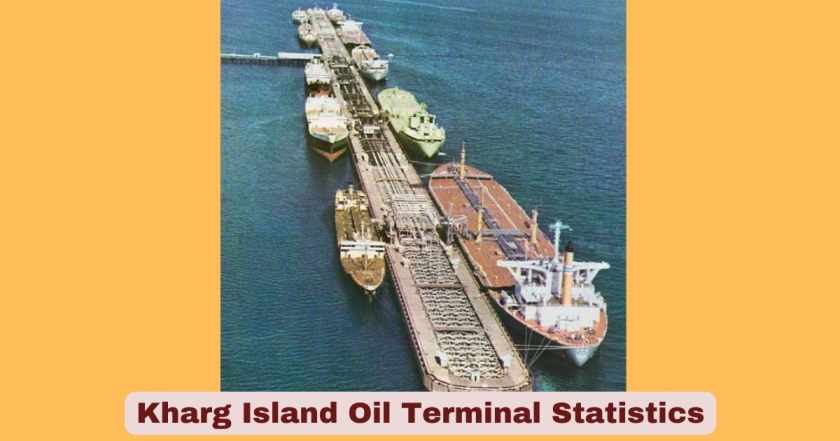
The Kharg Island Oil Terminal is not merely Iran’s most important piece of energy infrastructure — it is arguably the single most consequential oil export facility on earth, measured by the proportion of one nation’s economy that flows through it and by the cascading global consequences its disruption would trigger. Operated by the National Iranian Oil Company (NIOC) and located on the tiny 20 km² coral island of Kharg in the northern Persian Gulf, approximately 25 kilometres (15 nautical miles) off the Iranian coast and 483 kilometres northwest of the Strait of Hormuz, the terminal processes roughly 90 percent of all Iranian crude oil exports — approximately 950 million barrels every year. No other major oil-producing country on earth comes close to concentrating this proportion of its export capacity in a single facility. Iran’s unique topography is the reason for this extreme centralisation: most of its Persian Gulf coastline is silted, shallow, and inaccessible to the supertankers that dominate modern crude oil shipping. Kharg, with its surrounding deep waters, its position close to the major southwestern Iranian oilfields, and its ability to accommodate tankers of 500,000 deadweight tonnes, has no viable substitute anywhere on Iran’s coastline.
As of March 14, 2026 — the morning after US air forces bombed military installations on the island as part of Operation Epic Fury, the ongoing US-Israel war against Iran — the Kharg Island Oil Terminal sits at the absolute epicentre of one of the most dangerous geopolitical confrontations in the modern era. President Trump’s Truth Social statement in the early hours of March 14, 2026 declared that US forces had “totally obliterated every MILITARY target” on the island but had chosen — for now — “NOT to wipe out the Oil Infrastructure.” He simultaneously issued a direct threat: if Iran continues to block free passage through the Strait of Hormuz, he would “immediately reconsider this decision.” Iran confirmed over 15 explosions on the island but stated through state-affiliated media that no oil infrastructure was damaged. What this means is that on the morning of March 14, 2026, the Kharg Island Oil Terminal’s crude oil processing and loading infrastructure remains physically intact — but is operating under the explicit threat of destruction from the most powerful military on earth. The 1984 CIA document calling Kharg’s facilities “the most vital in Iran’s oil system, and their continued operation is essential to Iran’s economic well-being” has never been more relevant.
Interesting Facts About Kharg Island Oil Terminal 2026
| Fact | Detail |
|---|---|
| Official UN/LOCODE Port Code | IRKHK |
| Terminal Operator | National Iranian Oil Company (NIOC) |
| Terminal Location | Northern Persian Gulf; 25 km (15 miles) off Iranian coast; 55 km northwest of Bushehr |
| Share of Iran’s Total Crude Exports | ~90% |
| Annual Crude Throughput | ~950 million barrels per year |
| Maximum Loading Capacity | 7 million barrels per day (bpd) |
| Number of Terminal Complexes | 4: Kharg Terminal (T-Jetty), Sea Island Terminal, Darius Terminal, KHEMCO Gas Terminal |
| Supertanker Capacity | Can load 10 supertankers simultaneously |
| Number of Operational Berths (combined) | 10+ operational berths across all terminal complexes |
| Oil Grades Available | Iranian Light, Iranian Heavy, Forouzan Blend |
| Products Exported | Crude oil; sulphate fertilizers; liquid gas (LPG); sulphur; methanol; other petroleum products |
| Tank Farm Elevation | 62 metres above mean sea level (AMSL) — allows crude delivery to terminal jetties by gravity flow through pipelines |
| Load Line Zone | Tropical |
| Tidal Range | 1.50 to 2.50 metres |
| Pilotage | Mandatory — pilot boards vessel at anchorage |
| Anchorage Area | ~3 nautical miles southeast of T-Jetty |
| Towage | 4 to 6 tugs of 4,500–8,500 HP required |
| Operating Hours | 24/7 — no scheduled downtime |
| Airport Connectivity | Kharg Airport — connecting flights to Tehran, Ahwaz, Shiraz, and Bushehr (6 days/week) |
| Security Authority | Islamic Revolutionary Guard Corps (IRGC) |
| CIA Assessment (1984 Document) | Kharg facilities are “the most vital in Iran’s oil system, and their continued operation is essential to Iran’s economic well-being” |
| Israeli Assessment (Yair Lapid, 2026) | Destroying the terminal would “cripple Iran’s economy and topple the regime” |
| US Strike Status (March 13–14, 2026) | Military targets obliterated; oil infrastructure deliberately spared — per Trump Truth Social statement |
Source: Britannica (updated March 13, 2026), Wikipedia (Kharg Island, updated March 14, 2026), CNN (March 14, 2026), Al Jazeera (March 11, 2026), Iran Waterway (NIOC terminal data), Ocean Shelter Shipping Co., US EIA, Geopolitics Unplugged, Encyclopaedia Iranica
The defining characteristic of the Kharg Island Oil Terminal that distinguishes it from every other major crude export facility in the world is its combination of extreme strategic centrality and extreme geographic isolation. The gravity-flow delivery system — where the tank farm sits at 62 metres above mean sea level on the island’s central plateau and crude oil is delivered to the loading jetties purely by the force of gravity through pipelines, without requiring pumping energy — is an elegantly simple engineering arrangement that also happens to be extraordinarily efficient. Every barrel of oil that arrives from the mainland fields via subsea pipelines collects in this elevated tank farm before flowing downhill to the terminal berths, where it is loaded onto supertankers. The mandatory 24/7 operating schedule with no regular downtime reflects the terminal’s role as a continuous, non-stop economic engine that Iran cannot afford to pause, even briefly.
The 10 simultaneous supertanker loading capacity — confirmed by Britannica’s updated March 2026 entry — is the most significant single operational statistic about the terminal. Loading a 500,000 deadweight tonne ULCC (Ultra Large Crude Carrier) typically requires between 24 and 36 hours at standard loading rates, meaning the terminal is in a state of near-continuous tanker turnaround, with vessels arriving, berthing, loading, and departing around the clock every day of the year. The Early Departure Procedure (EDP) available at Kharg, where the terminal obtains cargo figures and signs Bills of Lading on the master’s behalf to accelerate vessel departure within 24 hours, is a direct response to the commercial pressure Iran faces to maximise loading speed — particularly under sanctions conditions where every day of delay costs money and creates exposure. The mandatory pilotage and the 4 to 6 high-powered tugs required for every berthing operation reflect the operational complexity of managing supertanker movements in the island’s exposed, tidally active waters.
Kharg Island Terminal Infrastructure Statistics 2026
| Metric | Data |
|---|---|
| T-JETTY — Location | Eastern side of Kharg Island |
| T-JETTY — Structure | 1,836.4-metre “monopile-fendered” jetty; connected to shore by a 1,219-metre bridge |
| T-JETTY — Shape | “TEE” head configuration |
| T-JETTY — Total Berths | 6 berths (Berths 3, 5, 6, 7, 9 + 1 additional) |
| T-JETTY — Currently Operational Berths | 4 berths: Berths 3, 5, 7, and 9 |
| T-JETTY — Water Depth Alongside | 17.68 to 21.33 metres |
| T-JETTY — Max Vessel Size | 275,000 DWT; draught 20.7 m |
| T-JETTY — Loading Rate | 3,500 to 9,000 MT/hour per berth |
| T-JETTY — Berthing Side | Normally starboard side (except Berth 6: portside) |
| SEA ISLAND — Location | Western side of Kharg Island |
| SEA ISLAND — Total Berths | 3 operational berths: Berths 11, 12, and 15 |
| SEA ISLAND — Max Vessel Size (outer) | 500,000 DWT ULCC; draught 32 metres (Berths 11 & 15) |
| SEA ISLAND — Max Vessel Size (inner) | 330,000 DWT; draught 29 metres (Berth 12) |
| SEA ISLAND — Loading Rate | 3,000 to 13,000 MT/hour per berth |
| SEA ISLAND — Max Single Berth Rate | 30,000 MT/hour under favourable conditions |
| SEA ISLAND — Distance from Island | Located >1 km offshore — open, unsheltered roadstead |
| SEA ISLAND — Equipment | Chiksan loading units with hydraulically operated loading arms at each berth |
| DARIUS TERMINAL — Max Vessel Size | LOA 274 m; draught 20.0 m; 80,000 DWT |
| DARIUS TERMINAL — Status | Largely destroyed in Iran-Iraq War; partially restored |
| DARIUS TERMINAL — Location | Southeast of Kharg Island |
| DARIUS TERMINAL — Access | Submarine pipeline at single berth ~1.6 km offshore in over 20 metres of water |
| KHEMCO TERMINAL — Operator | Kharg Petrochemical Company (KPC) — captive KPC berth |
| KHEMCO TERMINAL — Products | Sulphur, LPG, methanol |
| KHEMCO TERMINAL — LPG/Sulphur Berth Depth | 11.5 metres |
| KHEMCO TERMINAL — Max Vessel Size | 40,000 DWT |
| KHEMCO — Annual Sulphur Production Capacity | 186,000 tonnes of sulphur from crude oil |
| KHEMCO — Annual Liquid Gas Capacity | ~1.85 million tonnes (~2 million barrels equivalent) |
| COMBINED: Total Simultaneous Supertankers | Up to 10 supertankers simultaneously |
Source: Iran Waterway (NIOC), SPSShipping.com, Maroos Shipping Group, Ocean Shelter Shipping Co., Arad Star Lian, Star Marine Services, ShipNext.com, Encyclopaedia Iranica (November 2025), US EIA Background Reference: Iran
The terminal infrastructure statistics reveal a facility of extraordinary engineering sophistication that was built over more than six decades of continuous expansion and post-war reconstruction. The T-Jetty’s 1,836-metre length — over 1.8 kilometres of jetty structure extending from the island’s eastern shore on a 1,219-metre approach bridge — is one of the longest single crude oil loading jetties in the Persian Gulf, purpose-built to extend far enough offshore that the water depth of 17.68 to 21.33 metres is sufficient to accept tankers of up to 275,000 DWT. The fact that only 4 of 6 T-Jetty berths are currently operational reflects the reality of decades of deferred maintenance under sanctions, combined with post-Iran-Iraq War repair work that was never fully completed on all structural elements. The loading rate range of 3,500 to 9,000 MT/hour depending on vessel configuration and crude grade is wide enough to accommodate everything from smaller Aframax tankers up to the largest VLCCs.
The Sea Island Terminal is the true crown jewel of the Kharg complex — the facility that gives the terminal its world-class status. Its three berths accommodate vessels up to 500,000 DWT — the ULCC category that represents the absolute largest crude carriers ever built — at a water depth of 32 metres alongside the outer berths. At a maximum loading rate of 30,000 MT/hour under favourable conditions, a fully laden ULCC of 2 million barrels could theoretically be loaded in as little as 7 to 10 hours at peak rates. The Chiksan hydraulic loading arms at each Sea Island berth are the interface between the pipeline system and the tanker manifolds — precision engineering components that connect the subsea crude delivery system to each vessel’s cargo tanks, and whose maintenance condition directly determines loading efficiency. The KHEMCO petrochemical terminal, established in 1969 as a joint venture between NIOC and Amoco, adds a separate revenue stream through exports of sulphur, LPG, and methanol — products that continue to be shipped even during periods when crude loading is reduced.
Kharg Island Terminal Storage Statistics 2026
| Metric | Data |
|---|---|
| Total Storage Capacity | ~30 million barrels |
| Storage Expansion (May 2025) | +2 million barrels — rehabilitation of tanks 25 and 26 (1 million barrels each) |
| Storage Expansion Reported By | S&P Global Commodity Insights (May 2025) |
| Post-Expansion Total Capacity | ~30 million barrels (up from ~28 million pre-2025) |
| Tank Farm Location | Central plateau of Kharg Island — elevated 62 metres AMSL |
| Crude Delivery Method | Gravity flow from elevated tank farm through pipelines to jetties (no pumping required for export) |
| Oil Tanks Full (Mid-January 2026) | 27 tanks full — near-capacity storage |
| Oil Tanks Full (March 7, 2026) | Only 9 tanks full — Iran deliberately drew down stocks |
| Active Storage (Early March 2026, per Kpler) | ~18 million barrels — equivalent to 10–12 days of normal exports |
| Storage Drawdown Period | Mid-January to early March 2026 (~7 weeks) |
| Barrels Drawn Down (Est.) | ~27 million – 18 million = ~9 million+ barrels shifted to tankers |
| Reason for Pre-War Drawdown | Iran anticipated conflict and deliberately reduced stored inventory to minimise economic damage from potential strikes |
| Storage Type | Atmospheric storage tanks — above ground, fixed-roof |
| Crude Grades Stored | Iranian Light, Iranian Heavy, Forouzan Blend |
| Pipeline Delivery Sources | Ahvaz, Marun, Gachsaran oilfields (onshore); Aboozar, Forouzan, Dorood oilfields (offshore) |
| Pipeline Feed Method | Subsea pipelines from mainland and offshore fields to island; crude collected in tank farm |
| KHEMCO Product Storage | Separate sulphur, LPG, methanol storage at KPC berth |
| Comparison: Saudi Abqaiq Storage | Saudi Abqaiq processes ~7% of global oil supply but has multiple geographically separated facilities |
| Iran Storage Concentration Risk | All ~30 million barrels concentrated in one island = 20 km² |
Source: S&P Global Commodity Insights (May 2025), JP Morgan Research Note (March 2026 via Reuters/TRT World), Kpler data (via CNN, Reuters, TRT World — March 2026), Wikipedia (updated March 14, 2026), Iran Waterway (NIOC), US EIA, Encyclopaedia Iranica
The storage statistics for Kharg Island in 2026 tell a story of calculated pre-war preparation that reveals just how clearly Iran’s leadership understood the danger their most valuable asset faced. The decision — tracked precisely by commercial satellite imagery analysts — to draw down stored crude from 27 full tanks in mid-January 2026 to just 9 full tanks by March 7, 2026 represents a systematic pre-emptive liquidation of Iran’s most vulnerable economic asset. By converting stored oil into seaborne tanker cargo — moving the oil off the vulnerable island and onto ships heading for Chinese ports — Iran effectively front-loaded revenue collection and reduced the economic value of any potential strike on the terminal’s storage infrastructure. If the tanks had still held 27 million barrels when the March 13 strikes occurred, the potential economic damage from a follow-on strike on oil infrastructure would have been catastrophically higher.
The May 2025 rehabilitation of tanks 25 and 26, each with 1 million barrels capacity as reported by S&P Global Commodity Insights, is particularly telling in retrospect. Iran was simultaneously expanding storage capacity through infrastructure investment while also preparing — months later — to evacuate that same storage ahead of anticipated conflict. The gravity-flow delivery system, where crude sitting at 62 metres above sea level descends by natural pressure through the pipeline network to the loading jetties, is both the terminal’s greatest operational elegance and its most critical vulnerability: any disruption to the pipeline feed infrastructure above the tank farm would break the gravity chain and halt loading more effectively than targeting the jetties themselves. This is precisely the kind of operational detail that military planners on all sides have been modelling in the weeks preceding and following the March 13–14, 2026 strikes.
Kharg Island Terminal Export Flow Statistics 2026
| Metric | Data |
|---|---|
| Normal Daily Export Rate (2024–2025) | 1.3 to 1.6 million bpd |
| Pre-War Export Rate (Jan–Feb 2026) | Ramped up to ~2.17 million bpd in February 2026 (Kpler) |
| Peak Weekly Loading Rate (Feb 15–20, 2026) | Record 3.79 million bpd — nearly triple normal rate |
| Post-War Export Rate (March 2026) | Continued at 1.1 to 1.5 million bpd despite war (TankerTrackers.com, Kpler) |
| Terminal Operating Post-Strike (March 13, 2026) | “Non-stop since the war broke out” — TankerTrackers.com satellite data |
| Iran’s Total 2026 YTD Exports (per Kpler) | 1.7 million bpd crude — of which 1.55 million bpd shipped via Kharg |
| Kharg’s Share of 2026 YTD Iran Exports | 91.2% (1.55 of 1.70 million bpd) |
| Primary Export Destination | China — accounting for 11.6% of China’s seaborne crude imports (Kpler, 2026) |
| Chinese Buyer Type | Primarily independent “teapot” refiners — attracted by deeply discounted sanctioned Iranian crude |
| Price Discount vs Brent (sanctions era) | Iranian crude sold at significant discounts to Brent benchmark — exact spread varies but historically $5–$15/barrel below Brent |
| Annual Volume (2009 reference baseline) | 950 million barrels exported/swapped via Kharg (2009 — Iran Ministry of Petroleum) |
| Maximum Historical Capacity | 7 million bpd — the absolute engineering ceiling of the terminal |
| Gap Between Max and Normal | Normal rate of 1.3–1.6 million bpd is only ~20–23% of maximum capacity |
| Potential if Sanctions Lifted | Analysts estimate Iran could sustain 3–4 million bpd exports without sanctions |
| Strait of Hormuz Daily Traffic | ~20 million bpd passed through in 2024 (US EIA) |
| Kharg’s Share of Strait of Hormuz Traffic | ~7–8% on a typical day at 1.5 million bpd; up to ~20% at peak 3.79 million bpd |
| Shadow Fleet Usage | Iran relies on a shadow fleet of 200+ tankers to ship oil outside OFAC-designated vessel lists |
| Swap Agreements | Historic: Caspian crude received at Neka terminal swapped against Kharg exports to Azerbaijan, Kazakhstan, Turkmenistan — paused since 2018 US sanctions reimposition |
| Post-Strike Loading Continuity | Iran state media confirmed: no oil infrastructure damaged (March 14, 2026) |
Source: Kpler (via Reuters, CNN, TRT World — March 2026), TankerTrackers.com (via CNN — March 14, 2026), JP Morgan Research Note (March 2026), US EIA, Wikipedia (March 14, 2026), Geopolitics Unplugged, Anadolu Agency (AA.com.tr)
The export flow statistics for 2026 reveal a terminal that was operating at near-maximum political and physical capacity in the weeks before war broke out — and that has continued to operate even after US strikes targeted its military installations. The record 3.79 million bpd loading rate achieved in the week of February 15–20, 2026 — confirmed by Kpler satellite data cited by JP Morgan — represents an extraordinary operational surge. At that rate, the terminal was loading approximately 16 million barrels per week: equivalent to filling its entire remaining active storage from scratch every 8 days. The commercial logic was clear: at Brent prices already above $80–90/barrel, every extra day of front-loaded exports at record rates added hundreds of millions of dollars to Iranian government coffers before the conflict broke out. The $15 billion+ revenue acceleration that Iran achieved by ramping exports from 1.3–1.6 million bpd to 3.79 million bpd over several weeks will stand as one of the most consequential pre-war revenue extraction operations in the modern energy market’s history.
The post-strike export continuity — confirmed by TankerTrackers.com satellite data showing the terminal “non-stop since the war broke out” — has significant geopolitical implications. Iran’s ability to continue loading tankers at 1.1 to 1.5 million bpd even as US strikes hit its military infrastructure, combined with China’s reported decision to ban refined fuel exports and preserve domestic supplies amid Middle East disruption, shows how deeply integrated Iranian crude has become in Chinese refining supply chains. The 11.6% share of China’s total seaborne crude imports that Iranian oil represents (per Kpler 2026 data) means that a full shutdown of Kharg would force China’s independent refinery sector to rapidly source replacement volumes from Saudi Arabia, the UAE, or other Gulf producers — at significantly higher spot prices, creating immediate demand-pull pressure across the entire global crude market.
Kharg Island Terminal Pipeline & Field Connection Statistics 2026
| Metric | Data |
|---|---|
| Primary Onshore Fields Feeding Kharg | Ahvaz, Marun, Gachsaran (southern Iran, Khuzestan province) |
| Primary Offshore Fields Feeding Kharg | Aboozar (Ardeshir), Forouzan (Fereidoon), Dorood (northern Persian Gulf) |
| First Pipeline Connection | Gachsaran oilfield — first submarine pipeline laid in early 1950s (connected by ~1956) |
| Pipeline Route | Via coastal town of Ganava (Genaveh) on the mainland |
| Pipeline Type | Subsea (submarine) pipelines from mainland and offshore platforms to Kharg Island |
| Crude Grades Processed | Iran Heavy Blend (onshore fields); Iran Light Blend (onshore); Forouzan Blend (offshore Forouzan field) |
| Additional Condensate Exports | Iran’s condensate from South Pars field exported via Assaluyeh terminal (not Kharg) |
| Kharg vs Assaluyeh Division | Kharg: crude oil + fertilisers + LPG. Assaluyeh: South Pars condensate + LPG + sulphur + petrochemicals |
| Lavan Island Terminal Role | Handles Lavan Blend from offshore fields — Iran’s secondary western Gulf terminal |
| Sirri Island Terminal Role | Minor offshore terminal — activated as emergency backup during 1980s Iraq bombing of Kharg |
| Larak Island | Secondary emergency loading point — used during Iran-Iraq War when Kharg was under attack |
| Jask Terminal (Gulf of Oman) | Opened 2021 — first Iranian terminal outside the Strait of Hormuz; limited capacity; cannot replace Kharg |
| Jask Terminal Capacity | ~1 million bpd potential pipeline capacity but well below operational as of 2026 |
| Ahvaz Oilfield Size | Largest oilfield in Iran; one of largest in world — ~65 billion barrels original reserves |
| Marun Oilfield Size | ~2.8 billion barrels recoverable reserves |
| Gachsaran Oilfield Size | ~6.4 billion barrels recoverable reserves |
| Post-1979 Pipeline Constraints | Regional tensions and self-reliance doctrine prevented Iran from using cross-border pipelines — reinforcing Kharg’s dominance |
| Diversification Risk | Even with Jask operational at full capacity, it could replace at best 60–70% of Kharg volume — and is months from readiness |
Source: US EIA Background Reference: Iran, Wikipedia (Kharg Island, Jask terminal, Ahvaz oilfield, South Pars), Encyclopaedia Iranica, Geographical Magazine, The Conversation, TRT World, Geopolitics Unplugged
The pipeline and field connection statistics define why Kharg Island is structurally irreplaceable in Iran’s export system — not just for reasons of infrastructure investment but for deep geological and geographic logic that no policy decision can quickly overcome. The Ahvaz oilfield — one of the largest in the world with original reserves estimated at ~65 billion barrels — sits in Iran’s southwestern Khuzestan province, directly connected to Kharg by the most direct and shortest viable pipeline route. The shallow, silted coastline between the oilfields and the sea leaves almost no alternative deepwater export points within economic pipeline distance. This geographic reality, first understood by Iranian and American oil engineers in the early 1950s when the first submarine pipeline from Gachsaran to Kharg was laid, has only deepened as successive decades of infrastructure investment locked more and more of Iran’s export capacity into the Kharg hub.
The Jask terminal’s 2021 opening was Iran’s most significant strategic move to reduce Kharg’s dominance — siting a new terminal outside the Strait of Hormuz in the Gulf of Oman where it cannot be blockaded by Strait closure. But the statistics on Jask’s operational readiness as of 2026 are sobering: despite years of investment and much political fanfare, the terminal remains a fraction of Kharg’s operational capacity, lacks the deepwater berth infrastructure to accommodate ULCC-class tankers routinely, and feeds from a pipeline system that is still being built out. The “separation of production from exports” that analysts describe as the consequence of seizing Kharg — noted by Ben Quilliam of MEES in the Anadolu Agency’s reporting — is precisely the leverage that makes Kharg the target of US strategic interest: cutting the pipeline-to-terminal connection at Kharg doesn’t just stop exports temporarily, it severs the financial artery between Iran’s oil-producing heartland and the global market in a way that no amount of emergency rerouting through Jask, Lavan, or Sirri could quickly repair.
Kharg Island Terminal War Damage & Recovery History Statistics 2026
| Metric | Data |
|---|---|
| First Iraqi Strikes on Kharg | 1980 — early in Iran-Iraq War |
| Period of Most Intensive Bombing | August–November 1985: Iraq raided Kharg 44 times in this period alone |
| Total War Bombing Period | 1980–1988 — 8 years of intermittent strikes |
| Terminal Put Fully Out of Commission | Autumn 1986 |
| Scale of Damage by 1986 | “Iraqi airstrikes 1982–1986 had all but destroyed most of the terminal facilities” — GlobalSecurity |
| Darius Oilfield Status | Destroyed — Kharg sat in the middle of the Darius Oilfield; bombing destroyed both simultaneously |
| Emergency Backup Terminal (1986) | Iran shifted to Sirri and Larak Islands further east in the Gulf |
| Sirri & Larak Status | Also bombed by Iraqi jets — “refuelling in midair or using a Saudi military base” to reach them |
| Export Continuity Despite Bombing | Iran kept exporting throughout the war despite strikes — a testament to terminal resilience |
| Post-War Repair Speed | “Very slow, even after the war ended in 1988” — Wikipedia |
| Full Repair Timeline | Took multiple years post-1988 to restore full operational capacity |
| Darius Oilfield Recovery | Never fully recovered — the oilfield beneath the island remains underproductive |
| Reconstruction Investment | Significant national investment — Kharg rebuilt to exceed pre-war capacity |
| Post-Reconstruction Capacity | Terminal expanded to 7 million bpd max capacity — higher than any pre-war figure |
| IRGC Naval Role During War | Kharg served as base for IRGC Navy operations during the Tanker War — prime position at head of Persian Gulf |
| March 13–14, 2026 US Strike | US struck military installations — airport, naval mine storage, missile bunkers; oil infrastructure untouched |
| March 13, 2026: Explosions Confirmed | Iran confirmed 15+ explosions on island; state media: “no oil infrastructure damaged” |
| CNN Geolocation | Video posted on Trump’s Truth Social geolocated by CNN to airport facilities and runway |
| US Military Official Statement | Strikes were “large-scale” targeting naval mine storage, missile storage bunkers, other military infrastructure |
| Iran Retaliation Threat | Any attack on oil/energy infrastructure will trigger retaliatory strikes on regional oil company facilities — Tehran military command headquarters |
Source: Wikipedia (Kharg Island, updated March 14, 2026), Encyclopaedia Iranica, GlobalSecurity.org, CNN (March 14, 2026), Al Jazeera (March 11 & 14, 2026), Geographical Magazine, The Conversation, TRT World, Anadolu Agency
The historical war damage statistics for the Kharg Island terminal provide the most important context for understanding the current crisis: this facility has been through near-total destruction before and came back stronger. The 44 Iraqi air raids in just three months between August and November 1985, followed by terminal shutdown in autumn 1986, represent the most sustained and damaging assault on a single oil export facility in modern warfare history. Yet within a decade of the 1988 ceasefire, Kharg had not only been rebuilt but expanded to a maximum capacity of 7 million bpd — higher than it had ever operated before. This history of reconstruction after devastation is precisely what gives Iranian military planners a different calculus than outside observers might assume: they know from lived institutional memory that even severe physical damage to Kharg does not permanently destroy Iran’s export capacity, it merely delays it. The Darius Oilfield’s non-recovery — still underproductive decades after the bombing that destroyed it — is the one permanent scar that the 1980s war inflicted on Kharg’s energy landscape.
The March 13–14, 2026 US strike on military installations — sparing the oil infrastructure — represents a fundamentally different military doctrine than the Iraqi campaign of the 1980s. Where Iraq’s explicit objective was to destroy Kharg’s economic function and cripple Iran’s war financing, the US objective in 2026 is explicitly not to destroy Kharg’s oil infrastructure — at least not yet. Trump’s Truth Social statement framing this as a choice made “for reasons of decency” masks a more practical strategic calculation: the oil infrastructure’s value as leverage is maximised by keeping it intact under threat rather than destroying it. A destroyed terminal is a sunk cost; an intact terminal under credible threat of destruction is a continuous pressure point. The Iranian threat of retaliation against regional oil company facilities — cited by Tehran’s military command headquarters as the response to any oil infrastructure attack — is the final piece of the strategic chess problem that explains why, as of March 14, 2026, Kharg’s oil terminal remains operational, loading tankers round the clock, even as the military installations around it lie in ruins.
Disclaimer: The data reports published on The Global Files are sourced from publicly available materials considered reliable. While efforts are made to ensure accuracy, no guarantees are provided regarding completeness or reliability. The Global Files is not liable for any errors, omissions, or damages resulting from the use of these reports.