
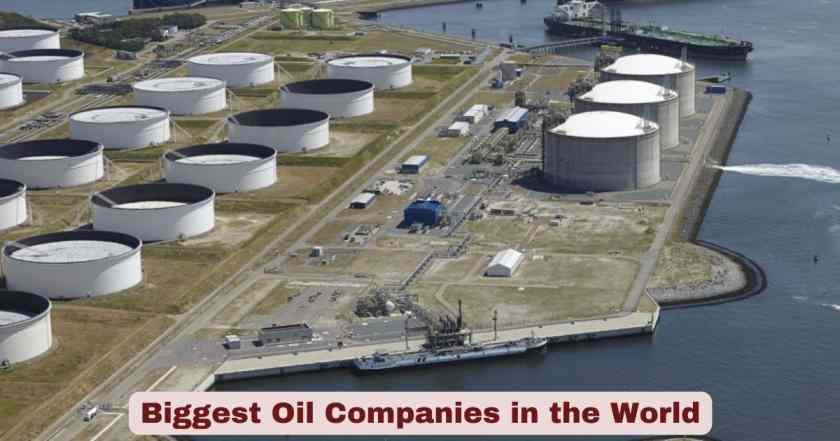
The global oil industry is not just one of the world’s oldest industries — it is still, without question, one of its most powerful. As of 2026, the biggest oil companies in the world collectively control trillions of dollars in assets, produce hundreds of millions of barrels of crude oil annually, and employ millions of people across every continent. Whether measured by market capitalization, annual revenue, daily oil production, or proven reserves, the companies at the top of this industry shape geopolitical decisions, drive national budgets, and determine the price of almost everything the world consumes. From state-owned national giants in Saudi Arabia and China to publicly traded supermajors in the United States and Europe, the largest oil companies in 2026 represent an extraordinary concentration of energy, capital, and strategic influence.
What makes the 2026 landscape particularly compelling is the context in which these companies are operating. Global crude oil demand has surged toward 104 million barrels per day, driven by growth across Asia, the Middle East, and parts of Africa. Simultaneously, the disruption of key supply routes — including significant pressure on the Strait of Hormuz — has pushed Brent crude prices above $90 per barrel in early 2026, a sharp climb from the $65–$75 range seen through much of 2024. In this environment, the world’s biggest oil companies are not just producing energy — they are generating enormous revenues, rebuilding reserves, and in many cases reporting profits that rival the GDP of entire nations. This article puts the definitive 2026 data on the table — verified, sourced, and explained.
Key Interesting Facts about Biggest Oil Companies in the World 2026
Before the full statistics, here are the most compelling headline facts that frame just how dominant the world’s biggest oil companies are in 2026.
| Fact | Detail |
|---|---|
| #1 Biggest Oil Company by Market Cap 2026 | Saudi Aramco — market cap of approximately $1.6–$2.1 trillion (March 2026) |
| Only Oil Company Worth Over $1 Trillion | Saudi Aramco is the only energy company worth more than $1 trillion in market cap |
| Saudi Aramco 2024 Net Income | $106.2 billion — highest net income of any oil company globally |
| Saudi Aramco 2024 Revenue | $436.6 billion in revenue for full-year 2024 |
| Saudi Aramco Production Capacity | Maximum Sustainable Capacity of 12 million barrels per day (b/d) |
| Saudi Aramco Proven Oil Reserves | Over 270 billion barrels of proven crude oil reserves — 2nd largest in the world |
| Lowest Production Cost in the World | Saudi Aramco’s production cost is under $3 per barrel — lowest among all major oil companies |
| ExxonMobil 2024 Production Record | 4.3 million barrels of oil equivalent per day (BOE/d) — highest level in over 10 years |
| ExxonMobil 2024 Revenue | $349.6 billion for full-year 2024 |
| ExxonMobil Market Cap (March 2026) | Approximately $473–$485 billion — largest among publicly traded IOCs |
| Global Oil & Gas Industry Value 2026 | Estimated to generate more than $7 trillion in total economic value |
| Global Crude Oil Demand 2026 | Expected to reach approximately 104 million barrels per day |
| Combined Revenue — Top 20 Oil Companies | Estimated to collectively exceed $2.6 trillion in revenue |
| Chevron 2024 Revenue | $193.41 billion for full-year 2024 |
| Shell 2024 Adjusted Earnings | $23.72 billion for full-year 2024 |
| BP 2024 Revenue | Approximately $189–$194 billion for full-year 2024 |
| TotalEnergies 2024 Net Income | $15.8 billion (IFRS) with $18.3 billion adjusted net income |
| PetroChina 2024 Revenue | Approximately $408 billion — among the highest of any oil company globally |
Source: Saudi Aramco Full-Year 2024 Results (March 2025); ExxonMobil Full-Year 2024 Results (January 2025); Chevron Full-Year 2024 Results; Shell Q4 2024 Results (January 2025); BP Full-Year 2024 Results (February 2025); TotalEnergies Full-Year 2024 Results; CompaniesMarketCap.com (March 2026); The Motley Fool (March 5, 2026); Global Growth Insights (2026)
The sheer scale represented in these numbers is difficult to fully absorb. Saudi Aramco generating $106.2 billion in net profit in a single year — even a year described as “challenging” due to lower crude prices — means it earned more money than the entire annual GDP of countries like Ecuador or Kenya. The fact that it produced these results while adhering to OPEC+ production cut commitments makes the underlying profitability of its assets even more staggering. Meanwhile, the combined $2.6+ trillion in revenue generated by the top 20 oil companies globally in 2025 represents a financial force that dwarfs most national economies.
The broader market context makes these figures even more meaningful heading into 2026. With crude oil prices surging in early 2026, every one of these companies stands to report significantly improved earnings for the year compared to 2024 — when average realized prices were notably softer. At $94+ per barrel for Brent crude in March 2026, the revenue and profit math for companies producing millions of barrels per day becomes extraordinary. For Saudi Aramco alone, each additional million barrels per day of production at elevated prices translates to roughly $12 billion in additional operating cash flow per year, as the company itself disclosed in its 2024 results.
Top 10 Biggest Oil Companies in the World 2026 – Market Cap Rankings
Market capitalization is the most widely used measure of a company’s size and investor valuation. Here is the definitive top 10 biggest oil companies by market cap in 2026, based on verified March 2026 figures.
| Rank | Company | Country | Market Cap (Approx. 2025–2026) | Type |
|---|---|---|---|---|
| 1 | Saudi Aramco | 🇸🇦 Saudi Arabia | ~$1.6–$2.1 Trillion | State-Owned |
| 2 | ExxonMobil | 🇺🇸 USA | ~$473–$485 Billion | Public |
| 3 | Chevron | 🇺🇸 USA | ~$250–$279 Billion | Public |
| 4 | PetroChina | 🇨🇳 China | ~$217 Billion | State-Backed |
| 5 | Shell | 🇬🇧 UK | ~$211 Billion | Public |
| 6 | TotalEnergies | 🇫🇷 France | ~$136 Billion | Public |
| 7 | ConocoPhillips | 🇺🇸 USA | ~$114 Billion | Public |
| 8 | CNOOC | 🇨🇳 China | ~$112 Billion | State-Backed |
| 9 | BP | 🇬🇧 UK | ~$98 Billion | Public |
| 10 | Equinor | 🇳🇴 Norway | ~$88 Billion | State-Backed |
Source: CompaniesMarketCap.com (2025–2026); The Motley Fool — Largest Energy Companies by Market Cap (March 5, 2026); Straits Research (March 2025); Voronoi App — Visual Capitalist (June 2025)
The market cap table tells a story that cuts across geopolitics and corporate structure in equal measure. Saudi Aramco’s lead is so vast that it occupies an entirely different tier from every other company on the list. At roughly $1.6 trillion to $2.1 trillion, depending on where the oil price sits in 2026, it is worth more than ExxonMobil, Chevron, Shell, TotalEnergies, and BP combined. This is not a close race at the top — it is a different league entirely, driven by a reserve base that covers 17% of global proven oil supply and production costs below $3 per barrel that no private company can replicate.
Below Aramco, the picture shifts dramatically toward publicly traded international oil companies (IOCs), with ExxonMobil and Chevron firmly anchoring the top tier of Western energy giants. The presence of PetroChina in fourth place — ahead of Shell — underscores how significantly Chinese state-backed energy companies have grown in global financial standing over the past decade. PetroChina’s massive domestic demand base, combined with its role as China’s primary upstream producer, gives it a scale that most purely private companies struggle to match. BP’s relatively modest market cap of around $98 billion, despite revenues exceeding $189 billion, reflects the sharp drop in net income the company reported in 2024 and ongoing investor concerns about its strategic direction.
Top 10 Biggest Oil Companies by Revenue 2026 – Annual Sales Data
Revenue — the total value of oil, gas, refined products, and chemicals sold — gives a different but equally important picture of corporate size. Here are the biggest oil companies in the world ranked by reported 2024 annual revenue (the most recently available full-year figures as of March 2026).
| Rank | Company | Country | 2024 Annual Revenue (USD) | Net Income 2024 |
|---|---|---|---|---|
| 1 | Sinopec Group (CNPC/Sinopec) | 🇨🇳 China | ~$450+ Billion | N/A (State Group) |
| 2 | PetroChina | 🇨🇳 China | ~$408 Billion | ~$25.6 Billion |
| 3 | Saudi Aramco | 🇸🇦 Saudi Arabia | $436.6 Billion | $106.2 Billion |
| 4 | ExxonMobil | 🇺🇸 USA | $349.6 Billion | ~$33.7 Billion |
| 5 | Shell | 🇬🇧 UK | ~$316–$320 Billion | $23.72 Billion (adj.) |
| 6 | TotalEnergies | 🇫🇷 France | ~$214 Billion | $15.8 Billion (IFRS) |
| 7 | Chevron | 🇺🇸 USA | $193.41 Billion | $17.66 Billion |
| 8 | BP | 🇬🇧 UK | ~$189–$194 Billion | $381 Million |
| 9 | Rosneft | 🇷🇺 Russia | ~$130–$140 Billion (est.) | N/A (Sanctions-constrained reporting) |
| 10 | Petrobras | 🇧🇷 Brazil | ~$100–$110 Billion (est.) | Strong offshore-driven earnings |
Source: ExxonMobil Full-Year 2024 Results (January 31, 2025); Saudi Aramco Full-Year 2024 Results (March 4, 2025); Shell Q4 & Full-Year 2024 Results (January 30, 2025); Chevron Full-Year 2024 Results; BP Full-Year 2024 Results (February 2025); TotalEnergies Full-Year 2024 Results; CompaniesMarketCap.com; PetroChina 2024 Annual Report; Worldostats.com (January 2026)
The revenue rankings expose a crucial structural difference between oil companies that primarily produce crude and those that are fully integrated across refining, chemicals, and retail fuel. Chinese state companies like Sinopec and PetroChina rank near or at the top by revenue precisely because they are massive integrated conglomerates processing enormous volumes of crude through their refining systems — they are both producer and refiner at massive scale. Saudi Aramco, despite producing fewer barrels per day than it is capable of due to OPEC+ cuts, still generated $436.6 billion in revenue in 2024 while delivering a net profit margin that crushes every other company on this list — its $106.2 billion net income represents a profit margin that most companies in any industry can only dream about.
The contrast with BP could not be more dramatic. BP generated revenues in the same general range as Chevron — around $189–$194 billion — but posted a net profit of just $381 million for 2024. This collapse in profitability, compared to a $15.2 billion profit in 2023, resulted from a combination of lower refining margins, weaker oil trading results, and a significant restructuring that includes cutting 4,700 staff and 3,000 contractors while pivoting back toward conventional oil and gas after an expensive and largely unremunerative push into renewables. The BP numbers serve as a reminder that revenue scale alone does not guarantee profitability in the oil business — operational efficiency, reserve quality, and production cost structure matter enormously.
Biggest Oil Companies by Daily Production 2026 – Output Statistics
Production volume — how many barrels of oil equivalent each company extracts per day — is the core operational metric for any oil company. Here is the latest verified daily production data for the biggest oil companies in the world.
| Company | Country | Daily Production (BOE/d) — Latest Available | Key Production Region |
|---|---|---|---|
| Saudi Aramco | 🇸🇦 Saudi Arabia | ~9.2–12.8 Million b/d (capacity 12M; current output per OPEC+ cuts) | Arabian Peninsula |
| ExxonMobil | 🇺🇸 USA | 4.3 Million BOE/d (FY2024 record; Q4 2024: 4.6M BOE/d) | Permian, Guyana, LNG |
| PetroChina | 🇨🇳 China | ~1,797 Million BOE (2024 annual) / approx. 4.9 Million BOE/d | Daqing, Changqing, Sichuan |
| Shell | 🇬🇧/🇳🇱 UK/Netherlands | ~2.8–3.0 Million BOE/d | North Sea, Integrated Gas, LNG |
| Chevron | 🇺🇸 USA | ~3.2 Million BOE/d (Permian: 850,000 b/d; Gulf of Mexico: 300,000 b/d) | Permian, Gulf of America, Deepwater |
| TotalEnergies | 🇫🇷 France | ~2.4 Million BOE/d (Oil: 1,314 kb/d; Gas: 1,120 kboe/d) | Africa, Middle East, Americas |
| BP | 🇬🇧 UK | ~2.36 Million BOE/d (2024 average; liquids: 1,070 kb/d) | North Sea, Caspian, Gulf of Mexico |
| ConocoPhillips | 🇺🇸 USA | ~1.9–2.0 Million BOE/d | Alaska, Permian, LNG |
| CNOOC | 🇨🇳 China | ~700,000–800,000 BOE/d | South China Sea, Offshore |
| Rosneft | 🇷🇺 Russia | ~3.5–4.0 Million BOE/d (estimated) | Western Siberia, Arctic |
Source: ExxonMobil Full-Year 2024 Results; Saudi Aramco 2024 Annual Results; BP Full-Year 2024 Results; TotalEnergies Full-Year 2024 Results; Chevron 2024 Results; PetroChina 2024 Annual Report; Scienceagri.com (2024/2025); Straits Research (2025); BlackRidge Research (2026)
The production table reveals something important that gets lost in the market cap and revenue debates: Saudi Aramco’s dominance in output is equally extraordinary. Even under OPEC+ production discipline that limits actual daily output to roughly 9.2 million b/d, Aramco maintains a maximum sustainable capacity of 12 million b/d — a ceiling it chose not to raise to 13 million b/d in 2024, cancelling that expansion to redirect approximately $40 billion in capital savings between 2024 and 2028. This is a company that is deliberately producing less than it can because global market management — not raw output — serves its long-term interests better.
ExxonMobil’s 2024 production record of 4.3 million BOE/d — its highest in over a decade — deserves particular attention. This achievement was driven by back-to-back record output from both Guyana and the Permian Basin, combined with the full integration of Pioneer Natural Resources following Exxon’s landmark acquisition of that company for $63 billion in May 2024. The Q4 2024 figure of 4.6 million BOE/d suggests this momentum was still building as the year ended. With plans to hit 5.4 million BOE/d by 2030, ExxonMobil is on a trajectory that would make it the largest publicly traded oil producer in the world by a widening margin — an ambition backed by some of the most advantaged resource plays on the planet.
Saudi Aramco 2026 – Detailed Statistics of the World’s Biggest Oil Company
Saudi Aramco stands in a class of its own among the biggest oil companies in the world. Here is the complete picture of its scale in 2026, drawn from its verified official 2024 results.
| Metric | Saudi Aramco Data |
|---|---|
| Full-Year 2024 Net Income | $106.2 billion (down 12.4% from $121.3 billion in 2023) |
| Full-Year 2024 Revenue | $436.6 billion (down from $440.8 billion in 2023) |
| EBIT (2024) | $206 billion (down from $231 billion in 2023) |
| 2024 Average Realized Oil Price | $80.2 per barrel (down from $83.6/bbl in 2023) |
| Q4 2024 Base Dividend | $21.1 billion (4.2% annual increase) |
| Maximum Sustainable Capacity | 12 million barrels per day |
| Proven Crude Oil Reserves | Over 270 billion barrels (2nd largest globally) |
| Production Cost per Barrel | Under $3 per barrel — lowest globally |
| Upstream Projects Pipeline (2024–2026) | 110 projects — 67 in oil/gas/petrochemicals, 20 in pipelines, 23 in infrastructure |
| Capital Investment 2024 | $53.3 billion (organic capex: $50.4 billion) |
| Capital Investment Guidance 2025 | $52–$58 billion |
| Additional Cash Flow from 1 Million b/d Extra Capacity | Approximately $12 billion in additional operating cash flow |
| Gas Growth Target | 2 billion standard cubic feet per day (Bcf/d) sustainable sales gas rate by 2025 |
| Market Capitalization (March 2026) | Approximately $1.6–$2.1 trillion |
Source: Saudi Aramco Full-Year 2024 Results Press Release (March 4, 2025); Aramco.com; CNBC (March 4, 2025); Arab News (March 4, 2025); Straits Research (March 2025); The Motley Fool (March 5, 2026)
Saudi Aramco’s $106.2 billion in net income during 2024 — a year it described as “challenging” — reframes what the word challenge means in the oil business. Even after a 12.4% decline in profit, the company still generated more net income than any other energy company on earth, and more net income than most Fortune 500 companies across any industry. The decline itself is straightforward to explain: OPEC+ production cut commitments reduced volumes, and average realized prices fell from $83.6 to $80.2 per barrel. Despite that, the dividend increased by 4.2%, demonstrating the extraordinary financial resilience that comes from having the world’s lowest production costs and some of the world’s most prolific conventional oil reservoirs.
The $12 billion sensitivity figure — the additional operating cash flow for each 1 million b/d of spare capacity deployed — is perhaps the most illuminating number in the entire table. It means that with the oil price surge witnessed in early 2026, the decision by Aramco and Saudi Arabia to ease or maintain OPEC+ cuts is not simply an oil market management decision — it is a decision worth billions of dollars per quarter. Aramco’s 110-project pipeline through 2026 — covering upstream, pipeline, and infrastructure — ensures that its capacity to serve global demand remains intact even as it manages short-term output. Few oil companies anywhere in the world are deploying capital at this scale with this level of operational certainty behind every dollar invested.
ExxonMobil & U.S. Oil Supermajors 2026
The United States is home to the largest publicly traded oil companies in the world. ExxonMobil and Chevron dominate the Western IOC landscape, with ConocoPhillips emerging as a formidable third player.
| Metric | ExxonMobil | Chevron | ConocoPhillips |
|---|---|---|---|
| 2024 Full-Year Revenue | $349.6 Billion | $193.41 Billion | ~$55–$58 Billion |
| 2024 Net Income | ~$33.7 Billion | $17.66 Billion | ~$9–$10 Billion |
| 2024 Daily Production (BOE/d) | 4.3 Million BOE/d (record high) | ~3.2 Million BOE/d | ~1.9–2.0 Million BOE/d |
| Q4 2024 Daily Production | 4.6 Million BOE/d | — | — |
| 2024 Cash Flow from Operations | $55.0 Billion | — | — |
| 2024 Free Cash Flow | $34.4 Billion | $15.04 Billion | — |
| 2024 Shareholder Returns | $36.0 Billion (dividends + buybacks) | Record returns | — |
| Permian Basin Production | Record high (Guyana + Permian combined drove record) | 850,000 b/d (Permian) | Major Permian player |
| 2024 Upstream Earnings | $25.4 Billion | $7.6 Billion (U.S. upstream) | — |
| Production Target 2030 | 5.4 Million BOE/d | 6–8% output growth forecast | — |
| Market Cap (March 2026) | ~$473–$485 Billion | ~$250–$279 Billion | ~$113–$114 Billion |
| Pioneer Acquisition Completion | May 3, 2024 ($63 billion — 545M ExxonMobil shares issued) | — | — |
Source: ExxonMobil Full-Year 2024 Results Press Release (January 31, 2025); Investor.exxonmobil.com; Chevron Full-Year 2024 Results; Bullfincher.io; CompaniesMarketCap.com; Straits Research (2025); Voronoi/Visual Capitalist (June 2025); The Motley Fool (March 5, 2026)
ExxonMobil’s 2024 results make clear that the Pioneer Natural Resources acquisition was not just a balance sheet exercise — it was a fundamental operational transformation. The integration drove record production in both Guyana and the Permian Basin, pushed full-year output to 4.3 million BOE/d (the highest in over a decade), and helped deliver $36 billion in shareholder distributions — dividends of $16.7 billion plus buybacks of $19.3 billion — all while the company continued funding its long-term growth strategy. CEO Darren Woods stated that the Q2 2024 oil production was “the highest level we produced since Exxon and Mobil merged” in 1999, which underlines the transformational impact of the Pioneer deal. The Q4 2024 climb to 4.6 million BOE/d further suggests that the production ramp from acquired assets was accelerating into 2025 and 2026.
Chevron’s $193.41 billion in revenue and $17.66 billion in net income for 2024 positioned it as the second-largest U.S. oil company by both metrics, maintaining a significant gap over rivals like ConocoPhillips. Its Permian Basin production of 850,000 b/d — combined with its status as the largest producer in the Delaware Basin — gives it a dominant position in the most prolific onshore oil field in the world. Chevron’s $15 billion in free cash flow for 2024 provides the financial muscle to sustain both its capital program and its shareholder returns well into the current period of elevated oil prices in 2026. With output in the Gulf of America adding a further 300,000 b/d from world-class deepwater projects, the company’s production base is geographically resilient against single-region disruptions.
European Oil Supermajors 2026 | Shell, BP & TotalEnergies Statistics
Europe’s three biggest oil companies — Shell, BP, and TotalEnergies — collectively represent an enormous slice of global oil and gas production, though their 2024 financial performance diverged sharply.
| Metric | Shell | BP | TotalEnergies |
|---|---|---|---|
| Headquarters | London / The Hague | London | Paris, France |
| 2024 Adjusted Earnings / Net Income | $23.72 Billion (adj.) | $381 Million (net profit) | $15.8 Billion (IFRS) / $18.3 Billion (adj.) |
| 2024 Operating Cash Flow | Strong (robust per analyst reports) | $27.3 Billion | $29.9 Billion |
| 2024 Adjusted EBITDA | — | $38.0 Billion | ~$38.3 Billion |
| 2024 Daily Production (approx.) | ~2.8–3.0 Million BOE/d | 2,358 kboe/d (2.36 Million BOE/d) | ~2.4 Million BOE/d |
| 2024 Upstream Production (BP) | — | +2.0% vs. 2023 | — |
| Key Growth Moves 2024 | Shell-Equinor UK North Sea JV announced (Dec 2024) | Cutting 4,700 staff + 3,000 contractors | 5 major project startups (Mero-2, Mero-3, Anchor, Fenix, Tyra) |
| Dividend Increase 2024 | +4% per share | Stable | $8 billion in share buybacks |
| Capital Expenditure 2024 | — | $16.2 Billion | $17.8 Billion |
| Market Cap (approx. 2026) | ~$211 Billion | ~$98 Billion | ~$136 Billion |
| Countries of Operation | ~70+ countries | ~80+ countries | ~120 countries |
Source: Shell Q4 & Full-Year 2024 Results (January 30, 2025); CNBC Shell earnings report (January 30, 2025); BP Full-Year 2024 Results (February 2025); BP Annual Report 2024; TotalEnergies Full-Year 2024 Press Release; Enerdata (February 2025); Wikipedia BP; BlackRidge Research (2026)
The contrast between Shell and BP in 2024 is one of the most striking stories in the entire global oil industry. Both companies are headquartered in the UK, both operate across similar geographies, and both had similar revenue scales. Yet Shell delivered $23.72 billion in adjusted earnings while BP reported just $381 million in net profit — a gap of more than $23 billion. BP’s collapse in profitability was the result of a perfect storm: lower refining margins hit its large downstream operations hard, its gas marketing and trading division underperformed, and oil trading contributions disappointed. The company’s decision to cut over 7,700 roles globally in 2025 and formally abandon its ambitious renewables targets to refocus on oil and gas is a direct consequence of the 2024 financial pressure. BP’s pivot back to hydrocarbons — confirmed in February 2025 — means it is now competing more directly for the same assets and reservoirs it had once signaled it would phase down.
TotalEnergies sits in the middle — financially stronger than BP, with an adjusted net income of $18.3 billion and cash flow of $29.9 billion, and operationally more diversified than Shell thanks to a presence in roughly 120 countries. Five major project startups in 2024 — including Mero-2 and Mero-3 in Brazil, Anchor in the United States, Fenix in Argentina, and Tyra in Denmark — drove a proven reserves replacement ratio of 157%, which is an exceptional result that means TotalEnergies replaced every barrel it produced plus an additional 57% on top. That kind of reserve replenishment is the foundation of long-term production growth, and it positions TotalEnergies as arguably the most operationally robust of the three European supermajors heading into 2026’s elevated price environment.
Disclaimer: The data reports published on The Global Files are sourced from publicly available materials considered reliable. While efforts are made to ensure accuracy, no guarantees are provided regarding completeness or reliability. The Global Files is not liable for any errors, omissions, or damages resulting from the use of these reports.